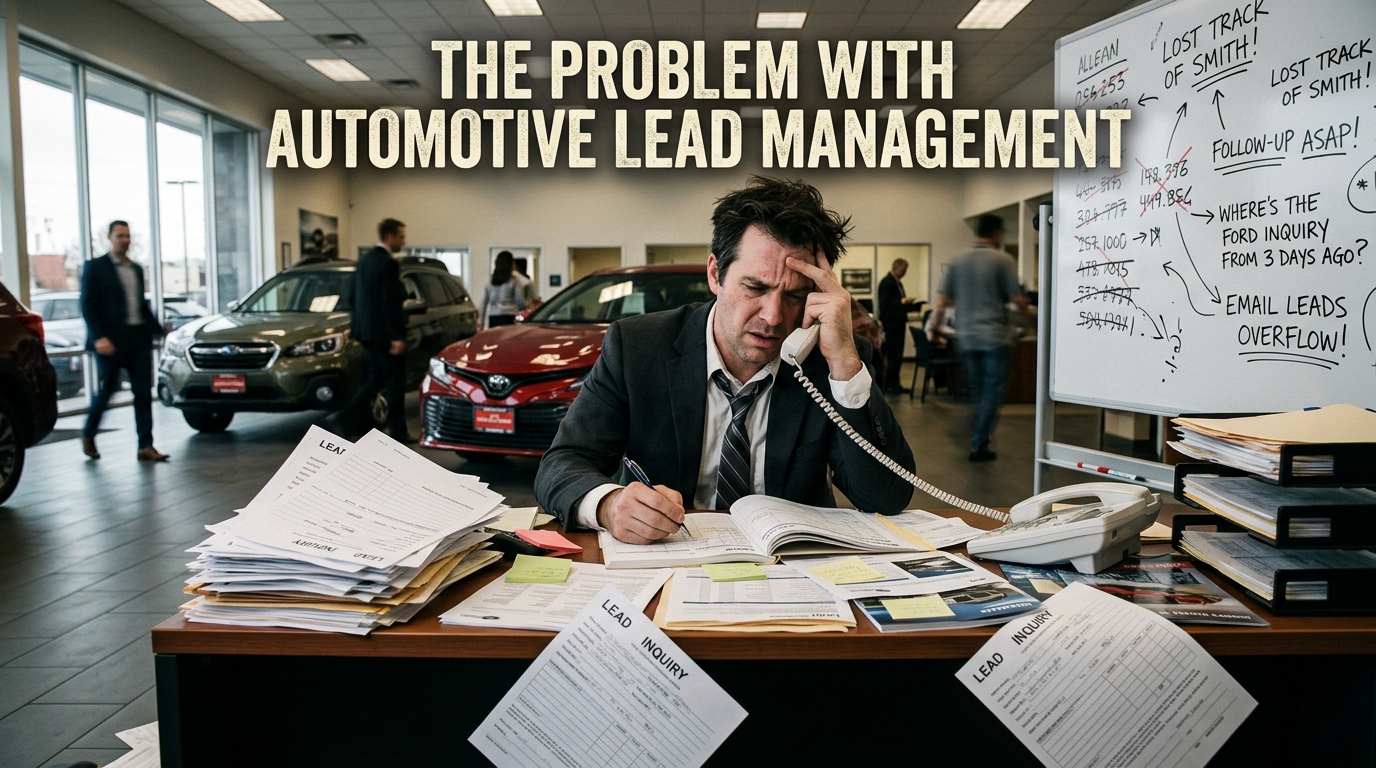
Automotive lead management should make it easier for dealerships to turn shopper interest into appointments, conversations, and vehicle sales. In reality, many dealerships struggle to manage leads in a way that matches how people actually shop today. Buyers move across websites, third-party listings, paid ads, chat tools, trade-in forms, phone calls, and social platforms before they decide to visit a store. Each interaction creates valuable context, but that context often gets lost, delayed, or mishandled. That is why automotive lead management challenges are not just sales problems. They are process, technology, data, and customer experience problems working together.
Modern Car Buyers Do Not Follow a Straight Path
The traditional sales funnel assumes that shoppers move neatly from awareness to interest to contact to appointment to purchase. Modern automotive shoppers rarely behave that way. They may research vehicles for weeks, disappear for a few days, return through a different channel, submit a form, call the store, and then compare another dealership’s offer. A CRM may record the final lead submission, but it may not show the full journey that led to that moment. When the sales team sees only part of the story, the follow-up often feels disconnected. The dealership may think it is responding to a new lead, while the shopper sees themselves as someone who has already done significant research.
This disconnect affects trust. A customer who has already viewed a specific SUV, calculated payments, and checked trade-in value does not want a generic introduction. They want answers that reflect what they have already done. If the salesperson starts from zero, the customer may feel like the dealership is not paying attention. That weak first impression can push the shopper toward a competitor. Good lead management begins with understanding that the lead is not the start of the relationship. It is usually the latest step in a longer digital buying journey.
Too Many Systems Create Too Many Gaps
Dealerships often rely on several platforms to attract, capture, and manage leads. A website provider may handle form submissions, a chat vendor may manage conversations, a call tracking tool may record phone leads, and a CRM may organize sales activity. Advertising platforms, inventory feeds, digital retail tools, and third-party marketplaces add even more complexity. Each system may hold a different piece of the customer journey. When these platforms do not communicate clearly, the dealership loses valuable information.
The problem is not always that dealerships lack tools. In many cases, they have too many disconnected tools. A shopper’s vehicle of interest may appear in one platform, their chat transcript in another, and their phone call in a third. The salesperson may have to dig through several dashboards to understand the customer’s intent. Most teams do not have time for that during a busy sales day. As a result, leads are handled with incomplete information, even when the dealership technically has the data somewhere.
Slow Response Times Reduce Lead Quality
Speed matters in automotive lead management because digital shoppers expect fast answers. When someone submits a lead, they are often actively comparing vehicles, payments, and dealership options. A delayed response gives them time to contact another store or lose interest. Even a high-quality lead can become weak if the dealership waits too long to respond. The issue is not only whether the team responds, but whether the response is fast enough to match customer expectations.
Slow response times usually come from process breakdowns. Leads may be routed to the wrong person, missed after hours, duplicated in the CRM, or buried under lower-quality submissions. Salespeople may also hesitate when the lead record lacks useful details. If they do not know which vehicle the shopper wants or what question they asked, they may send a generic message instead of a helpful answer. That delay can make the dealership seem unorganized. In a competitive market, a few minutes can make a meaningful difference.
Generic Follow-Up Creates a Poor Customer Experience
A major problem with automotive lead management is that many follow-up processes are too generic. Templates can save time, but they can also create weak customer experiences when they do not match shopper intent. A customer asking about a specific used truck should not receive the same message as someone asking about lease specials. A trade-in lead should not be handled the same way as a service-to-sales opportunity. When every lead gets the same response, the dealership misses the chance to build relevance.
Personalization does not have to be complicated. It can be as simple as mentioning the vehicle, answering the customer’s question, and offering the next logical step. The best follow-up shows that the dealership understands what the shopper wants. It also makes the process easier by giving the customer a clear path forward. Generic follow-up often creates more friction because it forces the customer to repeat information. The more a shopper has to explain themselves, the less confident they may feel about continuing the conversation.
Lead Volume Can Hide Lead Quality Problems
Many dealerships judge lead management success by volume, but more leads do not always mean better results. A campaign may generate hundreds of form fills while producing very few serious buyers. Some leads may come from shoppers who are casually browsing, chasing unrealistic payments, or submitting duplicate inquiries. Others may be ready to schedule an appointment immediately. If the CRM treats all leads the same, the sales team can waste time on low-intent prospects while high-intent shoppers wait.
Lead quality should be evaluated through behavior, source, timing, and outcome. A lead from a shopper who viewed the same vehicle multiple times and requested financing may deserve a different priority than a general incentive inquiry. A customer who calls after submitting a form may be more urgent than someone who opened one email. Dealerships need a clear way to separate strong opportunities from weak ones. Without that structure, lead volume can become noise. The team stays busy, but not always productive.
Important lead quality signals may include:
- Specific vehicle interest
- Repeat website visits
- Trade-in tool activity
- Finance application activity
- Chat or phone engagement
- Appointment requests
- Recent inventory views
- Lead source and campaign type
- Customer message details
Accountability Is Often Inconsistent
Even strong lead management tools cannot fix weak accountability. A CRM can assign tasks, log activity, and track communication, but managers still need to inspect what is happening. It is not enough to know that a salesperson completed a follow-up task. The dealership also needs to know whether the response was timely, relevant, and helpful. A completed task does not always mean a meaningful customer interaction occurred. This is one of the most overlooked automotive lead management challenges.
Managers should review both activity and quality. That means checking response times, message content, appointment outcomes, and lost lead reasons. It also means identifying patterns across people, sources, and processes. If one source creates many leads but few appointments, the issue may be marketing quality. If one salesperson has low engagement despite high activity, the issue may be follow-up quality. Accountability should help the team improve, not simply punish missed tasks. Clear standards make lead handling more consistent across the store.
FAQ: Automotive Lead Management
What is automotive lead management?
Automotive lead management is the process of capturing, organizing, prioritizing, following up with, and tracking potential vehicle buyers. It helps dealerships turn shopper interest into conversations, appointments, and sales.
Why do dealerships struggle with lead management?
Dealerships struggle because leads come from many sources, systems do not always connect, and shoppers expect fast, relevant responses. Without clean data and clear processes, opportunities are easy to miss.
What makes a digital lead difficult to manage?
A digital lead can include many hidden signals, such as vehicle views, payment activity, chat history, trade-in interest, and previous visits. If those signals do not reach the CRM, the sales team lacks context.
How can dealerships improve lead response?
They can improve by routing leads quickly, using source-specific templates, prioritizing high-intent shoppers, and making sure salespeople have complete customer information before responding.
Is lead volume more important than lead quality?
No. High lead volume can keep a team busy, but lead quality determines whether those leads are likely to become appointments and sales. Dealerships need both quantity and quality controls.
What role does the CRM play?
The CRM should centralize customer information, organize follow-up, support accountability, and help managers understand performance. It works best when it receives accurate data from every lead source.
Better Lead Management Requires Better Process
Solving automotive lead management problems starts with process, not software alone. Dealerships should map every major lead source and identify exactly what happens when a shopper submits information. That includes where the lead goes, who receives it, what data appears in the CRM, how quickly follow-up happens, and what message the customer receives. This review often reveals simple but costly gaps. A form may be missing vehicle details, a phone lead may not be assigned correctly, or an after-hours lead may sit untouched until morning.
Once those gaps are clear, dealerships can build better rules. High-intent leads should be prioritized, duplicate records should be cleaned up, and follow-up templates should match the customer’s action. Managers should define what a good first response looks like and measure whether the team meets that standard. Marketing and sales should also review lead outcomes together, not separately. If campaigns generate leads that do not convert, the dealership needs to know why. Better process turns lead management from a reactive task into a coordinated growth system.
The Goal Is a Better Buying Experience
At its core, automotive lead management is about creating a smoother buying experience. Customers want quick answers, accurate information, and a dealership that understands their needs. Sales teams want clear records, strong opportunities, and tools that help them focus on the right shoppers. Managers want visibility into what is working and where deals are being lost. When lead management breaks down, everyone feels the friction.
The best dealerships treat every lead as part of a larger customer journey. They do not rely on generic follow-up, incomplete records, or disconnected systems. They use data to understand intent, process to ensure consistency, and accountability to improve performance. Automotive lead management challenges will continue as buyer behavior becomes more digital and less predictable. Dealerships that address those challenges now will be better positioned to respond faster, communicate better, and convert more opportunities into sold vehicles.