When Debt Starts Paying Debt
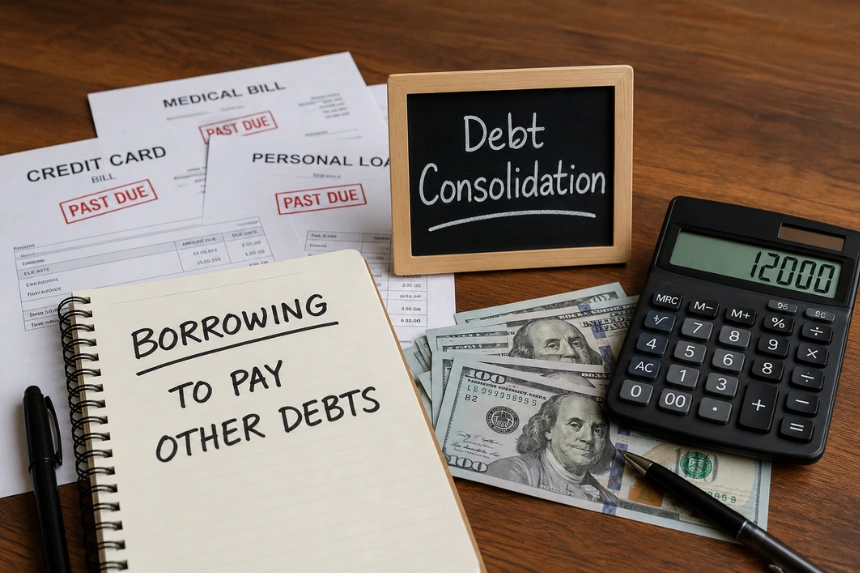
Borrowing to pay other debts can feel like progress because money is moving and accounts may look cleaner for a while. A credit card balance becomes a personal loan. Several payments become one payment. A high interest account gets replaced with a lower interest option. On paper, that can be a smart strategy.
But the real question is not whether you moved the debt. The real question is whether you made the debt easier to repay. If borrowing has become a cycle instead of a plan, it may be time to compare options carefully, including consolidation, creditor hardship programs, credit counseling, or debt settlement services.
Debt Consolidation Is A Tool, Not A Reset Button
Borrowing to pay off debt is usually called debt consolidation. The basic idea is simple: you take out new credit and use it to pay off existing debts. Ideally, the new loan has a lower interest rate, one predictable payment, and a clear payoff date.
That can work well when the math improves. For example, if several credit cards have high interest rates and you qualify for a personal loan at a lower rate, the new payment may save money and simplify your life. Lenders such as banks, credit unions, and online personal loan providers may offer this type of loan.
But consolidation does not erase debt. It changes the shape of it. If you pay off credit cards with a loan and then run the cards back up, you now have the loan plus new card debt. That is how consolidation turns into a trap.
First, Check Whether The New Debt Is Actually Better
Before borrowing, compare the full cost. Look at the interest rate, fees, repayment term, monthly payment, and total amount you will pay over time. A lower monthly payment can be helpful, but it may cost more overall if the repayment period is much longer.
Ask these questions before signing:
Can I afford the new payment every month?
Is the interest rate lower than what I am paying now?
Are there origination fees, balance transfer fees, closing costs, or prepayment penalties?
Will this loan be paid off by a specific date?
What happens if I miss a payment?
The Consumer Financial Protection Bureau offers helpful information on debt collection and debt repayment rights, including how to understand your situation before choosing a path forward.
Personal Loans Can Simplify The Mess
A personal loan can be useful when you have several unsecured debts and qualify for a lower fixed rate. The biggest benefit is structure. Credit cards let you borrow again as you pay them down. A personal loan usually gives you a set payment and a set payoff timeline.
That structure can reduce decision fatigue. Instead of juggling five due dates, five interest rates, and five minimum payments, you make one payment. That can be a relief.
Still, the loan only works if you stop adding new debt. If you keep the paid off credit cards open, remove them from your wallet and delete saved card information from apps. The goal is to keep old balances from quietly returning.
Balance Transfers Can Help, But The Clock Matters
A 0 percent APR balance transfer can be attractive because it gives you a temporary break from interest. If you can pay off the balance before the promotional period ends, this can save real money.
The danger is timing. Balance transfers often charge a fee, and the interest rate can jump sharply when the promotional period ends. If you move a balance but do not have a payoff plan, you may only delay the pressure.
Divide the transferred balance by the number of months in the promotional period. That tells you what you must pay each month to clear it before interest returns. If that payment is unrealistic, the offer may not be as helpful as it looks.
Home Equity Loans And HELOCs Raise The Stakes
Home equity loans and home equity lines of credit can offer lower rates because they are secured by your home. That lower rate can be tempting if you are carrying high interest credit card debt.
But this is a serious tradeoff. You may be turning unsecured debt into debt tied to your house. If you cannot keep up, the consequences can be much bigger than a late credit card payment.
A HELOC can also feel too flexible because it works like a credit line. If you use it to pay off cards but keep borrowing from it, you may stretch the problem out for years. Before using home equity, make sure the payment is affordable and the reason for the original debt has been addressed.
Do Not Consolidate Without A Spending Lock
The most important part of borrowing to pay debt is what happens afterward. You need a strict budget, but strict does not mean unrealistic. It means every dollar has a purpose.
Start with essentials: housing, utilities, food, transportation, insurance, medicine, and minimum debt payments. Then assign money to the new consolidation payment. After that, decide what can stay and what must pause.
If the budget only works when nothing goes wrong, it does not work yet. Build in a small buffer, even if it is tiny. Without a buffer, the next car repair, medical bill, or slow workweek may go right back onto a credit card.
Watch For Scams And Big Promises
When you are stressed about debt, big promises can sound comforting. Be careful with companies that guarantee results, pressure you to act immediately, or ask for large upfront fees before doing anything meaningful.
The Federal Trade Commission explains options for getting out of debt and finding legitimate help, including credit counseling, debt settlement, consolidation loans, bankruptcy, and scam warning signs.
A trustworthy path should make the costs, risks, timeline, and consequences clear. If someone makes the solution sound painless, ask more questions.
Know When Borrowing Is Not The Answer
Consolidation works best when the main problem is expensive interest or too many payments. It works poorly when the deeper problem is that income is not enough to cover basic expenses.
If you need to borrow every month just to make minimum payments, a new loan may only delay the crisis. In that case, you may need a broader plan. That could mean increasing income, cutting major expenses, negotiating with creditors, working with a credit counselor, exploring settlement, or speaking with a bankruptcy attorney.
That does not mean you failed. It means the problem is bigger than payment organization.
Make The New Loan The Last Move, Not The Next Loop
Borrowing to pay other debts can be smart when it lowers interest, simplifies payments, and gives you a realistic payoff plan. It can be dangerous when it only creates breathing room without changing the habits, expenses, or income gap that caused the debt.
Before you consolidate, run the numbers. Protect your budget. Stop new borrowing. Keep the payment affordable. Get terms in writing. Make sure the new debt is truly better than the old debt.
The goal is not just to move balances around. The goal is to make this the last time you need to borrow your way out of borrowing.