A Lifetime of Landmark Addresses
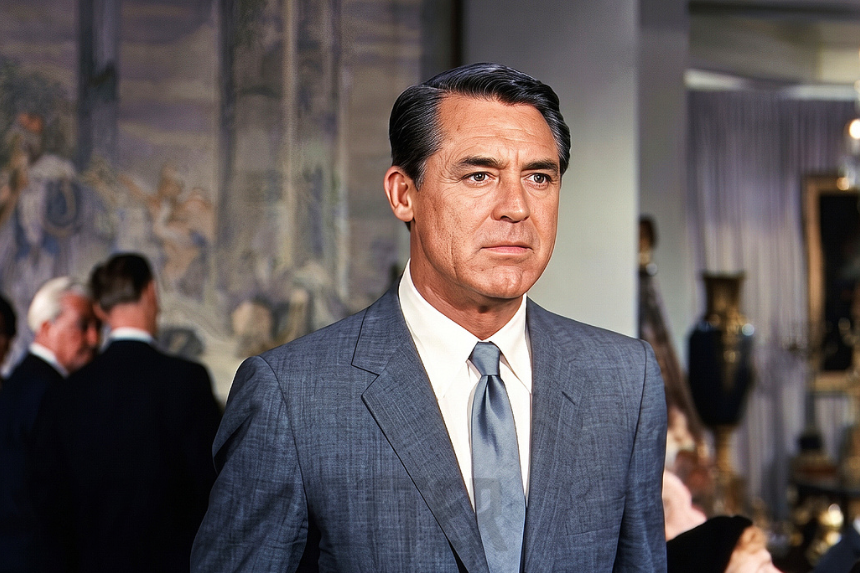
Cary Grant spent much of his American life associated with distinctive addresses, many of which became part of the story surrounding his Hollywood career. Born Archibald Leach in Bristol, England, Grant transformed himself into one of the defining leading men of Hollywood’s Golden Age, appearing in films including Bringing Up Baby, His Girl Friday, The Philadelphia Story, and North by Northwest. Away from the screen, his residences and retreats also reflected the different chapters of his life.
Grant was not known for treating real estate as a series of investments. Instead, he often established long-term homes and remained in them for years. In 1946, he acquired a hillside property above Beverly Hills for a reported amount in the tens of thousands of dollars and remained there for roughly four decades, spanning several marriages and the later years of his life. Earlier, he and fellow actor Randolph Scott shared a French Normandy-style beach house on Santa Monica’s Gold Coast. The property had its own notable ownership history, later becoming associated with Howard Hughes and, for a time, hosting guests such as Grace Kelly.
Palm Springs became another recurring setting in Grant’s personal life. From 1954 to 1972, Grant and his second wife, actress Betsy Drake, owned a Spanish Colonial Revival home in the city’s Movie Colony neighborhood. The property was later designated a historic site. Yet Grant’s connection to Palm Springs extended beyond homes he formally owned. He was also a frequent guest at Villa Paradiso, a private compound in the Old Las Palmas neighborhood owned by his close friend, Las Vegas hotelier Charlie “Kewpie” Rich. It is that estate, rather than a property Grant personally owned, that has now returned to the market.
Villa Paradiso Returns to the Market
Villa Paradiso, the historic Old Las Palmas compound where Cary Grant reportedly spent numerous weekends away from Hollywood, has been listed for $12.68 million. The nearly 15,000-square-foot estate occupies close to four gated acres and includes a Moorish Revival main residence along with several additional structures. Its considerable scale, privacy, and landscaped grounds made it a fitting retreat for a Hollywood star seeking distance from public attention.
The property’s connection to Grant is closely tied to Charlie “Kewpie” Rich, the Las Vegas hotelier behind the Dunes Hotel and one of Grant’s longtime friends. Rich owned Villa Paradiso for years and, recognizing Grant’s affection for the estate, constructed a dedicated pool house on the grounds for Grant and his family to use during their visits. Grant reportedly gave the property its distinctive name, while Rich’s Dunes Hotel provided another important setting in the actor’s personal history. In 1965, Grant married his fourth wife, actress Dyan Cannon, at the Las Vegas hotel.
A year later, Grant and Cannon welcomed their only child together, Jennifer Grant. Villa Paradiso subsequently became an important part of her early childhood memories. In her 2011 memoir, Good Stuff: A Reminiscence of My Father, Cary Grant, Jennifer Grant recalled the estate as the family’s defining weekend escape, describing “Uncle Charlie’s” Palm Springs property as their number-one getaway. For a child growing up alongside one of Hollywood’s most recognizable figures, the compound offered a private setting that stood apart from premieres, studios, and the public demands surrounding her father’s career.
Villa Paradiso has reportedly changed ownership only a limited number of times over the decades. Actress Ann Miller is also associated with the property’s history, while its current owner has held the estate for roughly three decades. Its return to the market therefore represents its first public offering in a generation. For prospective buyers, the property combines a substantial private compound with a documented connection to the social world of Old Hollywood.
Inside the Estate
The main residence at Villa Paradiso dates to 1928 and was designed in the Moorish Revival style by architect Prescott T. Stevens for a Chicago-born heiress who was drawn to the desert climate. Elements of the original architectural character remain visible throughout the house, including hand-painted ceiling murals, wrought-iron chandeliers, arched doorways and colonnades, a two-story foyer, and a sculpted outdoor fountain. A traditional Spanish clay-tile roof further reinforces the property’s historic character.
Beyond the main residence, the approximately four-acre gated compound contains several separate structures, including the midcentury pool house created for the Grant family, a caretaker’s cottage, and a guest house. Together, the buildings provide eight bedrooms and well into double-digit bathrooms across the estate. Mature gardens and citrus groves surround the structures, while views toward the San Jacinto Mountains add to the property’s desert setting. Taken as a whole, Villa Paradiso has the scale and layout of a private resort rather than a conventional single-family residence.
Property Timeline
- 1928: Main residence built in Old Las Palmas by architect Prescott T. Stevens for a Chicago-born heiress.
- Mid-20th century: Estate acquired by Las Vegas hotelier Charlie “Kewpie” Rich, who builds a dedicated pool house for his friend Cary Grant and Grant’s family.
- 1965: Cary Grant marries Dyan Cannon at Rich’s Dunes Hotel in Las Vegas.
- 1966: Daughter Jennifer Grant is born; the family’s weekend visits to Villa Paradiso become a fixture of her childhood.
- 2011: Jennifer Grant recounts the family’s trips to the estate in her memoir, Good Stuff: A Reminiscence of My Father, Cary Grant.
- Circa mid-1990s: Estate’s current owner purchases Villa Paradiso, beginning roughly three decades of ownership.
- 2026: Villa Paradiso is listed for sale at $12.68 million, its first time on the market in about thirty years.