What Should an Iowa Landowner Do When the Value of a Farm Is Unclear?
When the value of a farm is unclear, the best first step is a current evaluation based on the property itself. A statewide land-value figure, a neighbor’s recent sale, or an old appraisal can be useful context. Still, none can fully account for the details that make one Iowa farm different from another. Iowa Land Company helps landowners begin with a practical, property-focused discussion about farmland value, market conditions, and possible next steps. Whether an owner is considering a sale soon, managing inherited land, evaluating an investment, or simply planning, a professional review can replace guesswork with clearer information. Farmland value can vary considerably from county to county and even between nearby tracts. Productive soils, drainage systems, field shape, road access, lease arrangements, building sites, grain storage, recreational features, and future land-use potential can influence what buyers are willing to pay. The strongest strategy begins by identifying the factors that matter most for that particular property.
How Much Was Iowa Farmland Worth According to the Latest Available Research?
Broad research offers an important benchmark. The 2025 Iowa State University Land Value Survey reported a statewide average farmland value of $11,549 per acre, a 0.7 percent increase from the prior year. However, the inflation-adjusted value declined 1.8 percent, reflecting continuing pressure from commodity prices, input costs, and interest rates. These figures are useful for understanding the overall market, but they should not be treated as a direct valuation of a specific farm. A high-quality tract with strong CSR2 ratings, good drainage, efficient field boundaries, and local buyer competition may command interest substantially above the statewide average. Conversely, land with access limitations, weak drainage, unusual lease terms, or deferred improvements may need a different pricing approach.
Why Do County, Soil, and Farm Quality Matter?
Local market evidence is often more meaningful than a single statewide number. Recent sales in the same county or nearby area can reveal what buyers are prioritizing, including farm size, soil quality, possession timing, and the availability of comparable land. Iowa Land Company can help landowners consider those local details when assessing a farm’s market position.
Property Factors That Can Affect Farmland Value
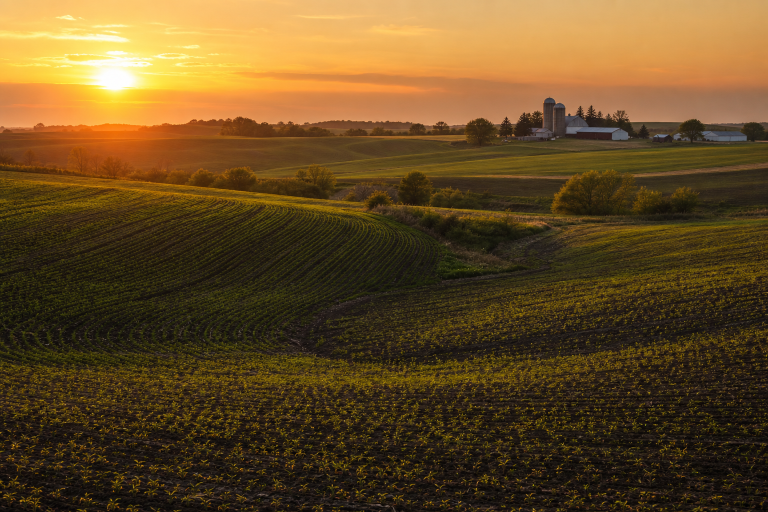
- CSR2 and soil quality: Higher Corn Suitability Rating 2 scores generally indicate stronger agricultural productivity potential. CSR2 scores range from 1 to 100 and provide one useful way to compare Iowa soils.
- Drainage and field conditions: Tile systems, waterways, terraces, and overall field conditions may affect yield potential, operating efficiency, and long-term buyer appeal.
- County and local sales: Nearby sales help establish realistic expectations for buyer demand and price ranges.
- Lease status: An existing cash-rent or crop-share lease may affect income, possession, marketing language, and buyer negotiations.
- Tract size and layout: The number of acres, shape of the fields, access points, and proximity to other operations can affect the potential buyer pool.
- Alternative uses: Development potential, hunting habitat, wind or solar considerations, and building sites can create value beyond ordinary crop production.
How Can Landowners Choose Between an Auction and a Traditional Listing?
Neither sales method is automatically right for every farm. The decision should reflect the property, the likely buyer audience, the owner’s timing needs, and current local conditions. Iowa Land Company offers both auction and traditional listing options, allowing the marketing plan to fit the land rather than forcing the land into a single process.
When an Auction May Be a Good Fit
- The farm is likely to attract several motivated buyers.
- Competitive bidding could help establish market value.
- The owner wants a defined sale date and a structured timeline.
- The property has notable features that may generate broad public interest.
When a Traditional Listing May Be a Good Fit
- The farm requires targeted marketing to a narrower buyer group.
- The seller wants time for private negotiations and flexible offer terms.
- The property includes improvements, development potential, or unusual ownership considerations.
- Recent local evidence indicates that a listing could provide an efficient path to the right buyer.
What Should Sellers Review Before Requesting an Evaluation?
- Confirm legal descriptions, acreage figures, and known boundary information.
- Gather current and previous lease documents, including possession terms and rent details.
- Review CSR2 data, drainage information, conservation practices, and field records.
- Document buildings, bins, wells, fences, roads, access points, and other improvements.
- Identify easements, restrictions, mineral interests, or potential development considerations.
- Clarify desired timing, possession date, sale objectives, and financial priorities.
- Consider whether estate, trust, partnership, tax, or 1031 Exchange issues require advice from qualified legal, tax, or financial professionals.
How Should Buyers and Sellers Use Market Data?
Research data helps establish context, but property-level evidence remains essential. The USDA reports that the average U.S. farm real estate value was $4,350 per acre in 2025, up 4.3 percent from 2024. Its farmland value research also emphasizes that soil quality, local economic conditions, agricultural returns, and regional geography can cause values to vary widely. For Iowa landowners, the practical takeaway is clear. National and statewide numbers can frame the conversation, but they cannot replace a review of county-level sales, farm productivity, lease income, and buyer demand. A careful evaluation brings those pieces together before a pricing or sale decision is made.
What if Selling Is Not the Right Next Step?
Some owners are not ready to sell but still want stronger oversight of their land. Farm management can be an alternative path for absentee owners, heirs, investors, and families who want to retain ownership while improving organization and long-term planning. Management support may include lease coordination, tenant communication, field monitoring, maintenance oversight, and stewardship planning. With agents serving all 99 Iowa counties and offices in Des Moines, Fort Dodge, Vinton, Carroll, and Grundy Center, Iowa Land Company can support owners who are evaluating land in a single county or managing holdings across multiple counties.
Questions to Ask Before Moving Forward
- What recent sales are the strongest comparisons for this farm?
- How do the property’s CSR2 ratings and drainage conditions affect buyer interest?
- Would an auction or traditional listing better match the farm and the seller’s goals?
- How will an existing lease affect marketing, income, and possession?
- What features should be documented before the property is presented to buyers?
- Could continued ownership and professional farm management be a better choice right now?
Iowa landowners do not need to rely on assumptions when evaluating a farm or planning a sale. By combining local market knowledge, property-level analysis, auction and listing experience, and farm management support, Iowa Land Company can help owners choose a practical next step for their land in 2026.
Conclusion
Understanding the value of Iowa farmland starts with looking beyond statewide averages and focusing on the property’s individual characteristics. Soil quality, lease income, drainage, location, improvements, and local buyer demand all influence a farm’s value. Whether you are considering an auction, a traditional listing, or continued ownership with professional management, gathering accurate property information is the foundation of a sound decision. By working with experienced local professionals and reviewing current market conditions, Iowa landowners can approach buying, selling, or managing farmland with greater confidence and a clearer understanding of their property’s long-term potential.