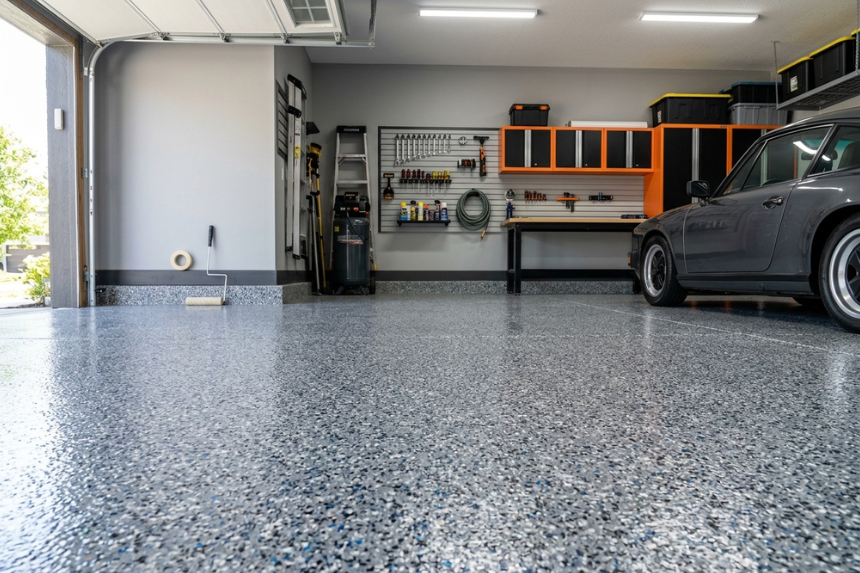
For many Atlanta homeowners, the garage is far more than just a place to park the car. It often serves as a main entryway, a workshop, or even an extension of our living space. However, daily wear, vehicle fluids, and heavy traffic can quickly take a toll, leaving concrete floors stained, cracked, and uninviting. This deterioration not only detracts from your home’s aesthetics but can also impact its overall value and functionality.
If you are considering a transformation, understanding the various garage floor coating options available is crucial. From robust epoxy garage floor coatings to advanced polyaspartic solutions, the choices can seem overwhelming.
In this comprehensive guide, we will explore the key differences between these high-performance systems and traditional DIY kits. We will also delve into the benefits of professional installation, the typical process involved, and what makes certain coatings superior in terms of durability and chemical resistance. Our aim is to provide Atlanta homeowners with the knowledge needed to select the best solution for a long-lasting, beautiful, and highly functional garage floor.
When envisioning a revitalized garage floor, homeowners often face a fundamental choice: invest in a professional, multi-coat system or attempt a do-it-yourself (DIY) kit from a local hardware store. While the latter might seem appealing due to lower upfront costs, the long-term performance and durability differences are significant. Understanding these distinctions is key to making an informed decision that truly enhances your property.
Here’s a comparison to highlight the critical differences:
Feature Professional Hybrid Coating Systems Retail DIY Epoxy Kits Coating Composition Industrial-grade, 100% solids epoxy base coat with aliphatic polyaspartic or polyurea topcoat. Often includes decorative flakes broadcast to rejection. Typically water-based (lower solids content) or thin solvent-based epoxy. May include minimal decorative flakes or just a single color. Surface Adhesion Achieved through mechanical profiling (diamond grinding) that creates a porous surface for superior chemical bond. Relies on acid etching, which provides minimal surface profile and can leave salts that hinder adhesion. Often applied to inadequately prepared concrete. Durability & Lifespan Exceptional resistance to abrasion, chemicals, impacts, and hot tire pickup. Designed for decades of service, often backed by long-term warranties (e.g., 15-year limited or lifetime against hot tire pickup). Prone to scratching, chipping, staining, and hot tire pickup delamination. Lifespan typically 1-3 years before showing significant wear or peeling. Hot Tire Pickup Guaranteed against hot tire pickup due to robust chemistry and strong bond. Highly susceptible to hot tire pickup, where hot tires lift the coating from the concrete, leading to unsightly bare spots and peeling. Chemical Resistance High resistance to automotive fluids, oils, greases, solvents, and household chemicals. Limited resistance to common chemicals, leading to staining and degradation upon exposure. UV Stability Polyaspartic topcoats offer excellent UV stability, preventing yellowing or fading over time, even with prolonged sun exposure. Most DIY epoxies are not UV stable and will yellow, chalk, or fade when exposed to sunlight, making them unsuitable for garages with open doors or windows, or outdoor applications. Installation Process Professional, multi-day process involving specialized equipment for preparation, multiple coating layers, and precise application techniques. Often a single-day application by the homeowner, with minimal preparation tools and a single or dual-coat system. Cost (Initial) Higher initial investment, but offers superior long-term value and avoids frequent reapplication costs. Lower initial cost, but often leads to premature failure and the need for costly repairs or reapplication, making it more expensive over time. Warranty Comprehensive warranties covering material defects, peeling, and hot tire pickup, providing peace of mind. Limited or no warranty, placing the burden of failure entirely on the homeowner. Aesthetic Options Wide range of customizable colors, flake blends (granite, quartz, stone mimics), and finishes for a high-end, showroom look. Limited color choices, often solid colors or small, sparse flakes, resulting in a less sophisticated appearance.
Understanding Multi-Coat Garage Floor Coatings
Professional garage floor coatings, particularly those utilizing a multi-coat system, represent the pinnacle of durability and aesthetic appeal. These systems are engineered to withstand the rigorous demands of a garage environment. The foundation of such a system typically involves an industrial-grade, 100% solids epoxy base coat. Unlike thinner, water-based DIY alternatives, 100% solids epoxy provides superior adhesion and a much thicker, more robust layer. This base coat is meticulously applied after thorough concrete preparation, forming an incredibly strong bond with the substrate.
Following the epoxy base, decorative vinyl flakes are often broadcast “to rejection,” meaning a generous amount is applied until the surface is fully saturated. This not only creates a stunning, granite-like or quartz-like appearance but also adds to the floor’s impact resistance and provides a degree of slip resistance. The final, and arguably most crucial, layer is an aliphatic polyaspartic or polyurea topcoat. This advanced material is celebrated for its exceptional chemical resistance, protecting the underlying layers from spills like oil, gasoline, and other corrosive fluids. Crucially, polyaspartic also offers excellent UV stability, preventing the unsightly yellowing and fading that can plague traditional epoxies when exposed to sunlight. This multi-layered approach ensures unparalleled abrasion resistance, making the floor highly resilient to scratches, scuffs, and heavy foot or vehicle traffic.
Shortcomings of Single-Component DIY Paint Kits
In stark contrast, single-component DIY paint kits, often marketed as “epoxy paint,” fall significantly short in performance and longevity. These kits typically contain water-based epoxy formulations with a much lower solids content. This means that once the water evaporates, the remaining coating is thin and vulnerable. The preparation methods recommended for DIY kits, usually involving simple acid etching, are insufficient to create the mechanical profile necessary for a strong, lasting bond with the concrete. Acid etching can also leave behind salts that actively inhibit adhesion.
One of the most common failures of DIY coatings is hot tire delamination. When a hot tire, especially from a recently driven vehicle, rests on a poorly bonded or low-quality epoxy, the heat causes the plasticizers in the tire to soften the coating, leading to it peeling away from the concrete. This phenomenon, known as “hot tire pickup,” results in unsightly bare spots and a floor that quickly deteriorates. Furthermore, DIY kits are highly susceptible to moisture vapor failure. If the concrete slab has even a slight amount of moisture vapor transmission, which is common in Atlanta’s humid climate, the inadequate bond of a DIY coating can be compromised, leading to bubbling, delamination, and premature peeling. The limited chemical resistance and lack of UV stability in most DIY products also mean they will stain easily and yellow over time, quickly losing any initial aesthetic appeal. While the initial investment is lower, the frequent need for repairs or complete reapplication makes DIY options a false economy.
The Professional Installation and Preparation Process
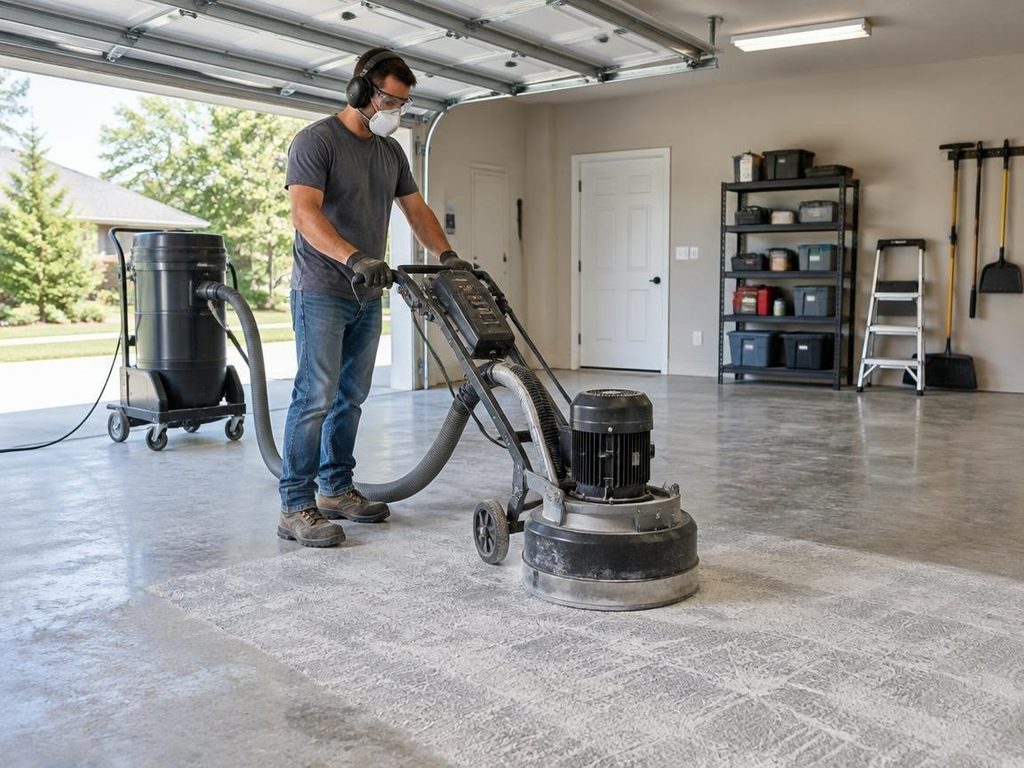
The longevity and performance of any garage floor coating system hinge almost entirely on the quality of its installation, particularly the preparation of the concrete substrate. Professional installers in Atlanta follow a meticulous, multi-step process that ensures optimal adhesion and a flawless finish, a stark contrast to the shortcuts often taken with DIY applications. This thorough approach is what differentiates a lasting, high-performance floor from one destined for early failure.
Substrate Preparation and Mechanical Profiling
The cornerstone of a durable coating system is proper substrate preparation. This begins with mechanical grinding, typically using diamond grinding equipment. This process achieves several critical objectives: it removes existing sealers, paints, or contaminants, opens up the concrete’s pores, and creates a rough, porous surface profile. This “concrete profiling” is essential for the coating to mechanically interlock with the concrete, forming a bond that is far superior to what acid etching can achieve. During this phase, professional teams also utilize powerful dust extraction systems to maintain a clean working environment and prevent airborne contaminants from settling on the prepared surface.
Beyond surface profiling, any existing cracks or imperfections in the concrete are meticulously addressed. Cracks are often repaired using specialized crack elastomeric filler, which allows for some movement without compromising the integrity of the coating. Before application, professionals also conduct tests for moisture vapor transmission (MVT) to ensure the concrete’s moisture content is within acceptable limits. High MVT can lead to coating failure, so mitigation strategies or specialized primers may be necessary in such cases. This comprehensive concrete repair and preparation phase is non-negotiable for a professional-grade installation.
Broadcast Application and Protective Topcoats
Once the concrete is perfectly prepared, the multi-layer coating system is applied. The first step is typically the application of an industrial-grade epoxy base coat. This material is chosen for its exceptional adhesion properties and its ability to penetrate and seal the concrete. While the base coat is still wet, decorative flakes (available in various sizes like 1/4″, 1/8″, 1/16″ to mimic granite, quartz, or stone) are broadcast “to rejection.” This means flakes are generously applied until the entire surface is saturated, ensuring full coverage and a robust, textured finish. Excess flakes are then removed once the base coat cures.
The final layer is an aliphatic polyaspartic or polyurea topcoat. These materials are chosen for their rapid curing times, excellent chemical resistance, UV stability (preventing yellowing), and superior abrasion resistance. The application of this topcoat seals in the flakes and provides a durable, easy-to-clean surface. Many leading providers, such as those offering Floortex® or similar systems, emphasize a two-day installation process. This extended timeline, compared to some one-day systems, allows for proper curing between layers and more thorough preparation, ultimately contributing to a more durable and long-lasting finish. This meticulous process ensures a rapid return to service, with foot traffic often permitted within 24 hours and vehicle traffic within 24-96 hours, depending on ambient conditions and specific product used.
Essential Functional and Aesthetic Advantages
Beyond simply looking good, professional garage floor coatings offer a wealth of functional and aesthetic advantages that transform a garage from a utilitarian space into a truly integral and appealing part of your home. These benefits extend from enhanced durability and ease of maintenance to increased property value and versatility for other areas of your Atlanta home.
Longevity and Value of Professional Garage Floor Coatings
One of the most compelling reasons to choose a professional garage floor coating is its extended service life. Unlike DIY options that may degrade within a few years, a professionally installed system is designed to last for decades. This durability translates into significant long-term value, as you avoid the recurring costs and inconvenience of frequent repairs or reapplication. Companies often back their installations with robust warranties, such as a 15-year limited warranty on Floortex® polyaspartic floor coatings or a Lifetime Satisfaction Warranty guaranteed against hot tire pickup and peeling. These warranties provide peace of mind and underscore the confidence in the product’s performance.
Professional coatings also drastically simplify maintenance. Their seamless, non-porous surface makes them incredibly easy to clean, resisting stains from oil, grease, chemicals, and even pet accidents. A quick sweep or mop is usually all that’s needed to keep them looking pristine. Furthermore, the light reflectivity of a bright, clean garage floor can significantly improve the overall ambiance of the space, making it feel larger and more inviting. While often overlooked, many professional systems also incorporate fine aggregates or textured flakes to provide enhanced slip resistance, an important safety feature in a garage environment. A beautifully coated garage floor is a significant home upgrade that not only improves daily living but also boosts your property’s curb appeal and resale value.
Versatility Beyond the Garage
The robust and aesthetically pleasing nature of professional-grade floor coatings makes them incredibly versatile, extending their utility far beyond just the garage. Atlanta homeowners are increasingly discovering the benefits of these systems in other areas of their homes and even commercial spaces. For instance, finished basements can be transformed from damp, utilitarian areas into vibrant game rooms, home gyms, or entertainment spaces with a durable, waterproof, and easy-to-clean coated floor. The ability of these coatings to be applied to uneven or deteriorated concrete surfaces makes them an ideal solution for reviving older basement floors.
Workshops and utility rooms also greatly benefit from these coatings, as they provide excellent chemical resistance against paints, solvents, and other craft materials, coupled with superior abrasion resistance for heavy tools and equipment. The seamless, waterproof barrier created by these systems makes them perfect for laundry areas, protecting the subfloor from potential leaks and spills. Even outdoor patios can be enhanced with UV-stable polyaspartic coatings, providing a durable, weather-resistant, and attractive surface for outdoor living. Commercial showrooms, auto shops, warehouses, and other industrial settings also frequently utilize these systems due attesting to their incredible toughness and functional benefits. The wide array of finishes, from granite and stone mimics to metallic and terrazzo designs, allows for complete customization to suit any aesthetic preference, making these coatings a truly adaptable flooring solution for nearly any application.
Frequently Asked Questions About Garage Coatings
As Atlanta homeowners consider upgrading their garage floors, several common questions arise regarding the practical aspects of professional coating systems. Addressing these concerns helps clarify expectations and reinforces the value of a high-quality installation.
How long does a professional coating take to cure before parking a vehicle?
The timeline for returning your garage to service after a professional coating installation is a critical consideration for many homeowners. While foot traffic is often permissible within 24 hours, allowing light access for organization or inspection, the full curing process for vehicle load takes longer. Typically, you can expect to return your vehicle to the garage within 24 to 96 hours after the final topcoat application. This window can vary based on several factors, including the specific product used, the number of layers applied, and ambient conditions such as temperature and humidity. Professional installers will always provide precise guidance based on your project’s specifications, ensuring the coating has adequately hardened to withstand the weight and heat from vehicle tires without damage.
Why do retail paint and DIY coatings peel under warm tires?
The phenomenon of “hot tire pickup” is a leading cause of failure for retail paint and DIY garage floor coatings. This occurs because the low-quality, often water-based, epoxy formulations used in these kits lack the chemical and physical properties to withstand the heat and pressure exerted by warm tires. When a car has been driven, its tires heat up significantly. As these hot tires rest on a poorly bonded or low-solids coating, the heat causes the coating material to soften and become more pliable. The plasticizers within the tire material can also migrate into the coating, further weakening its structure. Coupled with inadequate concrete preparation, which results in a weak substrate bond, the softened coating adheres to the tire and is literally lifted off the concrete surface as the vehicle moves. This thermal plasticizer migration and substrate bonding failure leads to unsightly peeling and delamination, a problem virtually eliminated by professional-grade, multi-layer systems with polyaspartic topcoats designed to resist such stresses.
What regular maintenance is required to keep coated floors looking new?
One of the significant advantages of professional garage floor coatings is their minimal maintenance requirements. To keep your coated floor looking new and pristine, a few simple practices are recommended. Regular dust mopping or sweeping is usually sufficient to remove loose dirt, dust, and debris. For spills or more stubborn grime, a pH-neutral cleaner mixed with water and applied with a soft mop or brush will typically do the trick. Avoid harsh abrasive cleaners or wire brushes, as these can dull the finish over time. While pressure washing can be used for deeper cleaning on occasion, it’s generally not necessary for routine maintenance. For chemical spills like oil or gasoline, a quick wipe-down with a rag and an appropriate cleaner will prevent staining, thanks to the coating’s excellent chemical resistance. These floors are also highly scratch resistant, but using felt pads under heavy items or rolling toolboxes can further protect the surface. With these simple steps, your professionally coated garage floor will maintain its showroom-quality appearance for many years to come.
Conclusion
Transforming your Atlanta garage floor with a professional coating system is more than just an aesthetic upgrade; it’s an investment in the functionality, durability, and overall value of your home. By opting for industrial-grade epoxy and polyaspartic solutions, homeowners gain a floor that is not only visually stunning but also incredibly resilient to the daily abuses of vehicle traffic, chemical spills, and heavy impacts.
From meticulous preparation techniques like diamond grinding to the application of multi-layered systems featuring decorative flakes and UV-stable topcoats, every step in the professional process is designed to ensure a long-lasting, high-performance finish. This stands in stark contrast to the short-lived results often associated with DIY kits, which frequently succumb to hot tire pickup and premature peeling.
With benefits extending from easy maintenance and superior chemical resistance to enhanced slip resistance and extended warranties, a professionally coated garage floor offers unparalleled peace of mind. Moreover, the versatility of these systems means they can revitalize not just your garage, but also basements, workshops, and patios, transforming underutilized spaces into functional, beautiful extensions of your living environment.
As we move through 2026, the choice for Atlanta homeowners seeking a durable home upgrade for their garage is clear. Embrace the benefits of concrete preservation, create a truly functional living space, and enjoy a showroom-quality finish that will serve your family for decades to come.