
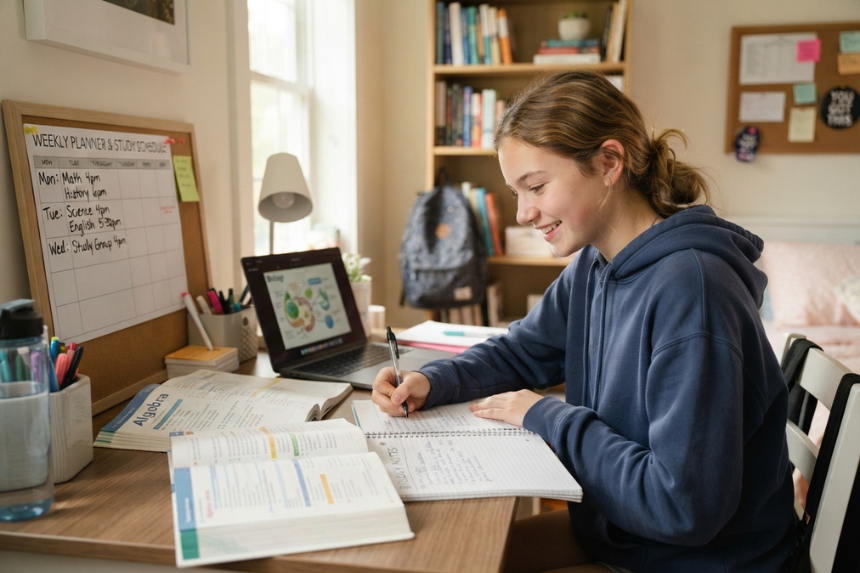
Teenagers face a steady stream of decisions each day: which assignment to start, when to study, whether to check a notification, and how to fit schoolwork around friends, activities, and family responsibilities. A structured school day gives those decisions a useful framework. Families exploring different learning environments, including high schools with JROTC programs, may notice that routines, accountability, leadership opportunities, and planned activities can help students practice time management.
Structure does not mean controlling every minute or expecting perfection. It means creating dependable patterns that make the next helpful action easier to take. When teens know when they will review notes, complete assignments, prepare for tomorrow, and rest, schoolwork can become a routine responsibility rather than a recurring source of conflict.
Why Daily Structure Matters for Teenagers
Long-term deadlines can be difficult because the consequences of delaying work may not feel immediate. A project due next week can seem less urgent than a message from a friend or a game that offers an instant reward. A predictable routine reduces the need to make the same choices from scratch every afternoon.
For example, a student who always checks assignments at the same time after arriving home has a clear starting point. They do not have to wonder whether homework should happen now, later, or after several distractions. That consistency can reduce rushed evenings and make it easier for adults to offer support without repeated reminders.
A routine also creates space for the parts of adolescence that matter beyond academics. Teens need time for relationships, interests, responsibilities, and recovery. The goal is not to pack every hour with productivity. It is important to set priorities so that important tasks have a reliable place in the day.
The Link Between Routine and Study Habits
Study habits become stronger when the behavior has a regular cue. Reviewing assignments after dinner, setting out books at a desk, or placing a planner beside a backpack can signal that it is time to begin. These cues are simple, but they remove friction at the moment students are most likely to procrastinate.
Create a Dedicated Starting Place
A study space does not need to be elaborate. A kitchen table, bedroom desk, library corner, or quiet shared room can work when it has the basics: needed materials, enough light, and fewer distractions. Keeping a short task list nearby helps students see what must be completed and what can wait.
Use Short Sessions Before Work Piles Up
Consider a student with a science quiz on Friday. Instead of waiting until Thursday night, they could spend 25 minutes each evening reviewing vocabulary, checking notes, and answering a few practice questions. The work is more manageable, and the student has several opportunities to identify confusing material before the deadline.
Five Parts of a Helpful School-Day Routine
- A consistent start. Build in enough time to wake up, eat, get ready, and travel without beginning the day in a rush. Preparing clothes and materials the night before can simplify mornings.
- Focused class time. Encourage active listening, brief notes, and questions. Paying attention during instruction makes later homework more efficient because students are not learning everything for the first time at home.
- A planned study block. Set aside a specific period for homework, reading, review, or longer assignments. The time may shift due to practices or family obligations, but it should remain a clear daily expectation.
- Movement and recovery. Include a walk, practice, stretching, time outdoors, or another break to help the student reset before returning to demanding work.
- An evening reset. Check tomorrow’s schedule, pack required materials, charge devices outside the sleeping area when possible, and choose the first task for the next study session.
Sleep Should Be Part of the Plan
A schedule that treats late-night work as normal is not a sustainable study plan. Teens ages 13 to 18 are generally advised to get 8 to 10 hours of sleep in 24 hours, and insufficient sleep is associated with attention, behavior, and academic difficulties. Building around recommended sleep for high school students means setting a realistic stopping point for homework rather than allowing unfinished work to consume the night.
A steady bedtime, a brief wind-down routine, and fewer late-night notifications can protect rest. If homework regularly extends far past bedtime, the answer may be to adjust the workload plan, seek clarification from teachers, or break larger assignments into earlier steps. More hours awake do not automatically mean more effective learning.
How Physical Activity Can Support Focus
Movement can be a practical transition between school and homework. A student may return from class mentally tired, but a walk, team practice, bike ride, or short workout can provide a change of pace before sitting down to study. Organized sports can be valuable, but students do not need to join a competitive team to make activity part of a routine.
Federal guidance recommends that children and adolescents ages 6 through 17 get at least 60 minutes of moderate-to-vigorous physical activity daily. Families can work toward that goal through activities a teen actually enjoys, such as walking with friends, dancing, pickup games, martial arts, running, or helping with active chores.
Phones, Notifications, and Lost Attention
Phone use becomes a problem during study time when checking one notification turns into repeated interruptions. A practical boundary can be more effective than an unrealistic ban. Students might put the phone across the room, turn on focus mode, silence nonessential alerts, or use a timer for one uninterrupted work block.
School technology still has a place in research, assignments, calendars, and communication. The aim is not to remove every screen. It is to help teens distinguish between tools that support their work and habits that repeatedly pull attention away from it.
Structure Should Include Choice
Teens are more likely to build self-management when they have meaningful input. A family can require a daily study block while allowing the student to choose whether it happens before or after dinner. They can require review before a test while allowing notes to be organized digitally, by hand, or with flash cards.
These limited choices preserve the routine while helping students learn how they work best. Older students especially need opportunities to make plans, notice what fails, and revise their approach. That practice supports the independence they will need in college, at work, in training programs, and in adult life.
A Simple Five-Step Study Routine
- List: Write down assignments, assessments, and upcoming deadlines.
- Sort: Identify what is urgent, what will take the longest, and what can be completed later.
- Start small: Choose one task and work for 20 to 30 focused minutes.
- Check: Review the work, correct clear errors, and note questions for a teacher or classmate.
- Prepare: Pack materials and identify the first task for the next session.
What Parents and Educators Should Watch For
Look for steady progress, not a flawless schedule. A routine may need to be adjusted during exams, sports seasons, illness, family changes, or heavier course loads. Ongoing exhaustion, withdrawal, unusually high frustration, or persistent difficulty completing basic work may signal that the plan is too demanding or that a student needs additional support.
Closing Perspective
Strong study habits usually grow through small actions repeated over time. A well-designed school day can give teens a dependable framework for learning, but it should also leave room for sleep, movement, friendships, interests, and growing independence. The best routine is not the strictest one. It is the one a student can use consistently and adapt as life changes.