
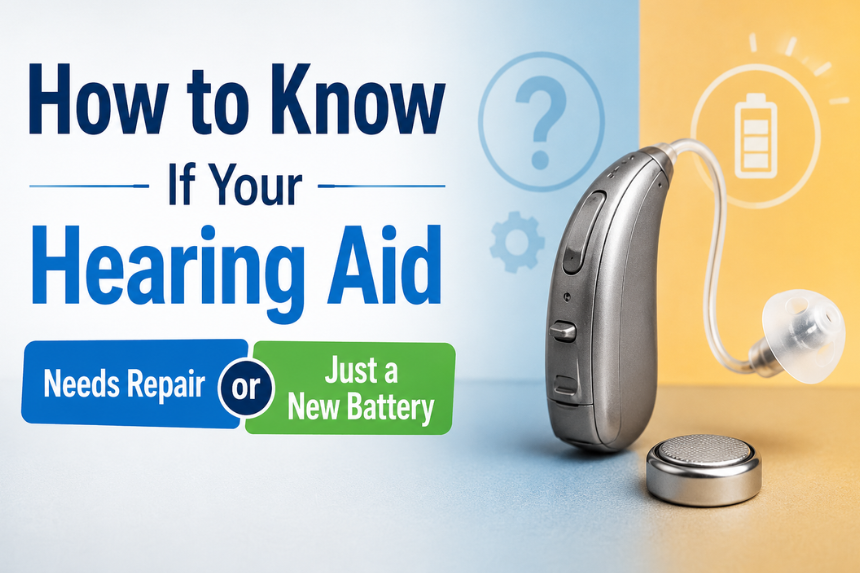
When a hearing aid stops working properly, it can be frustrating in a very specific way. It’s not just about missing sound—it’s about missing conversations, instructions, and little everyday moments that quietly keep life running smoothly. A phone call where you keep asking “sorry, can you repeat that?” A meeting where you’re guessing half the discussion. Or a TV volume that suddenly seems useless no matter how high you turn it.
The tricky part is that hearing aids are small, complex devices. When something goes wrong, it doesn’t always mean something is broken. Sometimes it’s just a simple battery issue. Other times, it needs proper repair or servicing. Knowing the difference can save you time, money, and unnecessary stress.
Let’s break it down in a way that feels practical and easy to apply in real life.
First, rule out the simple fix: the battery
In many cases, the problem starts—and ends—with the battery. Hearing aid batteries are tiny, and they don’t always give obvious warning signs before they die. One moment everything is fine, and the next, sound fades or disappears completely.
A common real-world example: someone is at a café talking with friends. Everything is clear at first, but halfway through the conversation, voices start sounding distant or muffled. By the time they get home, the hearing aid seems “dead.” In many cases, that’s just a drained battery, not a device failure.
Battery-related issues often show up as:
- Sudden loss of sound in one or both devices
- Sound becoming weak or fading in and out
- The hearing aid working again after opening and closing the battery door
- Intermittent performance that seems random
Here’s something people often miss: even if a battery is “new,” it doesn’t guarantee it’s fully charged or properly seated. Moisture, dirt, or even slight misalignment can prevent good contact.
In industries like aviation or emergency services, technicians follow a basic rule before diagnosing any equipment failure: check the power source first. It’s the simplest point of failure—and the most common. Hearing aids are no different.
A quick test you can try is swapping in a fresh battery and waiting a minute or two before reinserting the device. If everything returns to normal, you’ve likely solved the issue.
But if the problem continues even after multiple battery changes, it’s time to look deeper.
When it’s not the battery: signs of a real repair issue
If changing the battery doesn’t fix the problem, the hearing aid may need servicing or repair. This doesn’t necessarily mean something serious is wrong—it could be wear and tear, moisture buildup, or blocked components.
Hearing aids live a tough life. Think about where they go: warm skin, humidity, sweat, dust, and constant handling. Over time, even small issues can affect performance.
Here are some signs it’s more than a battery problem:
- Distorted or unclear sound
Voices might sound scratchy, robotic, or “underwater.” This often points to speaker or internal component issues. - Feedback or whistling
That high-pitched squeal you sometimes hear isn’t just annoying—it can indicate wax buildup, a poor fit, or internal malfunction. - Sound cutting in and out
Unlike a dead battery (which usually stops completely), this feels unstable, like the device can’t stay consistent. - No sound even with a new battery
If everything else checks out and there’s still silence, something internal may need attention.
In workplaces like hospitals or construction sites, equipment is regularly checked not only when it fails but also when it starts behaving inconsistently. A small irregularity can signal a bigger issue down the line. Hearing aids benefit from the same approach.
Moisture is another major factor. Even a small amount of humidity from weather, cooking steam, or sweat can slowly affect performance. That’s why some people notice problems after a hot day or long outdoor activity.
The key point is this: battery issues are usually sudden and simple. Repair issues tend to be inconsistent, ongoing, or sound-related.
Real-world examples and what to do next
Let’s bring this into everyday situations so it’s easier to recognize what’s going on.
Imagine someone working in retail. They rely on their hearing aid to talk to customers at the counter. One morning, everything sounds fine, but by lunchtime, voices start fading unless the device is turned up repeatedly. They replace the battery—no change. Later, they notice a faint crackling sound whenever they move their head. That’s no longer a battery issue. That’s a sign something inside the device needs attention.
Or consider someone in an office environment. They’re fine during quiet one-on-one conversations, but in meetings, the hearing aid starts producing occasional distortion. They try a new battery and even clean the device, but the problem continues. This kind of pattern often points to internal microphone or speaker strain.
At this stage, continuing to guess can be more frustrating than helpful. It’s usually better to get a professional check. Even if nothing major is wrong, a simple cleaning or adjustment can make a big difference.
If you’re unsure where your issue sits—battery or repair—there’s a helpful way to move forward without overthinking it. A quick professional assessment can usually identify the problem in minutes. If you want a simple place to start, you can click here for guidance on getting your device checked or serviced properly.
A good rule of thumb is this:
- If changing the battery fixes it → it was likely a power issue
- If the problem keeps returning → it likely needs servicing
- If sound quality changes rather than disappears → it often needs repair or cleaning
Hearing aids are a bit like eyeglasses. A smudge or dust particle can make everything unclear, even if the device itself is fine. But sometimes, the lens does get scratched or damaged—and no amount of cleaning will fix that.
The important thing is not to wait too long. Small issues tend to become bigger over time, especially when moisture or debris is involved. A quick check can often restore performance and prevent more serious wear.
In the end, the difference between a battery problem and a repair issue usually comes down to pattern. Batteries fail suddenly and cleanly. Repair issues show up as inconsistency, distortion, or gradual decline.
Once you know what to listen for, it becomes much easier to act quickly—and get back to normal conversations, work, and daily life without the guesswork.