Getting rid of an old air conditioner is rarely something people look forward to. It’s bulky, heavy, and often sitting in a corner long after it has stopped working properly. Many households and businesses simply delay the problem, not knowing what to do with it or how to dispose of it responsibly.
That’s where modern disposal solutions come in. Today, there are more convenient and environmentally responsible ways to handle old cooling units than simply dumping them or leaving them to rust away. One of the most practical options is a pickup and recycling service designed specifically for air conditioners.
This guide walks you through how it works, why it matters, and how it fits into everyday life in homes, offices, and even industrial settings.
Why Old Air Conditioners Are More Than Just “Junk”
At first glance, a broken air conditioner might seem like just another piece of household waste. But in reality, it’s a mix of valuable materials and potentially harmful components.
Inside most air conditioning units, you’ll find metals like copper and aluminum, both of which can be reused. There are also plastics, wiring, and refrigerants. Refrigerants are the chemicals that make cooling possible, but they need careful handling because they can be harmful to the environment if released improperly.
For example, a small café upgrading its cooling system might replace several wall-mounted units at once. If those units are simply tossed aside, the refrigerants could leak, and valuable metals would go to waste. On the other hand, proper recycling allows those materials to be recovered and reused in manufacturing new products.
Even in homes, the same principle applies. A family replacing an old bedroom air conditioner may not realize that what they’re discarding still has usable parts that can be recovered instead of buried in a landfill.
What Happens During Pickup and Recycling
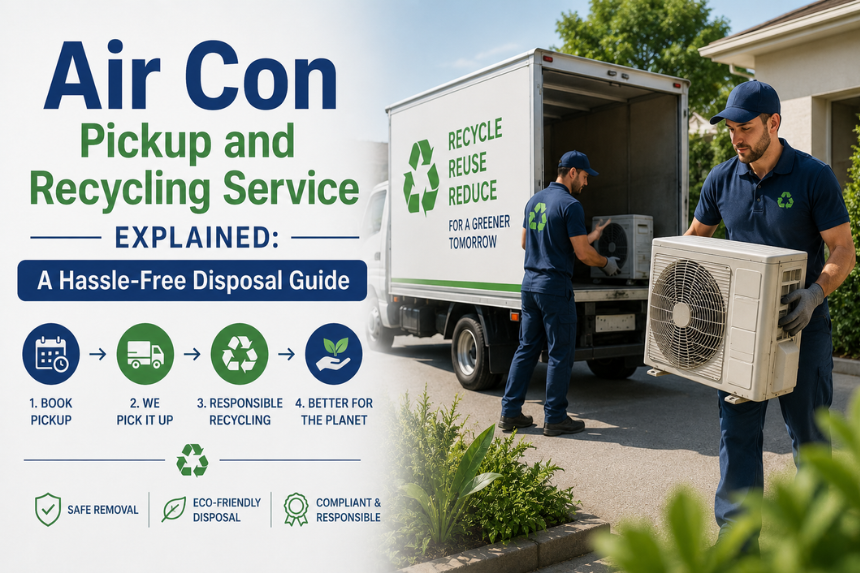
The process behind air conditioner pickup and recycling is more structured than most people expect. It typically starts with scheduling a collection, where the unit is safely removed from your home, office, or facility.
Once collected, the unit is transported to a processing facility. There, trained technicians carefully dismantle it. This step is important because different materials must be separated properly.
Metals like copper and aluminum are extracted and sent for smelting, where they are melted down and reused in manufacturing. Plastics are sorted and processed into reusable forms. Refrigerants are recovered using specialized equipment to prevent them from escaping into the air.
Think of it like recycling a smartphone on a much larger scale. Just as a phone contains valuable metals and components, so does an air conditioner—but on a heavier and more industrial level.
In commercial buildings, like shopping malls or hotels, this process becomes even more important. These spaces often replace multiple large HVAC systems at once, and proper recycling ensures that disposal does not become an environmental burden.
The best part is that modern services aim to make this process as simple as possible for the user. Instead of worrying about transportation or disassembly, everything is handled from pickup to final processing.
Real-World Benefits in Homes, Offices, and Industry
The impact of responsible air conditioner recycling becomes clearer when you look at how it fits into everyday life.
In residential settings, homeowners often upgrade their units for better energy efficiency. Instead of letting the old unit sit unused in storage or attempting to dispose of it themselves, they can have it picked up and processed safely. This is especially helpful in apartments or tight urban spaces where storage is limited.
In office environments, facility managers regularly deal with equipment upgrades. For example, a small coworking space replacing outdated cooling systems can quickly end up with multiple old units. Using a structured pickup service avoids disruption and ensures compliance with environmental guidelines.
Industrial and construction projects also benefit significantly. During renovations or building upgrades, large-scale air conditioning systems are often removed. Proper recycling ensures compliance with environmental standards while also recovering valuable materials that can be reused in production supply chains.
Even hospitality businesses, like hotels or resorts, rely heavily on such services. With hundreds of rooms to manage, replacing cooling systems is a regular occurrence. Efficient disposal becomes part of maintaining smooth operations without environmental risk.
At this point, many people discover that using an air con recycling service removes a major logistical headache. Instead of figuring out how to transport heavy equipment or where to dispose of it, the entire process is handled professionally, from collection to responsible recycling.
How to Arrange a Hassle-Free Disposal
Getting started with proper air conditioner disposal is usually straightforward. Most services only require basic details such as your location, the type of unit, and a preferred pickup time. Once scheduled, the team handles the rest.
Before pickup, it helps to make the unit accessible—such as clearing a path or ensuring it is safely disconnected. In most cases, you don’t need to dismantle anything yourself, which reduces both risk and effort.
One of the biggest advantages is convenience. Instead of dealing with heavy lifting or searching for disposal facilities, everything is coordinated in one simple process. This is especially useful for people living in high-rise buildings or businesses operating on tight schedules.
Another benefit is peace of mind. Knowing that the unit will be handled responsibly means you don’t have to worry about environmental harm or improper disposal. It also helps support recycling systems that reduce waste and recover valuable materials for future use.
In many cases, people are surprised by how seamless the experience feels. What initially seems like a complicated task turns into a scheduled visit and quick removal, leaving the space clean and clutter-free.
For anyone upgrading cooling systems or clearing out old equipment, using a structured pickup option makes the entire process significantly easier while contributing to more sustainable waste management practices.
Old appliances don’t have to become long-term clutter or environmental problems. With the right approach, they can be safely removed, broken down, and turned into reusable materials that support new production. It’s a simple shift in thinking—from “throwing away” to “recovering and reusing”—that makes a meaningful difference in both homes and industries.