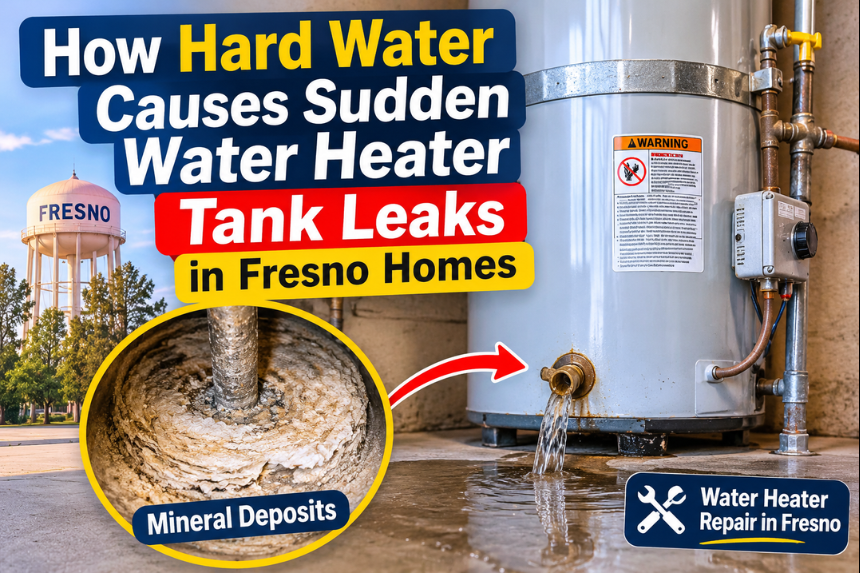
A Fresno homeowner may discover a pool of water forming beneath their water heater after years of trouble-free operation. This sudden leak is rarely a coincidence. In regions like Fresno, where municipal water sources have high mineral content, hard water deposits silently accumulate inside water heater tanks. Over time, these deposits create conditions that can result in a tank breach, leaving homeowners in urgent need of a repair service. Understanding how the minerals in local water interact with tank materials explains why what seems like a sudden failure is actually the result of a gradual, predictable process. Addressing hard water tank leaks begins with recognizing the underlying chemistry and mechanical stress at play in every affected home.
Fresno Water Quality and Mineral Buildup Risks
Tap water in Fresno is known for its elevated levels of minerals, especially calcium and magnesium. These minerals are what define “hard water.” When water is heated inside a tank, these minerals come out of solution, forming solid deposits on the tank’s inner surfaces and heating elements. Residents often notice white, chalky buildup around faucets or on glassware—a clear indicator of the same process happening inside their water heaters.
Over time, these mineral deposits, sometimes called limescale, reduce the efficiency of the heating process and form a thick layer at the bottom of the tank. This buildup is a direct result of the local water supply’s composition. As explained in hard water effects on household appliances, the hotter the water, the more rapidly these deposits form, intensifying the risk of damage over months and years.
The risk is not merely cosmetic. Thick mineral layers create hidden stress points and can even accelerate the breakdown of metal components, setting the stage for leaks that seem to occur out of nowhere.
Sediment Accumulation and Tank Corrosion Processes
As sediment from hard water settles at the bottom of the tank, it acts as an insulating barrier between the burner or heating element and the water. This insulation forces the system to work harder, raising the metal temperature at the tank base far above what designers intended. The result is localized overheating that weakens the steel over time.
Compounding this problem, sediment traps water against the tank’s internal surfaces. This trapped moisture, combined with constant heat, accelerates corrosion—a chemical reaction that eats away at the protective lining of the tank and exposes the underlying metal to rust. According to corrosion in hot water tanks, the presence of minerals not only speeds up rusting but can also cause the tank’s sacrificial anode rod to dissolve faster, reducing the tank’s lifespan.
Ultimately, the combined effects of sediment insulation and corrosion can create tiny pinholes or cracks in the tank, leading to the sudden leaks that require urgent Water Heater Repair in Fresno homes.
Warning Signs of Impending Tank Failure
Hard water tank leaks rarely appear without warning, but the early signals are easy to overlook. One of the first signs is a subtle popping or rumbling sound from the water heater. These noises indicate that water is trapped under layers of mineral sediment, boiling and causing mini-explosions against the tank floor.
Another telltale sign is rusty or discolored hot water coming from taps, a signal that corrosion inside the tank is worsening. Homeowners may also notice that their water heater’s performance drops—hot water runs out more quickly, or it takes longer to reheat. Visible moisture or rust around the tank’s base suggests leaks may already be forming beneath the insulation.
Ignoring these symptoms increases the risk of a sudden tank rupture. Recognizing these early warning signs allows for timely inspection and intervention before a full replacement is needed.
Professional Water Heater Repair Solutions in Fresno
Addressing hard water tank leaks requires expertise and the right tools. For Fresno residents, the repair process often begins with draining the tank to remove sediment buildup, inspecting for corrosion, and checking the condition of the anode rod. If leaks or severe corrosion are found, a targeted repair or tank replacement may be necessary. Homeowners searching for Water Heater Repair in Fresno can expect local professionals to assess the tank’s integrity, flush out mineral deposits, and recommend steps to extend the life of the new or repaired system.
Many technicians also advise installing a water softener to reduce future mineral buildup, especially in high-mineral areas like Fresno. While periodic flushing helps, only reducing the hardness of the incoming water can fully address the root cause. Regular inspection and maintenance, performed by qualified repair services, help prevent recurrence of the same issues.
Choosing a repair approach that fits the severity of the problem protects both the household budget and the safety of the home’s hot water system.
Conclusion
Scheduling an annual inspection and tank flush is the most effective way to minimize the risk of hard water tank leaks in Fresno. Homeowners noticing unusual noises, rust, or reduced hot water should act promptly to avoid costly repairs or sudden water damage.