
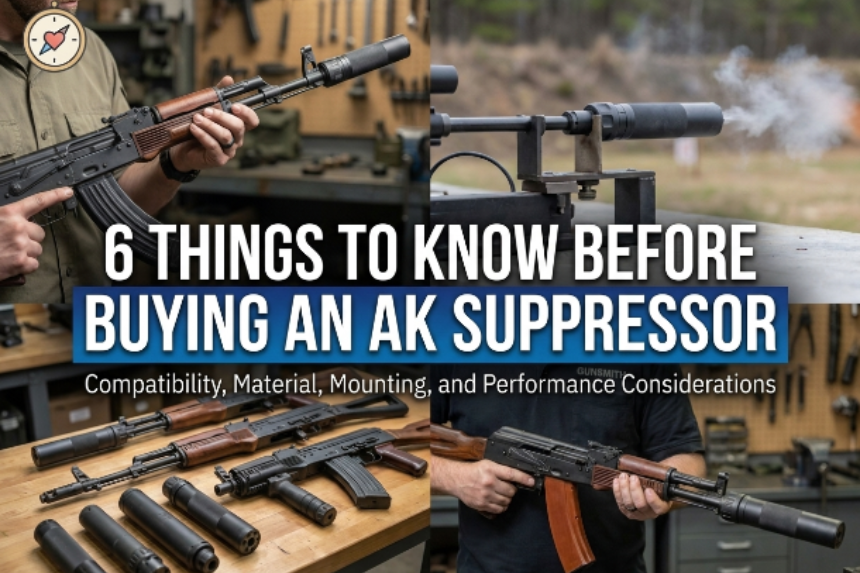
AK-pattern rifles differ in thread patterns, front-end configurations, calibers, and operating characteristics. Therefore, buyers need to examine more than appearance or general caliber compatibility before selecting sound-control equipment. Mounting security, pressure management, construction, dimensions, and accessory support can all influence the final setup. Verified manufacturer specifications offer the clearest basis for comparing available options. The following six points explain what buyers should review before completing a purchase.
1. Select a Design Intended for AK-Pattern Rifles
An ak suppressor should account for the distinct layout and operating characteristics of Kalashnikov-style firearms. A platform-specific design can provide a more suitable starting point than equipment developed mainly for another rifle family. Buyers should confirm that the manufacturer identifies the unit for use with AK-pattern firearms.
Some dedicated designs support standard rifles, short-barreled configurations, and full-auto use within their published limits. Such information helps buyers determine whether the equipment matches their intended firing schedule. Official specifications should always guide the final selection.
2. Review the Thread Pattern and Locking Method
AK variants can use different muzzle thread dimensions, so buyers should identify the exact pattern on their rifle. Cartridge type alone does not confirm thread compatibility. The correct thread insert, collar, or adapter must match the firearm’s muzzle arrangement.
Certain AK-focused mounting systems work with the existing front sight block retaining pin. This setup helps keep the attached unit secure under repeated use. Buyers should confirm which mounting components come with the suppressor and which require a separate purchase.
3. Compare Sound Control With Backpressure
Muzzle sound represents one part of suppressor performance, yet pressure management also affects the shooting experience. Buyers should look for published information about both sound control and backpressure. A balanced design can reduce muzzle noise while limiting additional pressure within the rifle’s operating system.
AK-pattern firearms can differ in gas-system behavior, so platform-focused engineering deserves attention. Manufacturer documentation may explain how the internal design addresses pressure without requiring special tuning. This information gives buyers a stronger comparison point than appearance alone.
4. Confirm Caliber and Energy Ratings
Caliber compatibility requires more than checking the bore diameter. Buyers should also review the stated energy rating and approved cartridge range. A .30-caliber bore may support several rifle cartridges, but each load must remain within the manufacturer’s published limits.
Some heavy-duty models carry ratings up to .300 RUM and 4,200 foot-pounds of energy. Such specifications provide measurable boundaries for host and ammunition selection. Buyers should compare these limits with their firearm before completing the purchase.
5. Examine Materials, Dimensions, and Weight
Construction materials indicate how a suppressor may suit demanding use. Cobalt alloy baffles, a welded stainless steel core, and a stainless steel tube can support a durable internal structure. A full-auto rating may also help describe the intended workload of the unit.
Before buying an ak suppressor, owners should review its complete mounted size and mass. Some AK-specific models measure about 7.4 inches long, with weight varying from approximately 19.8 to 24.4 ounces according to the mount. These measurements help buyers anticipate changes in front-end balance and overall handling.
6. Check Available Mounts and Replaceable Components
Accessory support can expand compatibility with different AK variants and other approved hosts. Available components may include thread inserts, collars, springs, dedicated tools, front caps, and mounting adapters. Buyers should identify the exact parts required for their intended configuration.
A removable front cap may also provide access to compatible cap options listed by the manufacturer. Adapter availability can support additional direct-thread or standardized mounting arrangements. Reviewing the complete accessory chart before purchase helps prevent missing components and fitment delays.
A suitable AK suppression setup depends on platform compatibility, secure attachment, published cartridge limits, pressure management, and durable construction. Buyers should also consider the complete mounted dimensions and required accessories before selecting a configuration. Careful review of official specifications supports a better-informed and more dependable purchase.