A safari to Kenya involves more moving parts than most travelers expect: park permits, seasonal migration timing, malaria prophylaxis, domestic flights between camps, and lodges that book out a year in advance during peak months. Getting the pieces right is the difference between a trip that flows smoothly and one spent stuck in logistics. Here’s how to build an itinerary that actually works.
Decide When You’re Going Before Anything Else
Kenya’s safari calendar revolves largely around the wildebeest migration, but the country rewards visitors in almost any month. The dry seasons, from late June through October and again in January and February, bring the best game viewing because animals cluster around rivers and waterholes. July through September is peak migration season in the Maasai Mara, when herds cross the Mara River in dramatic, chaotic surges.
The shoulder months of November and March offer thinner crowds and lower prices, plus lush green scenery from the short rains. April and May bring heavier rain and some camps close entirely, so this stretch works better for budget travelers willing to trade guaranteed sightings for quiet trails and steep discounts.
Choose Your Parks Based on What You Actually Want to See
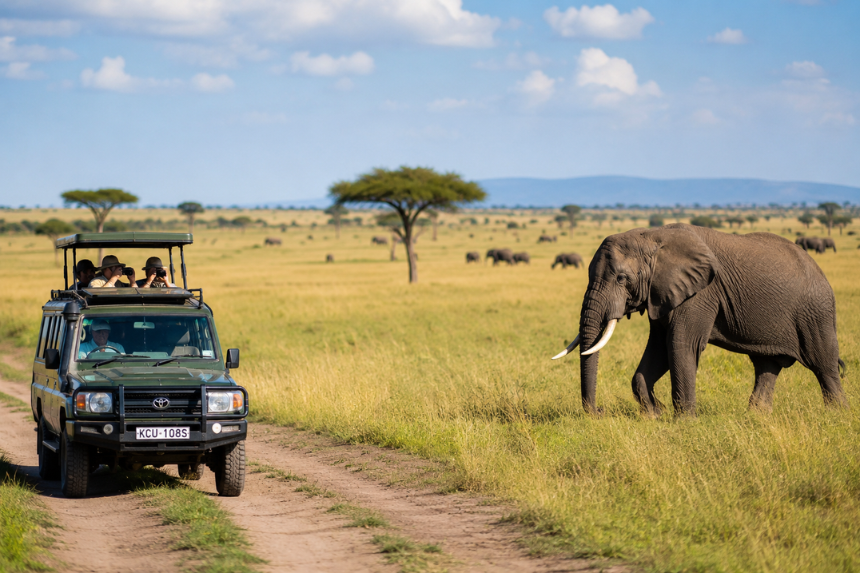
The Maasai Mara gets the spotlight, and deservedly so, but it’s not the only option. Amboseli delivers close-up elephant herds against the backdrop of Kilimanjaro, and it’s a strong pick for photography-focused trips. Lake Nakuru and Lake Naivasha specialize in birdlife, including flamingos in the right season, along with rhino sightings in protected sanctuaries.
Samburu, in the arid north, hosts species you won’t find further south, like the reticulated giraffe and Grevy’s zebra, and tends to have far fewer vehicles per sighting. Tsavo East and West, Kenya’s largest parks combined, offer a wilder, less-trafficked feel with red-dust elephants and volcanic landscapes. Picking two or three parks that complement each other, rather than trying to cover them all, usually makes for a better trip than a rushed circuit.
Understand the Difference Between Lodges, Tented Camps, and Mobile Camps
Permanent lodges offer solid infrastructure, pools, and reliable electricity, and they suit travelers who want comfort without giving up much of the safari feel. Tented camps, especially the luxury variety in the Mara or Mara conservancies, blend canvas walls with proper beds, en-suite bathrooms, and full service, often at a similar price point to lodges.
Mobile camps move with the migration or the season and give a more immersive, rustic experience, generally at a lower cost but with fewer amenities. Private conservancies bordering the main parks, such as Mara North or Naboisho, charge a conservancy fee but cap vehicle numbers, which means fewer crowds at sightings and the option for night drives and walking safaris that aren’t allowed inside the national reserves themselves.
Work Out Logistics: Flights, Transfers, and Timing
Flying between regions saves enormous amounts of time compared to driving, especially between Nairobi and northern parks like Samburu, where road transfers can take six or more hours. Small charter planes connect most major parks and lodges have their own airstrips, so a typical multi-park itinerary might include two or three short flights of 30 to 90 minutes each.
Driving safaris work well for shorter distances, like Nairobi to the Mara (about five to six hours by road) or the well-connected Rift Valley lakes circuit. Building in a buffer day in Nairobi at the start or end of the trip protects against delayed international flights and gives time to visit the Giraffe Centre or the Karen Blixen Museum if there’s room in the schedule.
Budget Realistically for the Full Trip
Costs vary enormously depending on camp category, season, and number of parks visited. A mid-range week-long trip covering two parks with decent tented camps typically runs between $3,000 and $5,000 per person, including domestic flights and park fees, while ultra-luxury camps in the Mara can push a single night’s rate above $1,000 per person.
Many travelers find that working with an operator who packages accommodations, transfers, park fees, and guiding together simplifies both the planning and the budgeting. Well-structured Kenya safari packages often cost less than booking each component separately, since operators negotiate rates directly with camps and airlines, and they take on the logistics of connecting multiple parks into one coherent route.
Pack and Prepare With the Specifics in Mind
Neutral-colored clothing (khaki, olive, tan) works best for game drives, and a warm layer is essential for early morning departures, which often start before sunrise when temperatures can dip into the 50s Fahrenheit even near the equator. Malaria prophylaxis is recommended for most safari regions, and a yellow fever vaccination certificate may be required depending on prior travel history.
Binoculars matter more than most first-time visitors expect, and a lens in the 200-400mm range makes a real difference for photography without needing professional gear.
Final Planning Takeaway
The strongest Kenya safaris are built backward from a clear priority: whether that’s witnessing the river crossings, photographing elephants against Kilimanjaro, or avoiding crowds entirely. Pick that priority first, then let it guide the timing, park selection, and camp style, rather than trying to force everything into one trip. A focused itinerary with two or three well-matched parks almost always beats a rushed tour trying to hit five.