
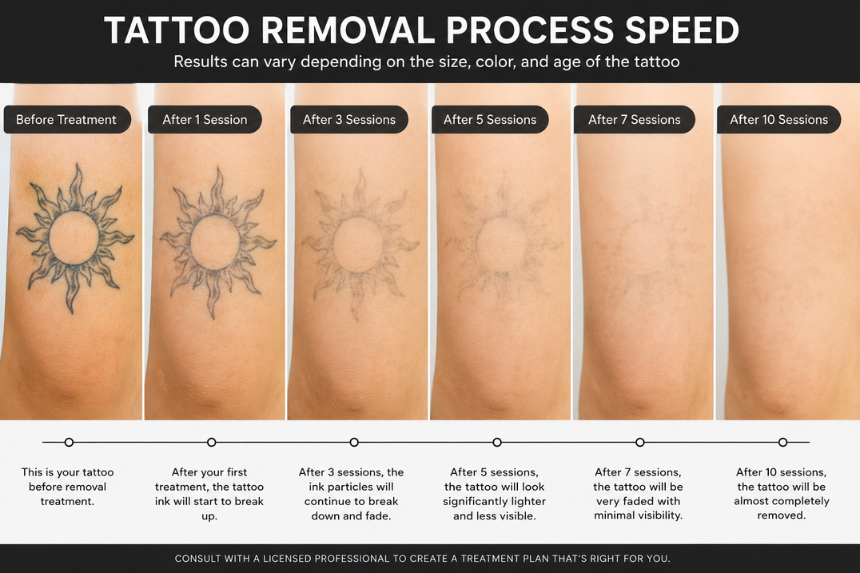
Tattoo removal is not a one-and-done procedure. It typically takes anywhere from six to twelve sessions, spaced six to eight weeks apart, which means the whole process can stretch past a year for darker or denser ink. That timeline frustrates a lot of people who assumed a few laser treatments would erase the tattoo quickly. The good news is that several factors within your control can meaningfully shorten that timeline.
Understand Why Removal Takes So Long
Laser tattoo removal works by breaking ink particles into smaller fragments that the lymphatic system can carry away over time. This is a biological process, not just a technical one, and the body needs recovery time between sessions to clear out fragmented pigment. Rushing sessions too close together doesn’t speed things up; it just increases the risk of scarring and incomplete fading.
The spacing between appointments exists because skin needs to heal and the immune system needs weeks to flush out treated ink. Pushing sessions closer than six weeks apart can backfire, causing tissue damage without actually removing more pigment. So the real path to faster results lies in optimizing everything that happens between sessions, not compressing the schedule itself.
Choose an Experienced Provider With the Right Equipment
Not all lasers are created equal, and neither are the technicians operating them. Picosecond lasers, such as the PicoSure or PicoWay, shatter ink particles more efficiently than older Q-switched models, often cutting the total number of sessions needed by a noticeable margin. A provider using outdated equipment may need twice as many treatments to achieve the same fading.
Experience matters just as much as the machine. A technician who understands how to adjust settings based on ink color, density, and skin tone can maximize each session’s effectiveness while minimizing damage that would otherwise slow healing. For anyone researching options locally, professional laser tattoo removal Hamilton clinics that use updated picosecond technology tend to deliver faster, more consistent fading than facilities relying on older devices.
Take Care of Your Skin Between Sessions
What happens after each appointment matters more than most people realize. Keeping the treated area clean and moisturized supports faster healing, which in turn allows the next session to proceed on schedule without delays caused by irritated or damaged skin. Fragrance-free lotion applied twice daily for the first week after treatment helps the skin recover without added irritation.
Sun exposure is one of the biggest setbacks in the removal process. UV rays can cause hyperpigmentation on treated skin, and providers often need to delay sessions until that discoloration resolves. Covering the area with clothing or a broad-spectrum SPF 30 or higher whenever it’s exposed keeps the schedule on track.
Support Your Body’s Natural Clearing Process
Since the lymphatic system does the heavy lifting of clearing ink particles, anything that supports circulation and lymphatic drainage can help. Staying hydrated, drinking at least eight glasses of water a day, gives the body the fluid it needs to flush out fragmented ink more efficiently. Regular light exercise, like walking or swimming, also promotes circulation without stressing healing skin.
Some clinics recommend lymphatic massage in the days following a session, though this should only be done once the skin has fully healed from the treatment, usually after the first week. Avoiding alcohol and smoking in the days surrounding a session can also help, since both interfere with the body’s ability to repair tissue and process cellular waste.
Stick to the Recommended Schedule Without Skipping Appointments
It sounds obvious, but consistency makes a bigger difference than most people expect. Missing appointments or spacing them out longer than recommended, say, waiting three months instead of six to eight weeks, slows overall progress because the skin sits in a holding pattern rather than moving forward. Treat the schedule like a commitment, the same way someone might approach physical therapy after an injury.
Set calendar reminders and book the next appointment before leaving each session. Clinics often have waitlists, and last-minute scheduling can push a treatment back by several weeks, adding unnecessary time to the overall process.
Consider Combination Treatments
Some providers now pair laser sessions with other treatments, such as saline-based tattoo removal or dermabrasion, particularly for stubborn colors like green and light blue that resist standard laser wavelengths. Combining approaches under professional supervision can address ink that would otherwise require several additional laser sessions alone. This isn’t right for every tattoo, but it’s worth asking a provider whether a hybrid approach fits a specific case.
The Real Takeaway
Speeding up tattoo removal isn’t about finding a shortcut around the biology involved; it’s about eliminating the small delays that add unnecessary months to the process. Choosing a provider with modern equipment, protecting treated skin from the sun, supporting the lymphatic system, and never skipping a scheduled session can shave real time off the total timeline. Approach the process as a partnership between the technology used and the daily habits maintained between appointments, and the fading will happen as efficiently as the body allows.