Most dog parents will deal with diarrhea at some point. The first time it happens, it feels like a small crisis. By the third or fourth episode over a few years, it tends to become familiar territory. A weird smell, a hurried trip outside, a few minutes of worry about whether this is the start of something bigger.
For the most part, it isn’t. Many mild cases improve within a day or two with simple at-home care. The harder part is knowing which ones are mild, which ones need attention, and what a reasonable first response looks like before the situation either improves or warrants a call to the vet.
That tracking starts with understanding what’s behind the loose stool in the first place. Diarrhea isn’t a condition by itself. It’s a symptom, and the list of possible triggers stretches from “ate something off the sidewalk this morning” to “long-standing food sensitivity that finally tipped over.” Knowing the causes of diarrhea in dogs and fixes that may help at home makes those moments feel a lot less alarming when they show up.
Acute vs. Chronic: Why the Difference Matters
Acute diarrhea comes on suddenly, lasts a day or two, and usually has a clear culprit. Chronic diarrhea sticks around for more than two or three weeks, or it comes and goes in a recurring pattern. The two have very different starting points clinically, and treating them the same way wastes time on both ends.
A single day of soft stool after a treat change is acute. Two months of intermittent loose stool, regardless of what’s in the food bowl, is chronic. The first often improves with time and supportive care. The second usually needs a veterinarian to help map out what’s going on underneath.
Common Causes, Roughly Ranked by How Often They Show Up
A few causes account for the bulk of episodes dog parents see at home:
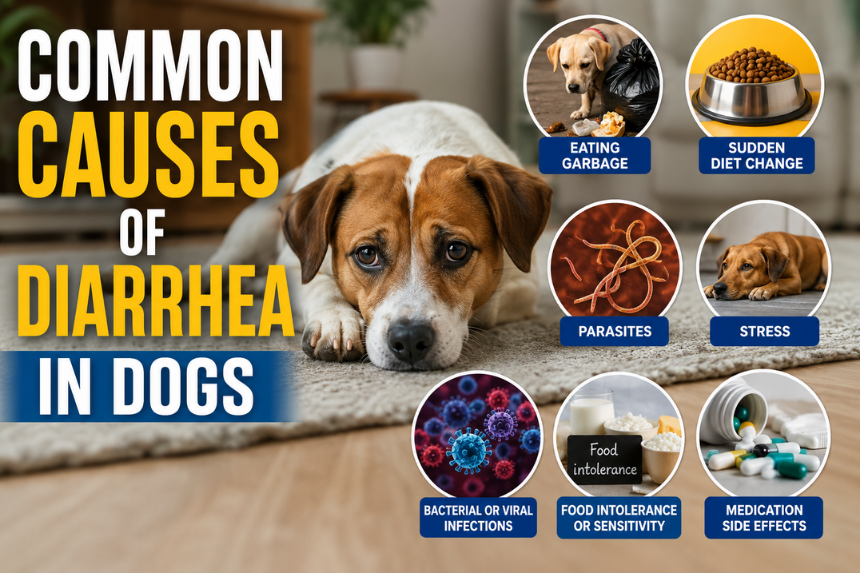
- Dietary indiscretion: The single most common trigger. Trash, scavenged food during a walk, a guest who slipped a piece of pizza, and a stolen sandwich off the counter. Dogs are good at this, and the canine digestive system doesn’t always tolerate unexpected foods very well.
- A sudden food change: Switching kibble brands or formulas without a gradual transition often produces a few days of loose stool. Most digestive systems need about a week of mixed-old-and-new feeding to adjust.
- Stress: Boarding, moving, a new baby in the house, and thunderstorm season. Stress changes gut motility in dogs the same way it can in people. Some pups are more sensitive than others.
- Parasites. Giardia, roundworms, hookworms, and others can cause persistent or recurring diarrhea, especially in puppies or dogs that drink from outdoor water sources. Fecal testing at the vet is how this gets confirmed.
- Bacterial or viral infections: Less common but more serious. Parvovirus, in particular, is a major concern in young or unvaccinated puppies and warrants an immediate vet visit.
- Food intolerance or sensitivity: A particular protein, grain, or ingredient that a dog’s system doesn’t process well. Often shows up as recurring episodes rather than one-time events.
- Medication side effects. Antibiotics are a frequent contributor. Other drugs can affect gut flora too.
- Underlying chronic conditions: Inflammatory bowel disease, pancreatitis, colitis, and similar conditions can present with chronic or intermittent diarrhea. These need veterinary diagnosis and management rather than home guesswork.
The AKC’s guide to dog diarrhea covers many of these in more detail, including which signs warrant urgent attention versus a wait-and-watch approach.
Supportive Care That May Help at Home for Mild, Short-Term Cases
For a healthy adult dog with mild, uncomplicated diarrhea and no other concerning symptoms, a few simple steps tend to help the gut settle on its own:
- Brief food rest: Withholding food for 12 hours (longer for some dogs, and never for puppies without vet guidance) gives the digestive tract a chance to slow down and reset. Water access stays normal, just offered in smaller, frequent amounts rather than large gulps.
- Bland diet for a few days: Plain boiled chicken or lean ground turkey mixed with white rice or boiled potato. The point isn’t long-term nutrition. It’s giving the gut something easy to process while it recovers. Three to five days is usually the window before easing back to regular food.
- Reintroduce regular food gradually: A 50/50 mix of bland and regular food for a day or two, then 75/25, then back to normal. Sudden returns to full meals can restart the loose stool.
- Hydration check: Gently pinch the skin between the shoulder blades. If the skin stays tented or returns slowly, dehydration may be a concern worth discussing with a veterinarian. Skin elasticity varies across breeds, ages, and body conditions, so this is a rough cue rather than a definitive test.
- Consider a probiotic: Probiotics may help support a balanced gut microbiome during recovery and broader digestive-wellness routines. They aren’t a fix for an underlying issue when something serious is going on, but for diet-related or stress-related episodes, they can be one useful piece of general gut-health support. Worth choosing a product formulated for dogs rather than improvising with a human option.
A handful of things that sound helpful but tend to make matters worse: giving human anti-diarrheal medications without veterinary guidance, switching to a new food immediately during an episode, and adding rich treats during recovery on the theory that a sick pup “needs comfort.” The gut needs less to do during these windows, not more.
When to Stop Trying Home Care and Call the Vet
Most mild cases resolve in a day or two. The flags that move a vet visit up in priority:
- Diarrhea lasting more than 48 hours in an adult dog, or more than 12 hours in a puppy
- Blood in the stool, whether bright red or dark and tarry
- Repeated vomiting alongside the diarrhea
- Lethargy, refusal to eat, or visible discomfort
- Signs of dehydration like dry gums, sunken eyes, or skin that doesn’t snap back
- Known exposure to a toxin, foreign object, or new medication
- Any diarrhea in puppies, senior dogs, or pups with existing health conditions
Cornell University’s Riney Canine Health Center has a practical overview of when to worry and when to wait that mirrors what most veterinarians would say in the exam room. Their general guidance: if loose stool lasts more than two days, it’s time to call the vet.
Prevention That Holds Up Over Time
Repeat episodes are often easier to head off than to treat. A few habits that tend to reduce frequency over the long run:
- Slow food transitions: A full week of gradual mixing when changing foods, not a same-day switch.
- Mindful treat additions: Each new treat type counts as a small diet change. Introduce one at a time so the digestive system can adjust, and watch for any patterns of GI upset.
- Garbage and counter management: A surprising portion of acute cases come down to access. A secured trash bin and a clean counter prevent more episodes than any supplement does.
- Regular parasite screening: Annual or semi-annual fecal tests, depending on lifestyle. Outdoor-heavy dogs and pups that drink from puddles or natural water sources benefit from more frequent screening.
- Consistent baseline diet: Dogs whose food and routine stay stable tend to have more predictable digestion. Variety isn’t required for canine nutrition the way it is for humans.
Bottom Line
Diarrhea in dogs is one of the most common reasons for a vet call, though many mild cases improve with supportive care at home. A short episode in an otherwise healthy adult dog often responds to brief rest, a bland diet, and patience. The harder cases are the ones that linger, repeat, or arrive with other warning signs alongside them. Those are the ones that benefit from professional eyes rather than home guesswork.
For dog parents, the most useful thing isn’t memorizing every possible cause. It’s knowing what mild looks like, what concerning looks like, and where the line between the two falls. Most everything else gets sorted out at the vet’s office when it needs to be.