Crawlspaces are easy to ignore.
They’re not exactly part of your day-to-day life. You don’t walk through them, decorate them, or think about them unless something goes wrong. So when someone brings up crawlspace encapsulation, the first reaction is usually, “Do I really need that?”
Fair question.
Especially in humid climates, though, the better question might be: what happens if you don’t?
Because moisture doesn’t just sit quietly under your home doing nothing. It slowly starts affecting things—sometimes in ways you don’t connect back to the crawlspace until much later. Thus, it’s best to act early by calling crawl space encapsulation Virginia Beach experts.
Let’s walk through what actually happens over time.
The Crawlspace Stays Damp… Almost All the Time
In a humid climate, moisture is basically unavoidable. The air outside is already carrying a lot of it, and when that air enters a vented crawlspace, it cools down and releases that moisture.
So even if it hasn’t rained in days, your crawlspace can still feel damp. The ground might feel slightly wet. The air feels heavy. It’s not dramatic—it’s just consistently… moist.
And that consistency is the problem.
Because materials don’t get a chance to dry out properly. They stay in that damp state longer than they should.
Wood Starts to Absorb Moisture
Now take that damp environment and add wood floor joists, beams, and subflooring.
Wood naturally absorbs moisture from the air. When humidity stays high, it doesn’t just absorb a little and move on. It holds onto that moisture.
Over time, that can cause the wood to swell slightly, soften, and become more vulnerable to damage. It’s not something you notice right away, but it’s happening.
And eventually, that slow absorption can lead to structural weakening.
Mold Finds the Perfect Environment
Warm, dark, damp space? That’s basically an invitation for mold.
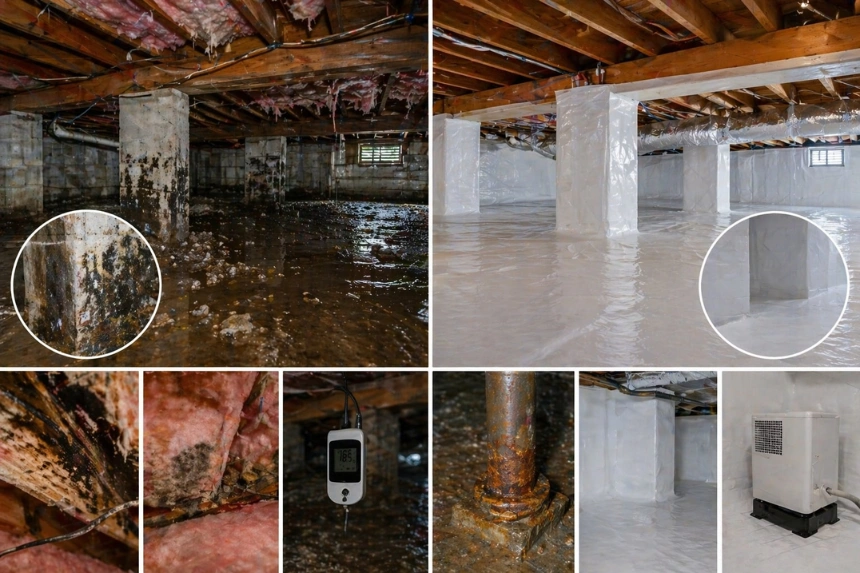
Once moisture levels stay elevated long enough, mold growth becomes more likely. It can spread across wood, insulation, and other materials in the crawlspace.
Here’s the tricky part—mold doesn’t stay confined down there.
Air from the crawlspace moves upward into your home. So those mold spores can travel with it, affecting indoor air quality. That musty smell you sometimes notice? There’s a good chance it started underneath your house.
And no, air fresheners don’t fix that. They just cover it up.
Insulation Starts to Fail
Crawlspace insulation isn’t designed to stay wet.
When moisture builds up, insulation can absorb it, sag, and lose effectiveness. Instead of helping regulate temperature, it becomes heavy, damp, and sometimes even falls out of place.
That means your HVAC system has to work harder to keep your home comfortable. You might notice higher energy bills or rooms that never quite feel the right temperature.
Again, it’s subtle—but it adds up.
Floors Can Begin to Feel Uneven or Soft
As moisture continues affecting the wood underneath your home, structural components can weaken.
This is when homeowners often start noticing changes upstairs. Maybe the floor feels slightly uneven. Maybe there’s a soft spot in one area. Maybe something just feels… off when you walk across a room.
At first, it’s easy to ignore.
But those small changes can be signs that the support system beneath your home isn’t as stable as it should be.
Pests Become More Comfortable
Moist environments attract pests. It’s that simple.
Insects, rodents, and other critters are naturally drawn to damp, sheltered spaces. A crawlspace that isn’t encapsulated can provide exactly what they’re looking for.
Once they settle in, they don’t always stay confined to the crawlspace either.
And dealing with pests on top of moisture issues? That’s not a fun combination.
Small Issues Turn Into Bigger Repairs
This is where things usually get frustrating.
None of these problems feel urgent at first. A little dampness. A slight smell. Maybe some insulation falling down.
But over time, they connect.
Moisture leads to wood weakening. That leads to structural shifts. That leads to cracks, uneven floors, and repairs that are much more involved than they would’ve been earlier.
What could have been a preventative upgrade turns into reactive repair work.
And yeah… that tends to cost more.
What Does Encapsulation Actually Change?
Crawlspace encapsulation services essentially seal the crawlspace off from outside moisture and help control humidity levels inside.
Instead of letting humid air flow freely in and out, it creates a more stable environment—one where materials can stay dry and conditions don’t constantly fluctuate.
It doesn’t mean your crawlspace becomes perfect. But it becomes controlled. Predictable.
And that makes a big difference over time.
Final Thoughts
Not encapsulating your crawlspace in a humid climate doesn’t usually cause immediate problems.
That’s what makes it easy to ignore.
But over time, that constant exposure to moisture starts affecting the structure, the air quality, and even the comfort of your home. And once those effects build up, fixing them becomes more complicated—and more expensive.
Sometimes it’s not about reacting to a problem. It’s about preventing one that’s already quietly developing beneath your feet.
FAQs
It’s not always required, but in humid climates, it’s often recommended. High moisture levels can lead to mold, wood damage, and air quality issues if left unmanaged.
A dehumidifier can help, but without sealing the crawlspace, humid air will continue entering. Encapsulation works by controlling both moisture entry and humidity levels.
Common signs include musty odors, visible mold, damp insulation, high indoor humidity, and uneven floors. These often point to ongoing moisture issues.
It significantly reduces moisture and helps control humidity, but proper installation and maintenance are important for long-term effectiveness.