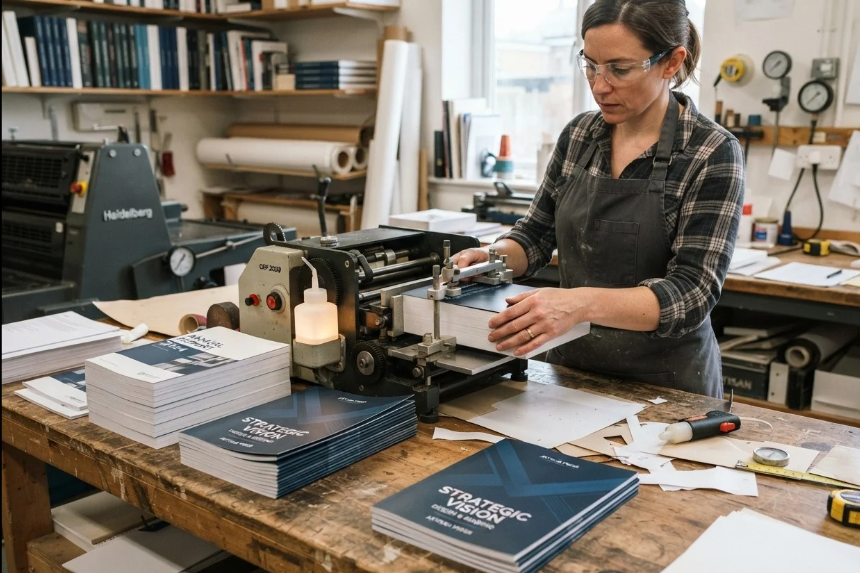
Binding is more than the final production step. It affects how a printed piece opens, feels in the reader’s hands, stores on a shelf, and holds up over time. Whether you are creating a program, catalog, planner, workbook, or novel, selecting the binding early helps avoid design changes later.
For example, printing a perfect bound book requires planning for a square spine, cover wrap, and enough inside margin for comfortable reading. A spiral-bound workbook has different layout needs because punched holes take up space near the binding edge.
Why Binding Should Be Chosen Early
The binding method influences trim size, page arrangement, cover construction, spine width, and safe margins. Changing from saddle stitch to perfect binding after artwork is finished can require a redesigned cover and adjustments to interior pages. Switching to coil or Wire-O can also mean moving text, tabs, charts, or images away from the punched edge.
Different bookbinding methods vary in durability, flexibility, and visual impact, which is why the best option depends on the goals of the project. Decide how readers will interact with the finished piece before committing to paper, layout, and finishing details.
Start With The Project’s Main Purpose
Function should lead the decision. A reader moving through a novel has different needs from a technician using a repair manual or a guest following a ceremony program.
- For reading: Prioritize comfortable page turns, manageable weight, and shelf-friendly storage.
- For writing: Select a format that stays open on a desk without constant pressure on the pages.
- For presentations: Focus on a polished cover, clean edges, and professional handling.
- For long-term storage: Put greater emphasis on cover protection and durable construction.
Compare The Most Common Binding Methods
Saddle Stitching
Saddle-stitched pieces are made from folded sheets secured along the center fold, commonly with staples. This lightweight approach is a practical fit for short programs, newsletters, event booklets, and simple guides. Because pages are created from folded sheets, the final page count generally needs to work with the printer’s required increment. Saddle stitch has no substantial printable spine, so it is less suitable for projects intended to be identified on a shelf.
Perfect Binding
Perfect binding gathers individual pages into a text block, applies adhesive along one edge, and trims the remaining edges for a clean paperback-style finish. It works well for catalogs, reports, magazines, manuals, and books that benefit from a square spine. Standard perfect-bound books do not normally open completely flat, so allow a comfortable inside margin and plan the cover only after the page count and paper stock are confirmed.
Coil And Wire-O Binding
Coil and Wire-O binding use punched holes and a plastic coil or metal wire element to hold pages together. Both are useful for planners, recipe books, classroom materials, workbooks, and manuals because pages can stay open or fold back on themselves. The tradeoff is a less traditional book appearance and no conventional printed spine.
Hardcover And Sewn Binding
Hardcover construction adds rigid cover boards that protect the text block and create a more substantial presentation. Sewn sections can provide added strength for books expected to receive repeated handling. These options can be worthwhile for keepsake books, reference works, premium editions, and projects where durability matters more than the lowest possible unit cost.
Let Page Count Guide The Decision
Page count helps rule out unsuitable methods, but paper thickness matters too. A short booklet may not have enough bulk to justify a glued spine, while a thick publication can become awkward with staples. Ask the printer to review the final page count, paper stock, trim size, and intended binding before files are finalized.
Quick Binding Comparison
- Saddle stitch: Best for short booklets and programs. It is lightweight, but it does not provide a printed spine or fully flat opening.
- Perfect binding: Best for books, reports, and catalogs. It offers a printable spine when the book has enough thickness.
- Coil binding: Best for workbooks and practical guides. It lays flat and folds back easily.
- Wire-O binding: Best for polished manuals and planners. It also lays flat, with a more formal metal finish.
- Hardcover: Best for premium, long-lasting books. Whether it lies flat depends on the text-block construction.
Think About How The Reader Will Handle It
Consider the real setting where the piece will be used. A cookbook may need to remain open on a counter. A training manual may need to lie flat beside a computer. A novel, annual report, or portfolio may be more likely to sit on a shelf, travel in a bag, or be handed to a client. Binding should support those moments rather than fight them.
Understanding the basic process of joining pages with adhesive, thread, wire, or coils makes the practical differences easier to see. A binding style that looks impressive can still be the wrong choice if it prevents readers from using the piece comfortably.
Balance Cost, Quantity, And Durability
The lowest initial price is not always the best value. Compare total budget, quantity, setup requirements, shipping weight, production timing, and expected handling. A short event program may not need premium construction, but a field manual that will be opened daily may justify a more durable format. Consider the cost of replacement as well as the cost of the first print run.
Prepare Artwork For The Chosen Method
- Confirm the final interior page count and trim size.
- Set generous inside margins for glued, sewn, or punched edges.
- Keep essential text and images away from trim lines and binding holes.
- Build the cover around the selected binding style.
- Calculate spine width only after paper stock and page count are settled.
- Check bleed, fonts, images, and color settings before exporting files.
- Review a physical proof when the project has detailed layouts or high handling demands.
Common Mistakes To Avoid
- Choosing a binding based only on appearance.
- Using a non-lay-flat option for a workbook, recipe guide, or training document.
- Designing a cover before confirming the spine width.
- Leaving too little room near the binding edge.
- Assuming heavier paper automatically improves the finished product.
- Waiting until final production to ask about binding limits and turnaround time.
Final Recommendations
Choose saddle stitch for short, lightweight pieces. Choose perfect binding for book-like projects that need a clean spine. Choose coil or Wire-O when hands-free use and flat pages matter most. Choose hardcover or sewn construction when long-term durability and presentation are the priority. The right binding supports the entire project, making it easier to read, use, store, and enjoy.