
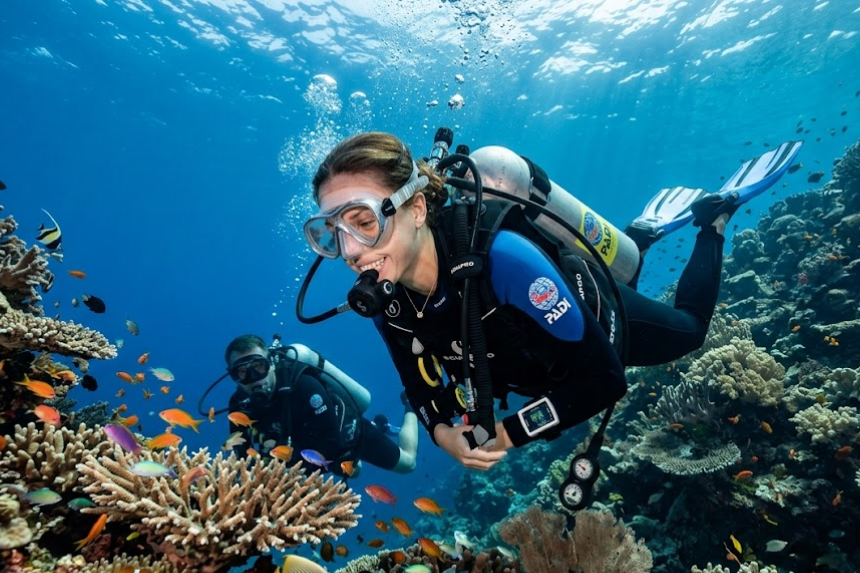
If you’ve spent five minutes researching how to learn scuba diving, you’ve already seen the name PADI everywhere. It’s on dive shop windows, resort brochures, and the certification cards of nearly every recreational diver you’ll meet underwater. But with a quick search revealing a range of opinions from passionate advocates to the occasional skeptic a fair question comes up: is
Let’s get into it honestly.
What exactly is PADI?
PADI stands for the Professional Association of Diving Instructors. Founded in 1966, it has grown into the world’s largest recreational diver training organization, with millions of certifications issued annually and dive centers in virtually every coastal country. When people talk about ‘PADI diving,’ they typically mean the learning pathway starting with the Open Water Diver certification and potentially progressing all the way up to professional levels, including the PADI Divemaster.
The Open Water Diver course is the entry point: it’s a combination of knowledge development (done online through eLearning or in-classroom), confined water skills in a pool, and four open water dives. Upon completion, you’re certified to dive to 18 meters with a buddy, anywhere in the world.
Why PADI Has the Reputation It Does
PADI’s dominance in the market is a double-edged sword. On one hand, it means their certification is universally recognized. Show your PADI card at any dive center from the Maldives to Mexico and they’ll know exactly what you’re qualified to do. The curriculum is standardized, performance-based, and developed with internationally recognized safety standards in mind. Instructors go through rigorous quality management checks.
On the other hand, PADI’s commercial success has earned it criticism in some corners of the dive community. Some experienced divers argue that the course structure is designed to ladder students into additional specialty certifications each requiring its own fee. The nickname ‘Put Another Dollar In’ does the rounds among dive enthusiasts. Is there truth to it? To an extent, yes. PADI’s progression system is modular and monetized. But that doesn’t make the training itself poor quality.
What You Actually Get Out of It
For most beginners, what matters is coming out of a course feeling safe, confident, and genuinely equipped to dive independently. By that standard, PADI delivers. The eLearning format is well-structured and accessible, the confined water sessions build real muscle memory, and the open water dives give you practical experience with an instructor close by.
You also gain something less quantifiable: entry into a global community. PADI-certified divers can dive in over 180 countries. Dive resorts, liveaboard trips, and specialty sites are almost universally oriented around recreational certification levels that PADI essentially defined. This matters enormously when you’re planning your first dive trip abroad.
Should You Go Straight to PADI Divemaster?
For beginners, the answer is almost always: not yet. The PADI Divemaster certification is a professional-level qualification; it’s the gateway to leading and guiding certified divers underwater. It requires significant logged dive experience, Rescue Diver certification, and demonstrated mastery of the fundamentals. If you’re dreaming of working in the dive industry or guiding dives long-term, the Divemaster path is an excellent one. But it’s a goal to work toward, not where you start.
The Verdict for Beginners
Is PADI diving worth it for beginners? Yes with clear eyes. PADI provides a solid, internationally recognized framework for learning to dive safely. It’s flexible (you can do eLearning from home and complete your dives on a tropical vacation), comprehensive, and deeply embedded in the global dive industry. The key is choosing the right instructor and dive center, not just the right brand. At the end of the day, the quality of your training depends far more on the person teaching you than on which certification body issues your card.