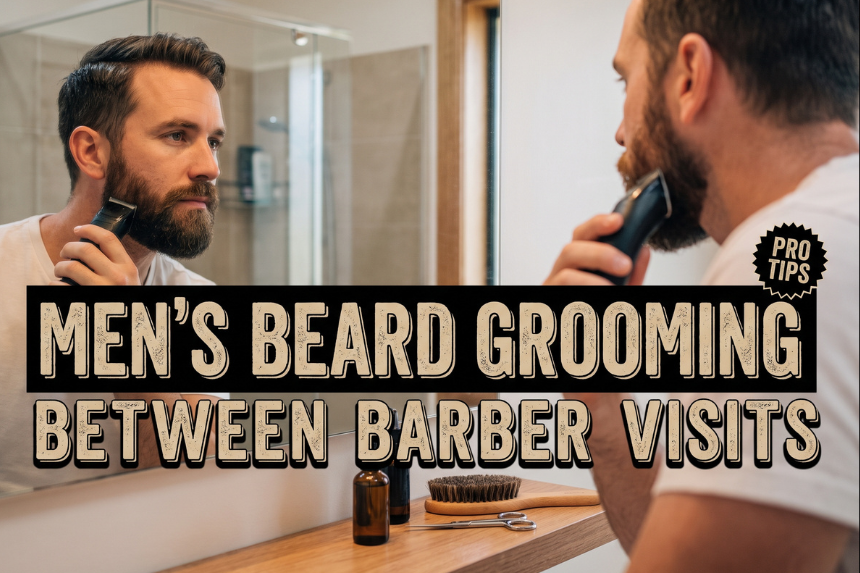
Most bad home trims begin with a tiny decision. One side looks a little wider, so a few hairs come off. The other side now seems heavy, which calls for another pass. Ten minutes later, the beard is shorter but somehow no more balanced. Men’s beard grooming between appointments works best when the goal stays modest. Tidy what has clearly grown outside the existing shape. Leave the shape itself alone. That means dealing with hair over the lip, visible neck stubble, and a handful of strays. It does not mean redrawing the cheeks or moving the neckline because the mirror made one section look uneven.
Men’s beard grooming needs a reference point
A clear starting shape takes much of the guesswork out of home care. After a professional beard and mustache trim in NYC, the lines around the neck, cheeks, jaw, and mouth provide something concrete to follow. As hair grows, those lines soften, though they do not disappear at the same speed. The neck may look untidy while the sides still sit well. The mustache may reach the lip before the beard needs any shortening. Problems appear when each area is treated as a separate project. A beard reads as one shape, so a change near the mouth or jaw affects the entire face.
| A small home job | A shape change |
| Cutting hair that hangs over the lip. | Narrowing the full mustache. |
| Clearing fresh growth below the neckline. | Moving the neckline upward. |
| Removing a few cheek strays. | Lowering both cheek lines. |
| Combing the beard back into place. | Reducing weight on one whole side. |
Check the beard from farther away
A mirror invites close inspection, and close inspection is not always helpful. At a distance of only a few inches, every stray hair looks serious. The overall shape is easier to judge from across the room or in a straightforward phone photo. Lighting matters as well. A ceiling bulb can cast a shadow under one cheek and make that side appear denser. Before trimming, comb the beard as usual, face a window, and take one photo with the head level. If the difference between the sides becomes less obvious in the picture, cutting is unlikely to improve it. Hair direction, rather than excess length, may be creating the effect.
| Problem area | What is visible | What often goes wrong | What to do first |
| Upper lip | Several hairs hang down. | Too much mustache is removed. | Cut only the overhang. |
| Neck | New growth appears below the edge. | The line is raised each week. | Follow the old boundary. |
| Cheeks | A few hairs sit above the line. | The entire line is lowered. | Tweeze or clip the strays. |
| Sides | One section sticks outward. | Length is removed immediately. | Comb and reassess it. |
A home cleanup should feel uneventful
Nothing dramatic should happen during routine maintenance. Use dry facial hair, familiar tools, and the same guard that has worked before. Wet hair stretches and may spring back shorter after cutting. An unfamiliar guard creates another variable at the exact moment when consistency matters. The useful jobs between appointments are limited:
- Comb the beard before evaluating its length.
- Clear hair from the edge of the upper lip.
- Remove isolated growth outside established lines.
- Wash the skin beneath the beard regularly.
- Apply a familiar product sparingly if the hair feels dry.
Once several guards, new lines, or major length changes enter the process, the job has moved beyond upkeep.
Why men’s beard grooming goes off course
Trying to correct growth patterns with length alone is a frequent problem. Hair that points outward appears fuller than hair that lies flat, even when both measure the same. Cutting the outward-growing side may expose more skin without making the beard look even. Pressure on the trimmer causes trouble too. Pressing a guard hard against the face catches some hairs more deeply and can leave a shallow patch. Men’s beard grooming also becomes awkward when the mustache is treated as an unrelated strip of hair. Its width and weight need to make sense beside the beard. A neat but overly narrow mustache can look detached from full sides and a broad chin.
The stopping point matters
Before making another pass, pause and check four things:
- Look at both sides while facing forward, not at an angle.
- Check whether the neckline rises evenly toward each ear.
- Confirm that the mustache clears the lip without becoming narrow.
- Compare the beard’s widest points on both sides of the jaw.
One isolated problem may be easy to clean up. Several uncertain lines are different. They suggest that the original shape has grown out and needs to be established again. More trimming at home can remove useful length before that happens. Good men’s beard grooming includes the judgment to stop while there is still enough beard left to reshape properly.