Dental implants can replace one tooth, several teeth, or a full arch, but successful treatment is about more than the procedure itself. People considering dental implant surgery Rockville, MD should understand how recovery, daily cleaning, food choices, and long-term checkups fit into life after treatment.
Once healing is complete, an implant-supported crown, bridge, or denture can feel stable and natural during conversation and meals. Still, implants need consistent attention. The restoration cannot get a cavity, but the surrounding gums, bone, and nearby natural teeth can develop problems if plaque is allowed to build up.
Why Daily Life Matters After Dental Implant Treatment
Replacing missing teeth may improve chewing, speech, comfort, and confidence, but the transition takes time. There may be temporary restrictions after surgery, especially if extractions, bone grafting, or multiple implants were involved. Even after the final restoration is placed, patients should avoid treating implant teeth as tools for opening packages, biting pens, or cracking hard objects.
Long-term success also depends on the condition of the gums and jawbone around the implant. Regular home care and professional visits help identify irritation early, before it develops into a more serious problem. Individual instructions from the treating dentist or oral surgeon should always take priority over general guidance.
What To Expect During The Healing Period
Mild tenderness, swelling, bruising, and minor bleeding can occur shortly after surgery. Healing is not identical for everyone. The timeline can vary based on overall health, the location and number of implants, bone quality, whether grafting was needed, and the type of temporary restoration used.
During osseointegration, the implant gradually bonds with the surrounding jawbone. This process creates the stable foundation needed for a final crown, bridge, or denture. The healing process for dental implants can take several months, which is why follow-up instructions and activity limits matter even when discomfort improves quickly.
What To Eat After Dental Implant Surgery
Food restrictions should be based on the stage of healing and the instructions provided for the specific procedure. A temporary tooth may look complete, but it may not be designed to handle normal chewing pressure right away.
Early Food Choices
- Choose soft foods that need little chewing, such as yogurt, scrambled eggs, mashed vegetables, oatmeal, soups that are not hot, and smoothies eaten with a spoon.
- Include protein-rich options to support overall nutrition, such as eggs, Greek yogurt, cottage cheese, soft fish, or blended beans.
- Drink plenty of water to help prevent dry mouth and rinse away food debris.
- Use the opposite side of the mouth for chewing when instructed to do so.
Foods To Limit At First
- Avoid hard, sharp, sticky, or crunchy foods, including nuts, chips, popcorn, hard candy, and chewy caramel.
- Skip foods that easily break into small pieces and become trapped near the surgical area.
- Avoid very hot drinks or foods while numbness and swelling are present.
- Follow the clinician’s advice about alcohol, tobacco, vaping, and strenuous activity during recovery.
Patients can usually return to a broader diet gradually, but the right timing depends on healing and the stability of the restoration. Do not test a healing implant by biting forcefully on it just because the area feels better.
How To Clean Dental Implants At Home
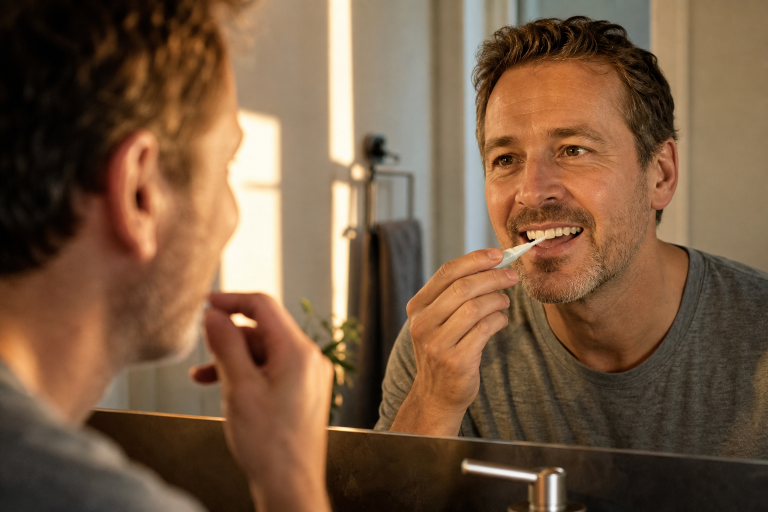
- Brush twice each day with a soft-bristled toothbrush and toothpaste recommended by the dental team.
- Clean gently along the gumline, including the areas where the restoration meets the gums.
- Floss or use an interdental brush, threader, or another recommended cleaner to remove plaque between teeth and beneath bridges.
- Use a water flosser only if the treating team recommends it for the restoration design and stage of healing.
- Remove and clean an implant-supported appliance if it was designed to be removable.
The right tools depend on the restoration. A single implant crown may need normal brushing and flossing, while a bridge or full-arch restoration can require extra cleaning aids. Dental experts at Tufts emphasize that daily brushing and flossing remain central to implant upkeep, particularly because gum inflammation can develop around implants.
Warning Signs That Need Attention
Some concerns are subtle at first, so do not wait for severe pain before contacting the dental office. Schedule an evaluation for continuing or returning bleeding, red or swollen gum tissue, tenderness when biting, drainage, pus, a persistent bad taste, or a change in how the teeth meet.
A crown, bridge, denture, or implant area that feels loose also needs prompt attention. Sometimes the restoration or a small connecting component is the source of movement, rather than the implant itself. Either way, a professional evaluation is important because chewing on a loose restoration can worsen damage.
Why Follow-Up Visits Still Matter
Follow-up care does not end when the final restoration is placed. Visits may include an exam of the gums, checks for plaque accumulation or inflammation, bite adjustments, professional cleaning, and imaging when needed. These appointments help the dental team confirm that the implant remains stable and that the restoration is functioning as intended.
Appointment frequency varies. Patients with gum disease history, diabetes, smoking habits, teeth grinding, complex bridges, or full-arch restorations may need closer monitoring. Keeping appointments when everything feels normal is often the best way to catch small issues early.
Daily Habits That Support Long-Term Implant Care
- Keep a consistent morning and evening brushing routine.
- Clean between teeth and around implant restorations every day.
- Attend routine dental cleanings and periodontal maintenance visits.
- Tell the dental team about new medications, health changes, smoking, or grinding symptoms.
- Wear a prescribed night guard to reduce excess force from clenching or grinding.
- Replace worn toothbrushes, interdental brushes, and other cleaning tools regularly.
Common Questions About Dental Implant Care
Can People Eat Normally With Dental Implants?
Many people return to a varied diet after complete healing. The timing depends on the procedure, the amount of bone support, and whether the restoration is temporary or final.
Do Dental Implants Get Cavities?
The implant and crown materials do not decay like natural enamel. However, plaque can still contribute to gum inflammation and bone loss around the implant, and nearby natural teeth can still develop cavities.
Can Dental Implants Become Loose?
Yes. Movement may involve the crown, bridge, attachment, screw, or the implant itself. Any looseness should be assessed rather than ignored.
How Long Does Implant Care Take Each Day?
For many people, implant care fits into a normal brushing and interdental-cleaning routine. Complex restorations may take a few additional minutes and require specific tools.
A Simple Weekly Care Checklist
- Brush twice daily and clean between teeth every day.
- Check for bleeding, swelling, tenderness, bad taste, or changes in fit.
- Clean removable appliances according to the provided instructions.
- Make sure upcoming hygiene and follow-up visits are scheduled.
Conclusion
Dental implants are designed to support everyday function, but the best results depend on everyday habits. Careful food choices during healing, gentle and thorough cleaning, regular follow-up visits, and quick attention to warning signs can help protect the gums and bone around an implant for the long term.