
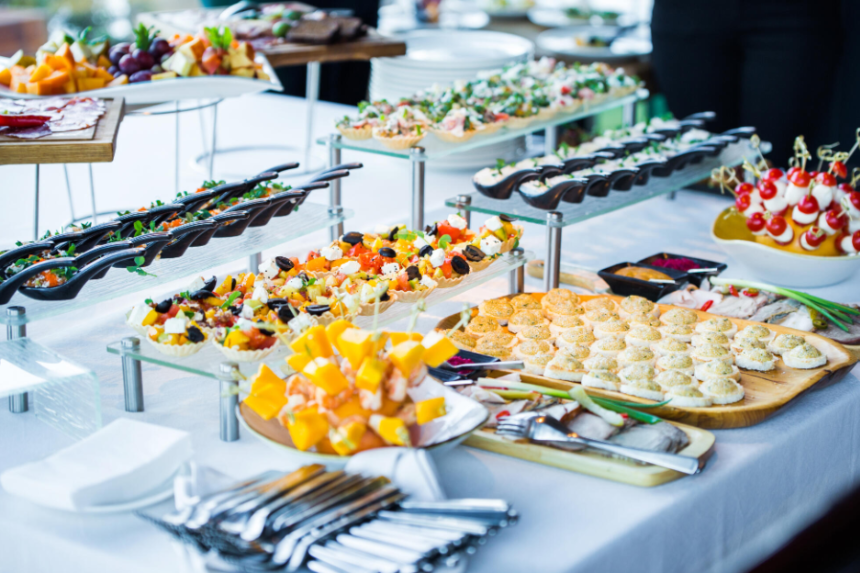
How to cater a lunch event comes down to five decisions: guest count and dietary needs, service style, portion sizing, dish variety, and a schedule the kitchen can hit. Answer those first, and the rest of the menu follows from them.
Dietary needs shape the menu directly: 6.7% of U.S. adults had a diagnosed food allergy in 2024, according to the CDC’s National Center for Health Statistics. Picture an office lunch on a Tuesday: the vegetarian tray runs out by noon, and the buffet line stalls the meeting twenty minutes behind schedule. A menu built around accurate headcounts and a matching service style avoids both.
What Should You Consider Before Choosing a Menu?
Start with the basics: guest count, event type, and schedule. These details shape almost every choice that follows. Budget and venue access matter just as much, so confirm both early.
Corporate lunch catering usually needs faster service and simpler dishes than a birthday lunch or wedding shower.
Selecting a Service Style That Fits Your Event
The service style you pick shapes how guests move through the meal. A company arranging lunch catering in Sydney might choose stations for an outdoor event, and a quick meeting calls for something simpler instead.
Common formats for lunch events include:
- Buffet-style lunch service for larger groups who want choice
- Boxed lunch catering for meetings with tight schedules
- Plated service for formal, seated lunches
- Food stations for networking events with room to walk around
Building a Balanced, Varied Menu
A good lunch menu balances a main dish, a fresh side, and something crunchy for texture. Sample dishes often include a protein, a vegetable, a starch, and a light dessert.
Pairing a rich entrée with a crisp salad keeps the meal from feeling heavy, and two entrée choices typically cover more guests.
How Do You Accommodate Dietary Needs and Allergies?
Ask guests about restrictions well before the event, and keep that list separate from general preferences. Vegetarian, vegan, gluten-free, and allergy-related needs each call for their own label on the table.
Cross-contact prevention matters nearly as much as the ingredient list, so separate serving utensils for each dish keep guests safer.
Estimating Portions and Planning Beverages
Portion planning depends on the format, the length, and the guests themselves. A sandwich-based lunch usually needs about one and a half sandwiches per guest, and shared sides work well at one dish for every four or five people.
Good catering menu planning also covers a full beverage lineup, and guests usually expect more than one option. A few reliable additions include:
- Sparkling or still water for guests who skip soda
- Iced tea or coffee for a familiar warm and cold pairing
- Fresh lemonade or juice for a non-caffeinated option
How to Cater a Lunch Event: Bringing the Menu Together
How to cater a lunch event comes down to matching the menu, the service format, and the kitchen’s capacity to the actual guests in the room. This guide has walked through the planning details that shape that outcome: accurate headcounts, documented dietary needs, portion math, and a service style suited to the venue. A shorter, well-executed menu consistently beats a long one that overwhelms the kitchen or the budget.
Browse our site for more articles like this one.