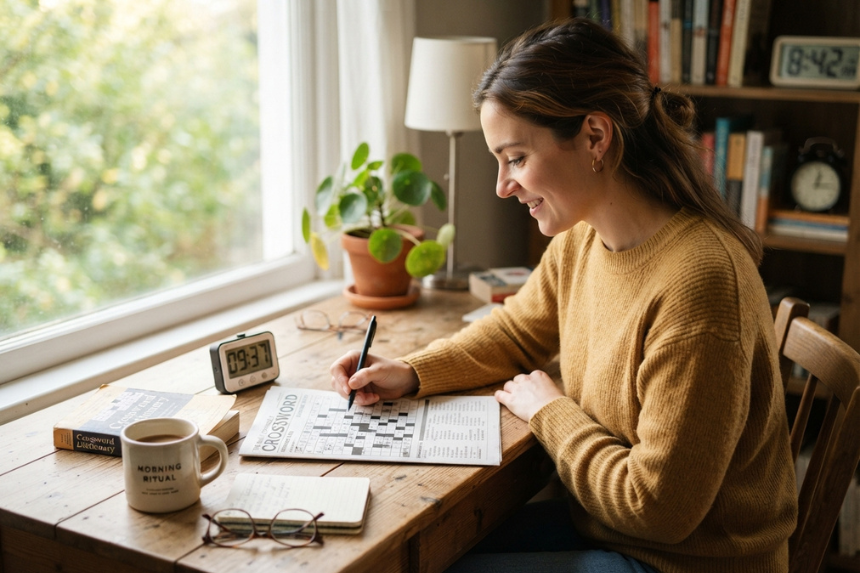
A short puzzle session can turn an overlooked part of the day into a satisfying screen-free ritual. Whether you enjoy wordplay, logic grids, number patterns, or hidden-word challenges, the goal is simple: choose a format you like and return to it often enough for it to feel familiar.
For people who prefer not to solve the same format every day, Penny Dell Puzzles offers variety crossword puzzle books with subscriptions, value packs, books, and printable options that combine multiple puzzle styles. Penny Dell Puzzles publishes a broad range of puzzle magazines and books for solvers across the United States, making its variety collection a practical place to find options for different skill levels and moods.
Why a 15-Minute Routine Works
A small commitment is easier to repeat than an ambitious one. Fifteen minutes can fit beside morning coffee, during a lunch break, before bed, or on a quiet weekend afternoon. Consistency matters more than completing a certain number of puzzles. For example, replacing a few minutes of morning phone scrolling with one easy crossword clue set can give the day a calmer start without requiring a major schedule change.
Choose Puzzle Types That Match the Moment
Different puzzles suit different energy levels. Choosing based on your mood can make the habit feel like a welcome break instead of another obligation.
- Word puzzles: A natural fit for people who enjoy clues, vocabulary, and language play.
- Logic puzzles: Good for solvers who like working through rules one step at a time.
- Number puzzles: Useful when clear patterns and structured choices are appealing.
- Cryptograms: A satisfying option for anyone who enjoys decoding a message.
- Word searches: Easy to begin and well-suited to relaxed sessions.
- Mixed collections: Helpful when variety is the best defense against boredom.
How to Build the Routine
- Choose one regular time. Attach puzzle time to something you already do, such as breakfast or an evening cup of tea.
- Keep supplies together. Put a puzzle book, pencil, eraser, and reading glasses in one convenient spot.
- Begin with one small puzzle. Starting modestly makes it easier to show up tomorrow.
- Use a gentle stopping point. Stop after 15 minutes when needed. You do not have to finish the page.
- Notice what works. Keep a brief note of favorite puzzle types, useful strategies, or new words.
Adjust the Challenge
The best difficulty level provides enough resistance to hold your attention, but not so much that every session becomes frustrating. Start with easy or moderate puzzles while the routine is new. Move up after several comfortable sessions, use hints as learning tools, and switch formats when concentration fades. Keeping a few easier puzzles available is especially useful on busy or tiring days.
The Value of Screen-Free Puzzle Time
Paper puzzles offer a hands-on alternative to alerts, streaming, and endless feeds. Set up in a comfortable chair with good lighting, place the phone out of reach, and let the session be intentionally simple. A pencil, a puzzle page, and a warm drink can be enough to create a quiet pause in a crowded day. These small moments can help reset your mental state and improve focus. Embracing this simple activity can bring a sense of calm and clarity amidst life’s busyness.
What Research Says
It is important to separate becoming better at a particular puzzle from broader improvements in everyday memory or reasoning. Puzzles call for attention, recall, and problem-solving while you are doing them, but no single puzzle format should be presented as a proven way to prevent dementia.
Research findings also depend on the exact activity studied. For instance, an NIH report on cognitive speed training examined a structured, computerized visual-speed program rather than ordinary crossword or Sudoku solving. A balanced routine can include puzzles alongside movement, adequate sleep, social connection, and opportunities to learn new skills.
Common Mistakes to Avoid
- Making the goal too large: A short routine is more likely to last than a daily one-hour plan.
- Starting too hard: Build difficulty gradually rather than treating frustration as proof of progress.
- Tracking only completion: Enjoyment and regular participation count, even when a puzzle remains unfinished.
- Repeating one format forever: Changing styles can renew interest.
- Comparing solving speed: Personal enjoyment is more useful than turning leisure into a competition.
Make It a Shared Activity
Puzzle time can also be social. Set aside one low-pressure evening a week, let each person choose a favorite format, and compare solving approaches rather than scores. Easier puzzles work well for mixed-age groups, while a difficult clue or code can become a cooperative challenge for two people. Making it a regular activity encourages family bonding and teamwork. It also helps develop problem-solving skills in a relaxed setting. By sharing different strategies, participants can learn from each other and enjoy the process more.
Frequently Asked Questions
Is 15 Minutes Long Enough for a Puzzle Routine?
Yes. Fifteen minutes is enough to establish a repeatable habit. On days when you have more time, you can continue, but the short version keeps the routine manageable.
Which Puzzle Type Is Best for Beginners?
Start with something familiar and clearly explained. Word searches, easy crosswords, and straightforward logic puzzles are approachable choices.
Should I Solve Puzzles on Paper or a Screen?
Both can work. Paper is useful for a screen break, while digital puzzles may be convenient for travel or quick access.
Can Puzzles Improve Memory?
Puzzles involve memory and attention during play, but they should not be treated as a guaranteed protection against memory problems or disease.
What if a Puzzle Feels Too Hard?
Take a break, use a hint, choose an easier puzzle, or return later. A sustainable routine should leave you wanting to solve again.
A Small Habit With Room to Grow
A useful puzzle routine does not need to be complicated or time-consuming. Fifteen focused minutes can provide a calm break, a screen-free activity, and a fresh way to enjoy word and logic play. Choose puzzles that fit your day, leave room for variety, and keep the experience fun beyond the first week.