As the warmer months approach, a reliable air conditioning system becomes essential for keeping your home comfortable. Yet even the best units can encounter issues that disrupt cooling and drive up energy bills. Knowing some basic troubleshooting steps can help you identify minor problems quickly and decide when professional help is needed.
Many homeowners face common air conditioner glitches that are straightforward to address at first. Simple checks often restore performance without delay. For more complex faults, especially in areas like Brooklyn, seeking air conditioner repair in Brooklyn ensures safe and lasting fixes from qualified technicians.
Why Air Conditioner Problems Occur
Air conditioning systems work hard during peak seasons, and wear, dirt accumulation, or minor electrical hiccups can lead to inefficiencies. Poor airflow, incorrect settings, or blocked components frequently lie behind sudden failures. Understanding these root causes empowers you to act promptly rather than endure uncomfortable heat.
Regular observation helps too. Noticing subtle changes—such as warmer air from vents or unusual sounds—allows early intervention. Addressing issues early often prevents costly breakdowns and extends the unit’s lifespan.
Common Air Conditioner Issues and Initial Checks
Several recurring problems plague home air conditioning systems. The good news is that many start with easy homeowner actions.
One frequent complaint is the unit running but failing to cool the space effectively. This can stem from restricted airflow or thermostat errors. Another is weak or no airflow from vents, often linked to obstructions or filter issues. Strange noises, from rattling to high-pitched squeals, may signal loose parts or motor strain, while water leaks inside the home point to drainage problems.
Short cycling—where the system turns on and off rapidly—can indicate an oversized unit or electrical faults. Frozen evaporator coils also appear in humid conditions when airflow is blocked.
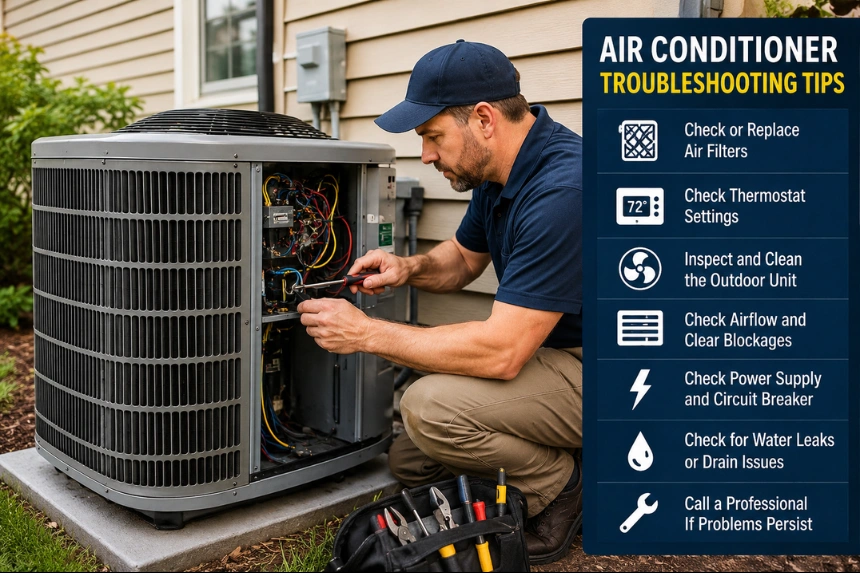
Begin troubleshooting by verifying power supply. Check circuit breakers and fuses in your electrical panel; a tripped breaker is a surprisingly common culprit. Next, inspect the thermostat. Ensure it is set to “cool” mode, the fan is on “auto,” and the temperature is below the current room reading. Replace batteries if the display is dim or unresponsive.
The Importance of Air Filters and Airflow
A dirty or clogged air filter ranks among the top causes of poor performance. It restricts airflow, forces the system to work harder, and can lead to higher energy use or even freezing of coils.
Replace or clean filters regularly—every one to three months during heavy use, or as recommended by the manufacturer. For central systems, locate the filter near the return air duct or air handler. Slide it out, note the size and direction arrow, and insert a fresh one correctly. Window or portable units often have washable filters that benefit from gentle cleaning with mild soap and water.
Keep supply and return vents clear of furniture, rugs, and curtains. Blocked vents disrupt balanced airflow and create hot or cold spots across rooms. In multi-story homes, ensure interior doors remain open to promote circulation.
Maintaining the Outdoor Unit
The condenser unit outside your home plays a vital role in releasing heat. Debris such as leaves, grass clippings, or dirt can coat the coils and reduce efficiency dramatically.
Clear at least two to three feet of space around the unit. Gently hose down the fins with a garden hose on a low setting to remove surface dirt—avoid high-pressure washers that could bend delicate fins. Perform this cleaning at the start of the season and periodically thereafter.
Inspect the area for overgrown vegetation or nesting insects that might obstruct airflow. A clean outdoor unit helps the entire system operate more quietly and effectively.
When to Investigate Further: Refrigerant, Coils, and Leaks
If basic checks fail to restore cooling, deeper issues may be at play. Low refrigerant levels often cause warm air output, but only certified technicians can handle refrigerant due to environmental regulations and safety requirements. Never attempt to add refrigerant yourself.
Frozen evaporator coils usually result from restricted airflow or low refrigerant. If you spot ice, switch the system to fan-only mode and allow it to thaw completely before restarting. Persistent freezing signals the need for expert diagnosis.
Water leaks inside the home commonly arise from a clogged condensate drain line. A mixture of water and white vinegar poured carefully into the drain can sometimes clear minor blockages, but recurring leaks warrant professional attention to prevent mold growth.
Unusual odors—musty, burning, or chemical—deserve immediate investigation. Musty smells may indicate mold in the system, while burning odors could point to electrical problems.
Essential Air Conditioner Maintenance Tips
Preventive care reduces the likelihood of sudden failures and improves overall efficiency. Here are key practices every homeowner should follow:
- Check and replace air filters monthly during peak cooling season to maintain strong airflow and indoor air quality.
- Clean the outdoor condenser coils at least twice a year to ensure efficient heat release.
- Clear debris around the outdoor unit and keep vegetation trimmed back.
- Inspect vents and registers regularly, ensuring they remain unobstructed and free of dust buildup.
- Schedule annual professional tune-ups before summer to catch small issues early and verify refrigerant levels and electrical connections.
- Consider a programmable or smart thermostat to optimise running times and reduce unnecessary strain on the system.
These steps not only troubleshoot existing problems but also help avoid them altogether. Consistent maintenance can lower energy bills and prolong the life of your investment.
Knowing When to Call a Professional
While many minor glitches respond to DIY efforts, certain situations require expert intervention. Persistent lack of cooling after basic checks, loud or unusual noises, frequent short cycling, or visible refrigerant leaks all indicate the need for skilled service.
Water leaks that continue despite drain cleaning, electrical issues such as repeatedly tripped breakers, or burning smells should never be ignored. Attempting complex repairs involving refrigerant, compressors, or wiring can void warranties and pose safety risks.
In such cases, contacting a reputable local service for air conditioner repair in Brooklyn provides peace of mind through proper diagnosis and quality parts. Professionals also perform thorough inspections that homeowners might miss.
Conclusion
Effective air conditioner troubleshooting combines simple observation, routine maintenance, and timely professional support. By addressing common issues like dirty filters, blocked vents, and debris around the outdoor unit, you can restore comfort quickly and keep your system running efficiently.
Staying proactive with seasonal checks prevents minor annoyances from escalating into major repairs. A well-maintained air conditioner delivers reliable cooling, better indoor air quality, and lower running costs—benefits every homeowner appreciates during warmer weather.