
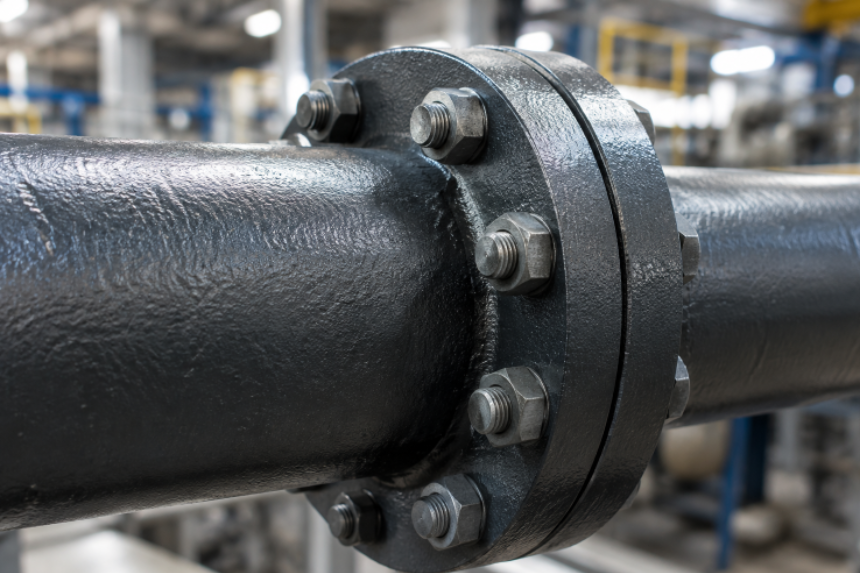
Industrial piping choices in North Carolina must account for more than line size and initial cost. From humid Piedmont manufacturing plants to coastal facilities exposed to salt-laden air and mountain operations facing winter temperature swings, pipe, valves, fittings, seals, and coatings must work together under real operating conditions. Working with an industrial pipe, valve and fittings supplier in North Carolina can help project teams compare components before installation begins.
The most dependable systems begin with a complete picture of the service: what moves through the line, how hot or cold it becomes, how much pressure it sees, and how workers will inspect or repair it. A durable pipe cannot compensate for an undersized fitting, incompatible gasket, or valve selected for the wrong duty.
Why Material Selection Matters
Pipe, valves, and fittings operate as a single assembly. A weak point at a branch connection, flange, threaded joint, valve seat, or seal can interrupt production even when the main run of pipe remains sound. Selecting components based on the full-service condition helps reduce avoidable leaks, corrosion issues, unplanned maintenance, and premature replacement.
Material selection should also consider the facility’s lifespan, not just the purchase order. Equipment that is easier to inspect, isolate, remove, and replace can reduce downtime when service is required. Guidance on piping design considerations emphasizes how temperature, pressure, corrosion, joint selection, and thermal movement affect system performance.
Start With Service Conditions
Before comparing brands or materials, create a short service description for each piping circuit. Clean water, compressed air, steam, wastewater, food ingredients, acids, and abrasive slurries may require very different combinations of components, even at the same nominal diameter.
- Identify the fluid or gas, including contaminants, moisture, solids, and cleaning chemicals.
- Record normal, minimum, and maximum operating pressure and temperature.
- Consider flow rate, velocity, cycling frequency, vibration, and possible pressure surges.
- Note whether the system is indoors, outdoors, underground, insulated, washdown-exposed, or near corrosive processes.
- Define access needs for inspection, valve operation, draining, and future modifications.
Compare Common Pipe Materials
Carbon Steel
Carbon steel is widely used for many utility and process applications because it offers strength and broad availability. It can be appropriate for air, water, steam, and other services when the applicable design requirements are met. External corrosion protection, coatings, insulation practices, and drainage details become especially important in damp, outdoor environments in North Carolina.
Stainless Steel
Stainless steel can provide corrosion resistance for many sanitary, chemical, food, beverage, and high-purity uses. However, stainless is not a universal answer. The grade, fluid chemistry, chloride exposure, temperature, finish, weld quality, and cleaning process should all be reviewed before specifying it.
PVC and Other Thermoplastics
PVC, CPVC, polyethylene, polypropylene, and other thermoplastics can be useful where corrosion resistance and lighter-weight installation are priorities. Their allowable pressure and temperature limits, support requirements, impact resistance, chemical compatibility, and fire-related restrictions must be evaluated for the exact product and application.
Ductile Iron, Copper Alloys, and Specialty Materials
Ductile iron is often considered for certain water and underground services. Copper alloys, lined pipe, fiberglass systems, and corrosion-resistant alloys may be selected when the process, hygiene requirements, soil conditions, or chemical exposure call for a specialized solution.
Match Valves to the Job
A valve chosen for isolation is not automatically suitable for throttling, frequent cycling, or reverse-flow protection. Ball valves are often used for quick shutoff. Butterfly valves can be practical on larger lines where space and weight matter. Gate valves are commonly used for isolation, while globe valves are often used for flow regulation. Check valves help limit reverse flow, and diaphragm or lined valves may be suitable for corrosive or contamination-sensitive service.
Review the valve body, trim, stem, seat, seals, end connection, flow direction, actuator, cycle frequency, and maintenance clearance. The valve’s pressure-temperature rating must be suitable for the complete operating range, not merely routine conditions.
Choose Compatible Fittings
Fittings direct, branch, reduce, terminate, and connect a piping system. Elbows change direction. Tees and crosses create branches. Reducers transition between sizes. Couplings and unions support connections and service access. Flanges provide removable connections at pumps, strainers, tanks, and valves.
A matching diameter does not establish compatibility. Confirm that the fitting material, wall thickness, or pressure class, end preparation, gasket selection, bolting, and joining method suit both the pipe and the service. Where different metals meet, evaluate the risk of galvanic corrosion and use an appropriate isolation strategy when required.
Check Pressure and Temperature Ratings
Nominal pipe size, schedule, flange class, and valve rating describe different characteristics. They should never be treated as interchangeable. Review the design limits of every component, including gaskets, seats, seals, hoses, strainers, instruments, and adapters. Account for startup, shutdown, cleaning, thermal expansion, vacuum conditions, and pressure surges.
For systems involving hazardous chemicals, inspection and testing procedures should follow recognized engineering practices. OSHA identifies piping systems and components, such as valves, among the equipment covered by mechanical-integrity requirements for applicable process safety management operations.
Review Joining Methods
Threaded connections can simplify smaller-line work but require correct thread sealing and torque. Welded joints can provide permanent, strong connections when qualified procedures and inspection practices are used. Flanged joints allow equipment removal, while grooved mechanical couplings can speed installation in appropriate services. Plastic systems require the manufacturer-approved solvent cement, fusion, or mechanical joining process.
The chosen joint affects labor, inspection, vibration response, repair time, leak paths, and future expansion. Plan joints around areas that workers can safely reach and maintain.
Avoid Common Selection Mistakes
- Choosing components by size alone.
- Assuming a corrosion-resistant material is compatible with every chemical.
- Ignoring gasket, seat, seal, and coating compatibility.
- Using an isolation valve for continuous flow control.
- Overlooking temperature changes during cleaning, startup, or shutdown.
- Accepting substitutions without reviewing material, rating, and connection details.
- Failing to leave operating and maintenance clearance around valves and flanges.
- Skipping documentation for material identification, testing, and installation changes.
Build a Practical Selection Checklist
- What fluid or gas will the system carry?
- What are the maximum pressure, temperature, and flow conditions?
- Are corrosion, abrasion, freezing, contamination, or washdown concerns present?
- Does the pipe material fit the service and environment?
- Do valves match their intended isolation, control, or check function?
- Are fittings, flanges, gaskets, seals, and coatings compatible?
- Does the joining method support installation and future maintenance?
- Have applicable codes, specifications, inspections, and test requirements been identified?
Conclusion
Reliable industrial piping systems in North Carolina start with disciplined material selection. By evaluating service conditions, component compatibility, ratings, connections, maintenance access, and long-term exposure, facility teams can make choices that support safer operation and more predictable performance.