
Introduction
Technology keeps businesses connected, productive, and competitive, but it also introduces new risks that can interrupt operations if systems are not properly protected. As organizations rely more heavily on cloud platforms, digital collaboration, and connected devices, building resilient IT infrastructure has become a business priority instead of simply an IT responsibility.
When systems are not designed with resilience in mind, even a small outage can disrupt communication, slow down teams, and create avoidable costs. That is why businesses need a proactive strategy that protects both daily operations and long-term continuity.
True resilience goes beyond installing security software or responding to isolated incidents. It requires a complete strategy that strengthens every layer of the technology environment, from physical networking equipment to cloud infrastructure, creating a stable foundation that supports long-term business growth.
Why End-to-End IT Resilience Matters
Building resilient infrastructure means thinking beyond individual technologies and focusing on how every component works together. Physical networks, cloud services, cybersecurity, backups, and disaster recovery all contribute to business continuity. When these areas are managed through a unified strategy, organizations can reduce downtime, improve security, and respond more effectively to unexpected disruptions.
The Cost of Reactive IT
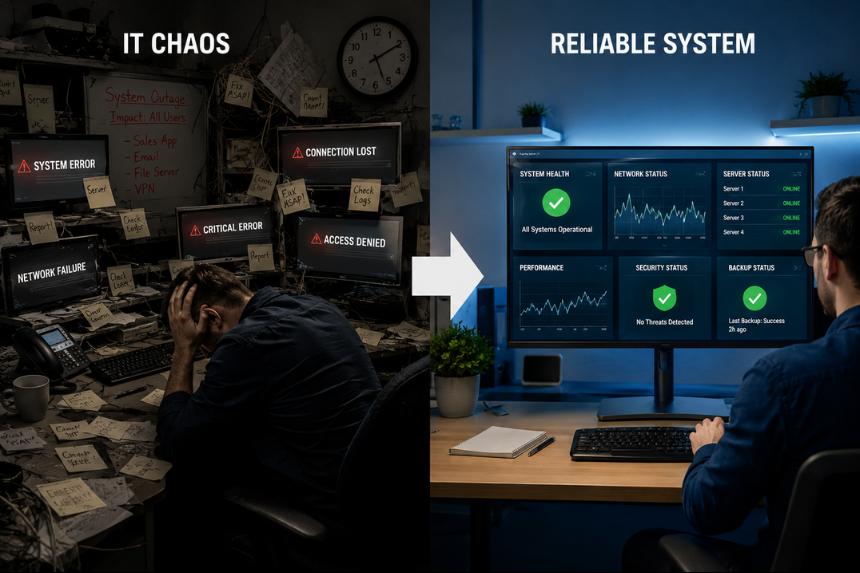
Many businesses still operate under a break-fix model, addressing problems only after they interrupt operations. Although this approach may seem less expensive initially, the long-term costs are often much higher.
Unexpected server failures, network outages, and security incidents stop employees from working, delay customer service, and create financial losses that extend well beyond repair costs. Research from Splunk estimates that unplanned downtime can cost large organizations an average of $15,000 per minute, demonstrating how quickly disruptions can affect business performance.
Another challenge comes from managing multiple technology vendors independently. Separate providers for networking, cloud services, cybersecurity, and hardware often create communication gaps that make troubleshooting slower and accountability less clear when issues arise.
Businesses reduce these risks by adopting a unified IT strategy that focuses on prevention instead of emergency response.
Understanding End-to-End Security
End-to-end security means protecting every layer of the technology environment rather than relying on a single security solution. Multiple safeguards work together so that if one control fails, additional protections continue defending systems and data.
This layered approach also simplifies compliance with regulations such as HIPAA, PCI DSS, SOX, and GDPR. Managing infrastructure through a coordinated strategy makes it easier to document security controls, track data movement, and prepare for regulatory audits.
Many organizations strengthen this approach by working with a managed IT provider in Vancouver that oversees networking, cloud infrastructure, cybersecurity, and ongoing support through a single, coordinated technology strategy. This reduces operational complexity while improving consistency across the entire IT environment.
Building a Strong Physical Foundation
Cybersecurity often brings software to mind first, but every digital system depends on physical infrastructure. Network cabling, switches, servers, and hardware all influence security, reliability, and performance.
Poorly maintained or outdated equipment can create bottlenecks, increase downtime, and introduce vulnerabilities that software alone cannot solve. Secure server rooms, organized cabling, and properly maintained networking equipment provide a stronger foundation for every application running across the business.
When physical infrastructure is planned alongside cybersecurity, organizations create networks that are both reliable and easier to expand as technology needs change.
Extending Protection into the Cloud
Cloud platforms have become essential for collaboration, remote work, and business continuity. While cloud services provide flexibility, they also require careful planning to protect sensitive information.
Research from Thales reports that more than half of data stored in cloud environments is considered sensitive. Financial records, customer information, and intellectual property all require strong access controls, encryption, and continuous monitoring.
Organizations that integrate cloud security with on-premises infrastructure create a consistent security posture regardless of where employees work or where data is stored.
Disaster Recovery That Keeps Business Moving
Backing up data is important, but backups alone do not guarantee business continuity. Without a complete recovery strategy, organizations may still experience extended outages while systems are rebuilt and restored.
Modern disaster recovery focuses on recovering entire operating environments instead of individual files. Automated snapshots, virtual server replication, and regularly tested recovery plans allow businesses to resume operations much faster after an incident.
| Feature | Traditional Backups | Integrated Disaster Recovery |
| Recovery Time | Days or longer | Minutes to hours |
| Data Protection | Periodic backups | Continuous automated replication |
| System Recovery | Individual files | Complete systems and applications |
| Testing | Infrequent | Regular validation and testing |
With recovery built into everyday operations, organizations reduce downtime and improve confidence that critical services will remain available during unexpected events.
Turning Technology into a Strategic Investment
Technology creates the most value when it supports long-term business goals instead of reacting to short-term problems.
Predictable monthly IT planning helps organizations budget more effectively while reducing unexpected repair expenses. Continuous monitoring, proactive maintenance, and strategic infrastructure improvements also improve productivity by reducing interruptions that affect employees and customers.
Rather than treating IT as a necessary expense, successful organizations view technology as an investment that supports growth, strengthens security, and improves operational efficiency.
Conclusion
Creating resilient IT infrastructure requires more than isolated technology upgrades. Businesses benefit most when networking, cloud services, cybersecurity, disaster recovery, and ongoing management work together as part of one coordinated strategy.
A proactive approach reduces downtime, strengthens security, and provides greater confidence as organizations continue adopting new technologies. By investing in end-to-end resilience today, businesses build an IT environment that supports growth while remaining prepared for future challenges.