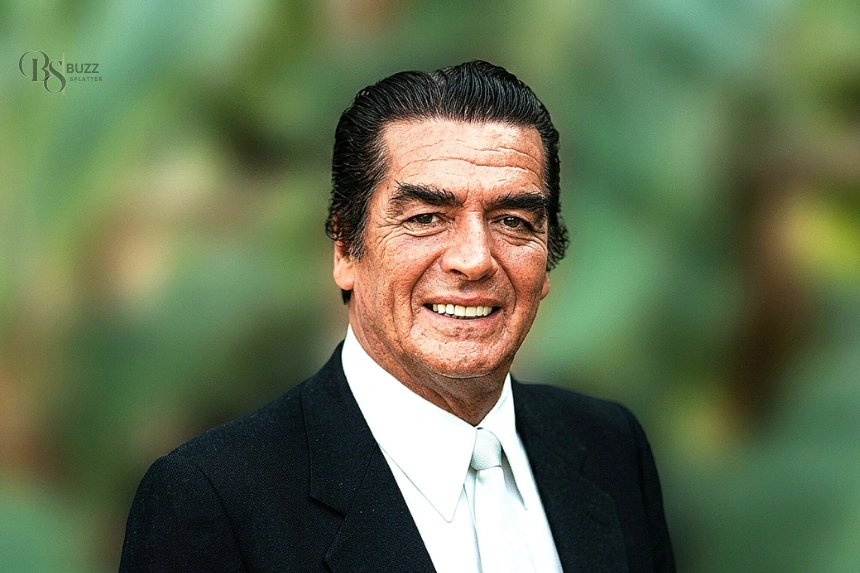

Bill Haney has built an unusually diverse career spanning environmental technology, documentary filmmaking, sustainable housing and biotechnology. Rather than following a conventional corporate path, he has repeatedly moved toward emerging industries, founding or leading companies that addressed environmental, medical and technological challenges.
His most significant financial opportunities appear to have come from biotechnology. As co-founder and CEO of Dragonfly Therapeutics and co-founder and CEO of Skyhawk Therapeutics, Haney has been closely associated with companies that attracted substantial strategic investment and pharmaceutical partnerships.
Bill Haney Net Worth
As of 2026, Bill Haney’s net worth estimation of about $100 million, is primarily due to his potential equity stake in two biotechnology firms: Dragonfly Therapeutics and Skyhawk Therapeutics. They have raised a lot of capital and secured strategic partnerships, but are still privately owned, and Haney’s interest in the companies has not been made public. Therefore, the $100 million amount should be considered not a financial disclosure, but an informed estimate. While his investments, cash on hand, and other holdings could be part of his net worth, his biotechnology holdings seem to be the main reasons behind his estimated net worth.
Facts about Bill Haney Net Worth
| Fact | Details |
| Bill Haney Net Worth | Approximately $100 million |
| Primary Wealth Source | Biotechnology entrepreneurship and founder equity |
| Key Company | Dragonfly Therapeutics |
| Dragonfly Funding | More than $300 million raised by 2020 |
| Second Key Company | Skyhawk Therapeutics |
| Skyhawk Funding | More than $625 million raised by 2021 |
| Role in Dragonfly | Co-Founder and CEO |
| Role in Skyhawk | Co-Founder and CEO |
| Other Ventures | Fuel-Tech, Blu Homes and documentary filmmaking |
| Potential Additional Assets | Cash, investments, real estate and film-related income |
| Wealth Classification | Primarily estimated private-company equity |
| Liquidity | Much of the estimated wealth may be illiquid |
| Net Worth Confidence | Moderate to low due to undisclosed ownership stakes and private valuations |
Bill Haney’s Early Career and Education
Haney earned a bachelor’s degree from Harvard University in 1984. His entrepreneurial career began unusually early. While still an undergraduate, he co-founded Fuel-Tech, an environmental technology company focused on controlling nitrogen oxide emissions from power plants.
The business later became known as Fuel Tech and eventually reached the public markets. Haney’s precise ownership position and the extent of his financial proceeds from the company are not clearly documented, making it difficult to assign a reliable value to this part of his wealth.
From Technology to Documentary Filmmaking
During the 2000s, Haney expanded his professional interests into documentary filmmaking and sustainable housing. He became associated with Blu Homes, a company focused on environmentally friendly prefabricated housing.
Blu Homes attracted significant venture funding, reportedly approaching $200 million. Despite that capital, the company did not ultimately become a major financial success for its founders. Its assets were acquired by Dvele in 2020, and there is no clear evidence of a substantial founder payout.
Haney also developed a career as a documentary filmmaker. His credits include The Price of Sugar, released in 2007 and Oscar-shortlisted, as well as The Last Mountain, American Violet and Jim Allison: Breakthrough.
Dragonfly Therapeutics and a Major Shift in Wealth Potential
Haney’s career took a more financially significant turn in 2015 when he co-founded Dragonfly Therapeutics in Cambridge, Massachusetts.
Dragonfly focuses on natural killer-cell, or NK-cell, immuno-oncology therapies designed to develop new approaches to cancer treatment. Haney serves as a co-founder and CEO, placing him in a central position within the company’s development.
One of Dragonfly’s important early milestones came in 2017, when the company announced a partnership with Celgene involving a $33 million upfront payment and options covering multiple cancer drug candidates. Celgene subsequently invested an additional $50 million in 2018.
By March 2020, Dragonfly had reportedly raised more than $300 million through equity and partnership capital.
For Haney personally, the importance of Dragonfly is less about the amount of money raised than the founder equity that may remain attached to his position. Private-company funding does not mean that the CEO personally receives the capital. Instead, funding generally increases the company’s resources while potentially creating a higher implied value for existing shares.
Skyhawk Therapeutics Adds Another Major Equity Position
Haney’s biotechnology portfolio expanded again in 2017 when he co-founded Skyhawk Therapeutics with Kathleen McCarthy.
Based in Waltham, Massachusetts, Skyhawk develops small-molecule medicines designed to target RNA. The company attracted considerable attention from pharmaceutical companies and investors, including partnerships involving Celgene, Vertex, Merck, Bristol Myers Squibb, Biogen and Takeda.
In 2018, Skyhawk announced a five-year partnership with Celgene involving a $60 million upfront payment and $40 million in equity. By late 2021, the company had reportedly raised more than $625 million, including pharmaceutical upfront payments and investor equity.
That fundraising history is central to estimates of Bill Haney’s net worth. As a founder and senior executive, he is expected to hold founder shares, although the exact percentage is private.
A relatively small ownership percentage can become valuable when a private biotechnology company attracts hundreds of millions of dollars in capital and develops a promising drug pipeline. At the same time, such valuations remain uncertain until there is a public offering, acquisition or other liquidity event.
How Haney’s Wealth Was Built
His early Fuel-Tech experience provided a foundation in technology and business. His work in film broadened his public profile and interests, while Blu Homes placed him in the sustainable-housing sector. The most consequential financial chapter, however, appears to be his involvement in biotechnology.
Dragonfly and Skyhawk demonstrate the wealth-building potential of founder equity. A CEO may receive a salary, but the largest financial outcome can come from shares acquired when a company is young and valued relatively modestly. If that company later attracts major pharmaceutical partnerships or reaches a successful exit, those shares can appreciate dramatically.
This also explains why estimates of Haney’s fortune vary so widely. A founder can theoretically hold assets worth tens or hundreds of millions of dollars on paper while having far less immediately available cash.
What Could Change Bill Haney’s Net Worth?
The future value of Haney’s fortune is closely connected to the performance of Dragonfly and Skyhawk.
A successful clinical pipeline, acquisition, licensing arrangement or public offering could significantly increase the value of his holdings. Conversely, dilution from future fundraising, disappointing clinical results, lower private valuations or unsuccessful programs could reduce the value of those stakes.
This uncertainty is especially important in biotechnology, where promising scientific programs can require years of development and substantial capital before they produce commercial returns.
For that reason, any precise online figure for Haney’s wealth should be treated cautiously unless it is supported by verified ownership records or a disclosed transaction.
Final Assessment
Bill Haney’s career illustrates how entrepreneurial wealth can develop across several industries rather than through a single profession. From founding an environmental technology company as a Harvard student to producing socially focused documentaries and leading biotechnology companies, his professional path has been marked by innovation and calculated risk.
Until Haney or the companies disclose definitive ownership and valuation information, his net worth should remain an informed estimate rather than a confirmed figure.