
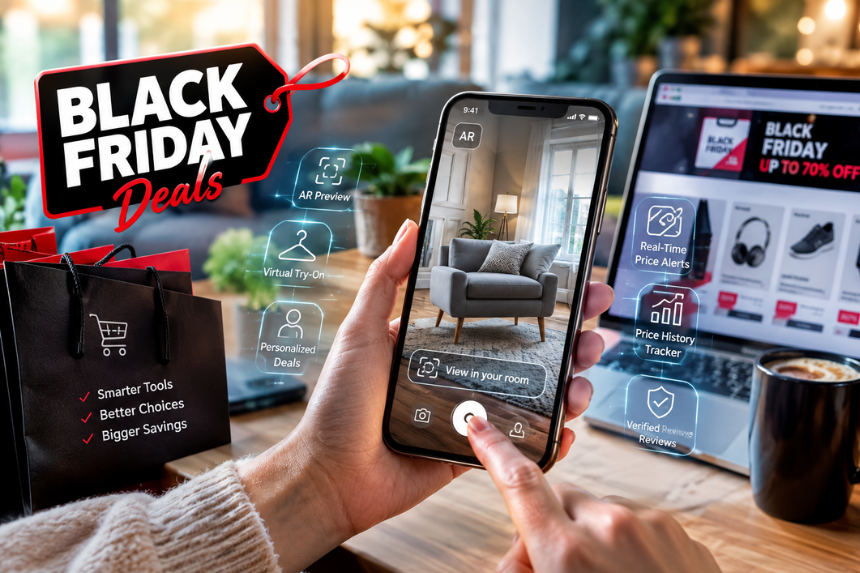
Every year, the rush begins the same way: a buzz in the air, tabs multiplying across your screen, wish lists growing faster than your patience, and that familiar hope that this time, you will actually grab the best bargain before it vanishes. Yet online shopping has changed. It is no longer only about lower prices and faster checkouts. Today, augmented features are transforming how you experience black friday deals, making them more interactive, more personal, and far less chaotic than they used to be.
This shift matters because modern shoppers do not just want discounts. You want confidence. You want to know whether the sofa fits your living room, whether the glasses suit your face, whether the TV belongs on your wall, and whether the deal flashing in red is genuinely worth your money. Augmented tools are stepping in to answer those questions before regret has a chance to.
How Augmented Shopping Is Reshaping black friday sales
Augmented features refer to digital tools that layer useful information, previews, or interactive experiences onto your online shopping journey. Think augmented reality previews, smart size matching, virtual try-ons, live inventory indicators, dynamic price alerts, and AI-driven recommendations that actually feel relevant.
During black friday sales, these features become especially powerful. Instead of blindly clicking through dozens of listings, you can use room-view technology to place a virtual lamp on your nightstand, test a lipstick shade against your skin tone, or compare electronics with interactive product overlays. It feels less like gambling and more like shopping with clarity.
There is something deeply comforting about that. When sales move at lightning speed, uncertainty is stressful. Augmented features soften that stress by giving you context in real time. They help you make decisions quickly without feeling reckless.
Why Visual Confidence Drives Better Decisions
One of the biggest reasons online shoppers abandon carts is simple: hesitation. A product photo can only say so much. Augmented features close that emotional gap between seeing and knowing.
For example, virtual try-on tools let you preview clothing, makeup, eyewear, or even hairstyles before buying. Home retailers now let you project furniture into your room using your phone camera. Suddenly, dimensions stop being abstract numbers and become visible reality. That kind of visual confidence can make all the difference during black friday deals, when limited-time offers pressure you to act fast.
There is also a human side to this technology. A shopper once shared a funny story about trying on a pair of virtual glasses while discussing facial proportions with a friend who jokingly described their profile as dolichocranial. The term sounded almost too grand for a casual shopping moment, but the point stuck: face shape matters, and augmented try-on features can save you from buying something that looks perfect on a model yet strangely off on you. That small, quirky moment says a lot about the emotional usefulness of this technology.
Smarter Personalization in black friday deals
Not all discounts are worth your attention. That is where personalization enters the picture. Retailers are now using augmented shopping features to filter deals according to your browsing habits, preferences, budget, and even the products you nearly bought before.
This can mean curated deal dashboards, product comparison widgets, and alerts when a saved item drops to your target price. Instead of drowning in offers, you get a more focused path to the best black friday deals available online. You still experience the thrill of discovery, but without the exhausting digital stampede.
Of course, personalization works best when it feels helpful rather than invasive. The strongest systems are transparent. They show you why something is being recommended and let you adjust preferences easily. When done right, this creates a sense of being understood rather than watched, and that difference is enormous.
The Role of Real-Time Data and Urgency
Black Friday has always thrived on urgency, but augmented features make that urgency smarter. Real-time stock indicators, countdown timers, delivery estimate overlays, and price-history trackers help you judge whether a deal is genuinely urgent or just emotionally manipulative.
This is important because fear of missing out can cloud judgment. A subtle alert showing “only 3 left in stock near your shipping zone” gives actionable insight. A price-history graph showing that a product truly hit its seasonal low gives reassurance. Together, these features turn pressure into information.
There is an unexpected parallel here with climate awareness. A shopper once mentioned waiting too long to buy an air purifier during a stretch of brutal seasonal smoke and shifting climate patterns. By the time they finally checked out, the best model had sold out. Since then, they relied on predictive alerts and restock notifications during major sales events. That small story reflects a bigger truth: when the world feels unpredictable, better shopping tools offer a strange but welcome kind of control.
black Friday auto-parts deals and Augmented Buying Confidence
One area where augmented features are becoming especially valuable is automotive shopping. black Friday auto-parts deals may not sound as glamorous as fashion or luxury electronics, but they fit perfectly with the larger story of enhanced online shopping. Buying car parts online has always carried risk. Will the brake pads fit? Is that battery compatible? Does the tire match the exact model requirements?
Now, augmented tools are reducing those doubts. Fitment checkers, VIN-based matching systems, 3D product views, installation videos, and compatibility overlays are helping drivers shop more confidently. During peak black friday sales, this matters even more because auto parts often sell quickly and returns can be frustrating. These features bridge the gap between technical precision and online convenience, making auto-parts shopping a powerful example of how the article’s title comes to life in practical, everyday ways.
Trust, Reviews, and the End of Inglorious Shopping Mistakes
We have all had those inglorious shopping moments. The order arrives, the packaging looks promising, and then reality crashes in. Wrong size. Wrong fit. Wrong expectation. It feels deflating, especially after the excitement of a major sale.
That is why augmented features increasingly work alongside verified reviews, user photos, and interactive FAQs. They do not just show the product; they surround it with context. One customer recalled an inglorious holiday purchase that looked premium online but turned out flimsy and disappointing. Ever since, they relied heavily on 360-degree views and review summaries before buying anything discounted. That lesson, though painful, reveals how trust is built today: not through flashy banners, but through layered information.
Where Online Deals Are Heading Next
The future of black friday deals is not simply bigger discounts. It is better digital guidance. Expect more immersive previews, voice-assisted comparisons, AI shopping companions, and hyper-accurate personalization that saves you time while reducing buyer’s remorse.
For you, that means a gentler kind of deal hunting. Less guessing. Less panic. More certainty. The thrill of seasonal shopping will always remain, but it no longer has to feel messy or overwhelming. Augmented features are bringing warmth, intelligence, and reassurance into one of the busiest shopping moments of the year.
And perhaps that is the real upgrade. Technology is not replacing the excitement of finding a great bargain. It is protecting that excitement from turning into confusion. When used well, these tools help you shop with sharper eyes, steadier nerves, and a little more joy.