
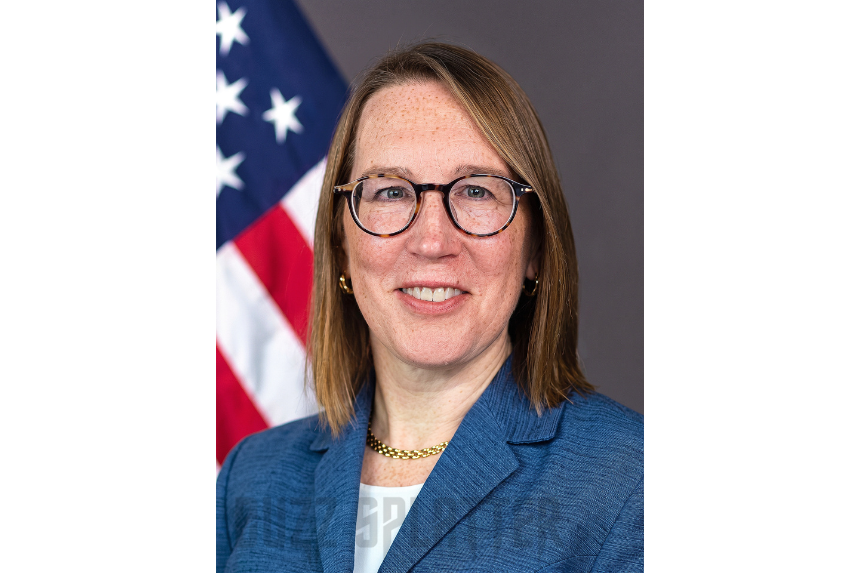
Allison Beck is an American labor lawyer and mediator whose career has connected workers’ rights, federal service, and union leadership. She is recognized for her work with the International Association of Machinists and Aerospace Workers (IAM), her historic appointment as director of the Federal Mediation and Conciliation Service (FMCS), and her leadership role at the American Guild of Musical Artists (AGMA). Across these positions, Beck has developed expertise in labor law, collective bargaining, and workplace dispute resolution.
Who Is Allison Beck?
Allison Beck is a labor relations attorney who has held senior positions in organized labor and the federal government. She spent more than two decades working for IAM, including 21 years as its general counsel, before moving into federal mediation leadership.
In 2015, she became the first woman confirmed as director of FMCS, the federal agency responsible for helping resolve labor-management disputes. After leaving federal service in 2017, Beck returned to union work and joined AGMA, which represents professional opera and ballet performers.
Allison Beck’s Facts
| Fact | Details |
| Full Name | Allison Beck |
| Profession | Labor Lawyer and Mediator |
| Nationality | American |
| Education | Goucher College; The Catholic University of America School of Law |
| Bachelor’s Degree | Bachelor of Arts (BA) |
| Law Degree | Juris Doctor (JD) |
| Notable Organization | International Association of Machinists and Aerospace Workers (IAM) |
| Former Position | Director of the Federal Mediation and Conciliation Service (FMCS) |
| Historic Achievement | First woman to lead FMCS |
| Union Leadership | Interim National Executive Director of AGMA |
| Areas of Expertise | Labor Law, Collective Bargaining, Dispute Resolution |
| Known For | Leadership in labor relations and workplace mediation |
Early Background and Education
Beck began her professional career in public service during the early 1970s. From 1972 to 1975, she worked as a legislative aide to U.S. Senator Alan Cranston of California, focusing on veterans’ employment issues. This experience introduced her to the relationship between public policy, employment protections, and workers’ interests.
She subsequently served as legislative coordinator for the Energy Action Committee from 1975 to 1977, an organization concerned with labor issues in the energy sector. During this period, she attended law school at night while continuing her professional responsibilities.
Beck earned a Bachelor of Arts degree from Goucher College and later received her Juris Doctor from The Catholic University of America. Her academic training provided the legal foundation for a career involving labor legislation, employment disputes, and workplace rights.
In 1979, she joined the National Labor Relations Board’s Division of Enforcement as an appellate court attorney. There, she litigated labor cases, gaining practical experience in the legal framework governing relations between employers, employees, and labor organizations.
Career at the International Association of Machinists and Aerospace Workers
In 1980, Beck joined the International Association of Machinists and Aerospace Workers, a major labor union affiliated with the AFL-CIO. She initially served as associate general counsel, a position she held until 1989.
That year, she became the union’s general counsel, making her the first woman to hold the position. She remained in the role until 2010, overseeing legal matters for the international organization.
As general counsel, Beck handled a broad range of labor and employment issues. Her responsibilities included collective bargaining, workplace discrimination, safety concerns, and litigation before federal courts and labor agencies. The position required her to represent union interests while navigating complex legal disputes and employment regulations.
Her 21-year tenure as general counsel became one of the defining periods of her professional life. It gave her extensive experience in the practical challenges facing organized labor and helped prepare her for a later role that required cooperation between employers and unions.
Leadership at the Federal Mediation and Conciliation Service
Beck moved into federal service in March 2010, joining the Federal Mediation and Conciliation Service as deputy director for national and international programs. She subsequently served as acting director for more than four years.
President Barack Obama nominated her to lead the agency in September 2014, and the U.S. Senate confirmed her appointment in July 2015. She became the 18th director of FMCS and the first woman to hold the position since the agency was established in 1947.
FMCS helps employers and labor organizations resolve disputes through mediation and related conflict-resolution services. Its work is important because disagreements over wages, working conditions, contracts, and employment policies can disrupt workplaces and essential services.
During Beck’s leadership, the agency pursued modernization and reviewed its organizational structure and services. She also emphasized innovation in mediation and stronger engagement with labor and management representatives.
One of her notable initiatives was the revival of the national labor-management conference. In August 2016, FMCS hosted The Future@Work, a summit that brought together more than 1,000 labor and management professionals to discuss the changing workplace. Topics included collective bargaining, emerging employment models, and technologies such as artificial intelligence and robotics.
Beck’s tenure also included international outreach in cooperation with the U.S. Departments of State and Labor, including efforts to support mediator training and strengthen labor standards in countries such as Vietnam, China, and Bangladesh.
She left FMCS in early 2017 as the Obama administration concluded. Her time there represented a significant transition from advocating for union members to helping manage disputes through a federal mediation agency.
Allison Beck’s Role at the American Guild of Musical Artists
After her federal service, Beck returned to union representation. In 2018, she joined the American Guild of Musical Artists, the labor union representing professional performers in opera and ballet.
She initially worked as Mid-Atlantic Counsel, providing legal and organizing support to members in the region. In 2022, she took on additional responsibilities as special counsel to the national executive director while continuing her regional work. Her role later expanded to broader counsel responsibilities.
In early 2024, Beck stepped into the position of interim national executive director. She was also named senior counsel in December 2024, according to the supplied biographical information.
These responsibilities brought her legal experience into the administration of a performing-arts union. AGMA represents artists whose professional concerns can include contracts, working conditions, compensation, and the protection of collective bargaining rights.
A notable development under her interim leadership was AGMA’s reported achievement of a first union contract for Dayton Ballet dancers in 2026. The agreement illustrated the practical importance of organizing and negotiation for performers seeking formal workplace protections.
Alongside her union responsibilities, Beck has contributed to professional education and discussion. She served as the Jean McKelvey Neutral-in-Residence at Cornell University’s School of Industrial and Labor Relations during the 2016–2017 academic year and has spoken at labor-management conferences on dispute resolution.
Major Achievements and Professional Legacy
Two milestones distinguish Beck’s career: becoming the first woman to serve as IAM’s general counsel and the first woman confirmed as director of FMCS. Both appointments represented important advances in leadership within traditionally male-dominated areas of labor relations.
Her work at FMCS also demonstrated an interest in preparing labor organizations and employers for changing economic conditions. The 2016 Future@Work summit created a forum for discussing how technology and new employment models could affect workplace relationships.
In 2016, Beck received the Labor and Employment Relations Association’s Outstanding Practitioner Award, recognizing her professional standing in the field.
Conclusion
Allison Beck’s professional journey spans public policy, labor law, federal mediation, and union leadership. From her early work on employment issues to her long tenure at IAM, historic appointment at FMCS, and leadership at AGMA, she has held positions that influence how workers and employers address their competing interests.
Her career is particularly notable for breaking gender barriers while maintaining a focus on practical labor relations. Through legal advocacy, mediation, and organizational leadership, Beck has contributed to the institutions that support collective bargaining and workplace dispute resolution. Her work offers a clear example of how legal knowledge and negotiation skills can serve both organized labor and broader efforts to build constructive employer-employee relationships.