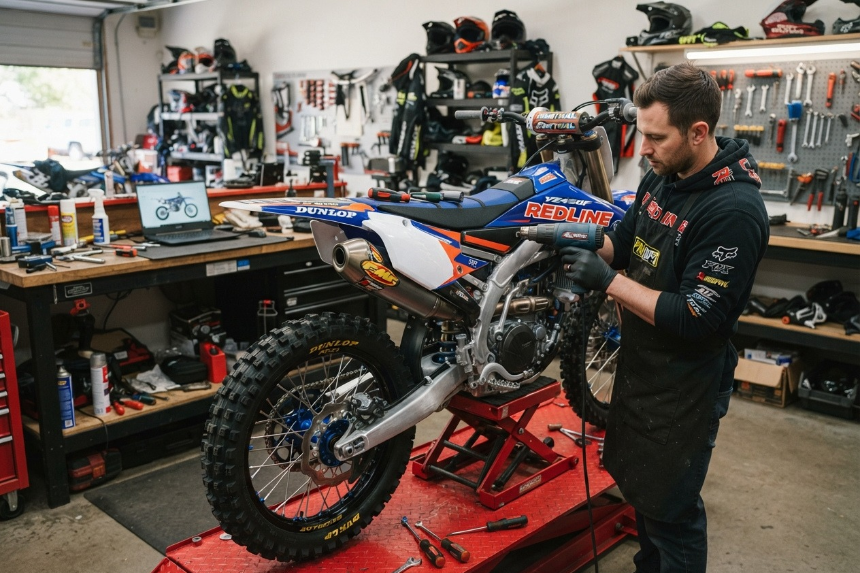
An off-road bike is more than a way to cross dirt, rocks, and ruts. It’s also a moving expression of your taste. Before changing anything, decide what you want the build to communicate: clean and understated, loud and race-inspired, retro, or unmistakably personal. A simple color palette and one strong design idea often look sharper than a pile of unrelated details.
Think about where you ride and how the bike is used. Mud, brush, and frequent loading can scuff finishes, while a weekend show bike may need a different balance of style and practicality. Keep the machine’s make and model in mind as you plan; for example, buying Honda CRF 70 graphics gives you a model-specific starting point for a younger rider’s off-road bike.
Build A Color Story
Choose two or three main colors, then repeat them deliberately across the shrouds, fenders, number plates, seat, and small accents. Repetition makes a bike feel designed rather than randomly accessorized. High-contrast colors help shapes stand out, while a mostly dark palette with one bright accent can create a more restrained look.
Consider the existing frame, wheels, and plastics before settling on a scheme. Those parts already contribute color, so account for them rather than fighting them. If the bike has a vivid frame, for instance, a calmer graphic layout can let that feature remain the focal point. Small details, such as matching rim accents or a coordinated seat cover, can tie everything together without overwhelming the design.
Make Graphics Personal
Graphics are often the most visible change, but the best designs do more than fill empty plastic. Use number placement, angular shapes, and negative space to guide the eye along the bike. A custom number, nickname, or subtle reference to a favorite place can make the setup feel individual without turning every panel into a billboard.
Before applying graphics, clean the plastics thoroughly and follow the maker’s instructions. Careful alignment matters: start at a consistent edge, work slowly, and press out air as you go. For background on responsible off-highway riding and trail access, the American Motorcyclist Association’s trail resources offer useful context for riders who spend time on shared trails.
Choose Details That Work
Personalization doesn’t have to stop at graphics. A different grip color, handguards, lever finish, or seat texture can reinforce the theme. Choose parts that suit the riding conditions and fit the bike correctly. Comfort and function should come first, especially for controls and protective components; decoration is no reason to compromise either.
Keep maintenance in the plan, too. Off-road bikes get dirty, and decorative finishes need regular cleaning. Avoid harsh products unless the manufacturer says they are suitable, and check that stickers or accessories aren’t obstructing vents, controls, or safety information. The Motorcycle Safety Foundation’s off-road safety information is a helpful reminder that preparation and responsible riding belong alongside appearance.
Let The Bike Tell Your Story
A distinctive build doesn’t require a complete overhaul or a large budget. Start with one visual change, see how it works with the bike’s existing features, then add details only when they strengthen the overall idea. Taking photos as you go can help you compare colors and spot choices that feel out of place.
Most of all, make the bike recognizable to you. A thoughtful palette, well-fitted graphics, and a few purposeful details can make an off-road machine stand out while still feeling ready for the trail. When every element has a reason to be there, the result looks less like a collection of accessories and more like your own ride.