What Does the AC Compressor Do and Why Is It Critical?
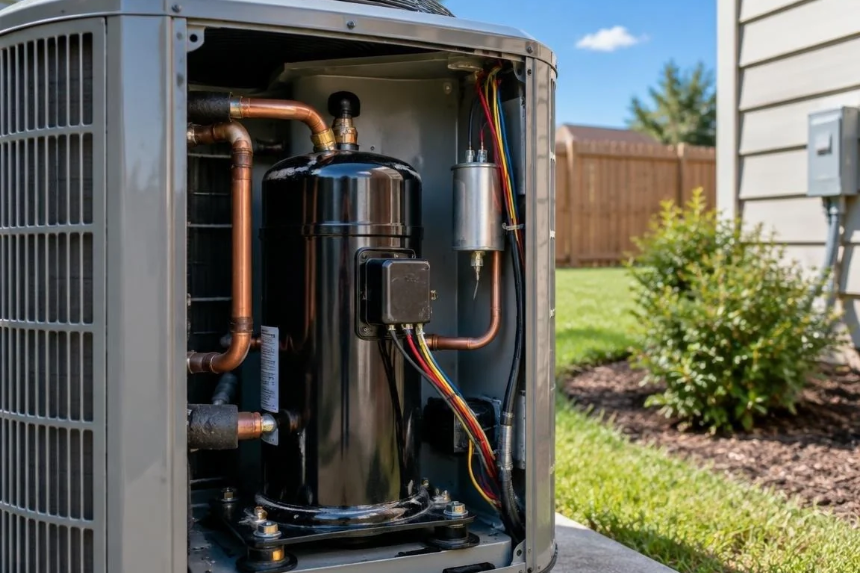
To understand why your cooling system might be silent, it helps to view the compressor as the engine of your air conditioner. Its primary function is to pressurize the refrigerant gas, which allows it to circulate through the entire HVAC system. Without this pressurization, the refrigerant cannot undergo the necessary phase changes required to absorb heat from your indoor air and release it outdoors.
The Role of the Compressor in the Refrigeration Cycle
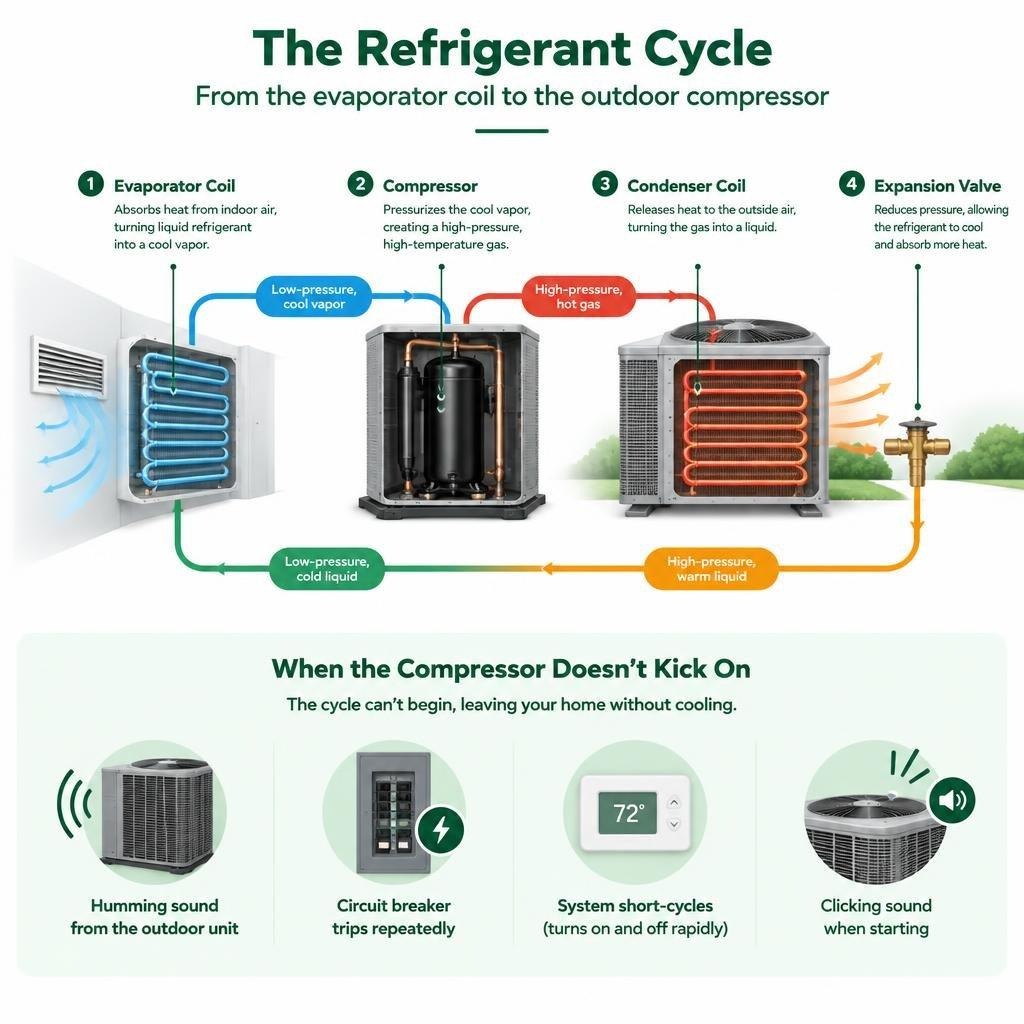
The refrigeration cycle is a closed loop. The compressor takes low-pressure, cool refrigerant vapor from the indoor evaporator coil and compresses it into a high-pressure, high-temperature gas. This hot gas then travels to the outdoor condenser coils, where the heat is dissipated into the outside air. As the refrigerant cools, it condenses into a liquid, flows back inside, and expands to absorb more heat. If the compressor fails to kick on, this cycle cannot begin, leaving your home without cooling regardless of how low you set your thermostat.
Common Warning Signs of Compressor Failure
Before the unit stops starting entirely, it often provides subtle warnings. A common indicator is a humming sound coming from the outdoor unit while the indoor fan continues to blow warm air. This suggests the motor is receiving power but lacks the “kick” needed to rotate. Other signs include the circuit breaker tripping repeatedly, the system short-cycling (turning on and off rapidly), or the unit struggling to start, often accompanied by a clicking sound.
Step-by-Step Guide to Troubleshooting AC Compressors
When the system fails, your first step should always be safety. Before approaching the outdoor unit, turn off the power at the service disconnect box or the main circuit breaker panel. Never attempt to touch internal wiring or electrical components if you are not comfortable with high-voltage systems. For those interested in the technical side of troubleshooting AC compressors, the goal is to isolate whether the issue is a simple electrical component failure or a mechanical seizure.
Electrical Checks for Troubleshooting AC Compressors
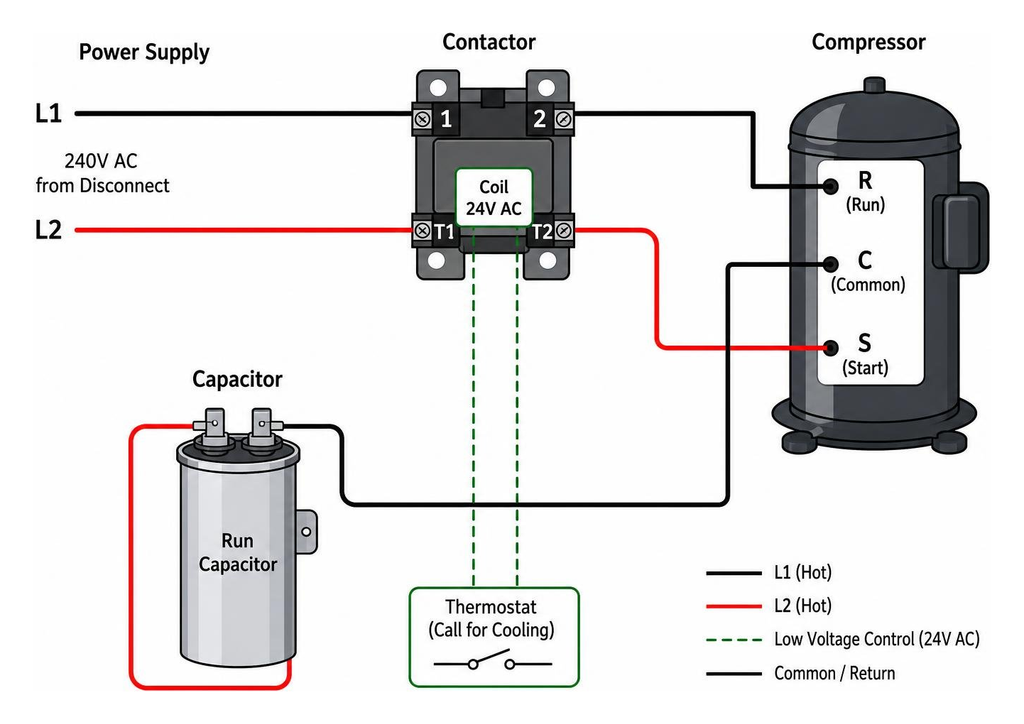
The most frequent culprit in a no-start scenario is the capacitor. This small, cylindrical component stores energy and provides the jolt needed to start the compressor motor. If the capacitor is bulging or leaking oil, it has failed. Another common point of failure is the contactor—the switch that allows electricity to flow to the compressor when the thermostat calls for cooling. If the contactor points are pitted or stuck, the compressor will not receive the signal to start.
Mechanical and Airflow Checks in Troubleshooting AC Compressors
Mechanical issues are often harder to diagnose. A “locked rotor” occurs when the internal parts of the compressor seize due to age, lack of lubrication, or extreme overheating. Additionally, restricted airflow—caused by dirty condenser coils or a clogged air filter—can cause the system to overheat, triggering a thermal overload switch that shuts the compressor down to prevent permanent damage.
Core Electrical and Mechanical Terms Demystified
Navigating HVAC terminology can be daunting. Here is a breakdown of the terms you might hear from a technician:
- Capacitance: The measure of a capacitor’s ability to store an electrical charge. If this drops below the manufacturer’s rating (measured in microfarads), the motor won’t start.
- Locked Rotor Amperage (LRA): The high amount of current drawn when a motor is trying to start but is physically stuck.
- Contactor Pitting: The erosion of metal contacts caused by electrical arcing, which prevents a clean connection.
- Thermal Switch: A safety device that cuts power when the compressor reaches dangerous temperatures.
Component Common Symptom Diagnostic Fix Capacitor Humming, no start Test capacitance; replace if faulty Contactor Clicking sound Inspect contacts; replace if pitted Compressor Motor Tripped breaker; high heat Check windings; replace unit if seized Airflow/Coils System overheating Clean coils and replace filters
Repairing vs. Replacing: Making the Cost-Effective Decision
Deciding between a repair and a full replacement depends heavily on the age and condition of your system. If the issue is a failed capacitor or contactor, these are relatively inexpensive parts that can extend the life of your unit significantly. However, if the compressor motor itself has failed, the cost of labor and parts can be substantial.
Generally, if your HVAC system is over 10 years old and the compressor requires a major repair, replacing the entire unit is often the more logical investment. A new system will offer better energy efficiency, lower utility bills, and the peace of mind that comes with a full manufacturer’s warranty.
Preventive Maintenance to Prevent Future Compressor Failures
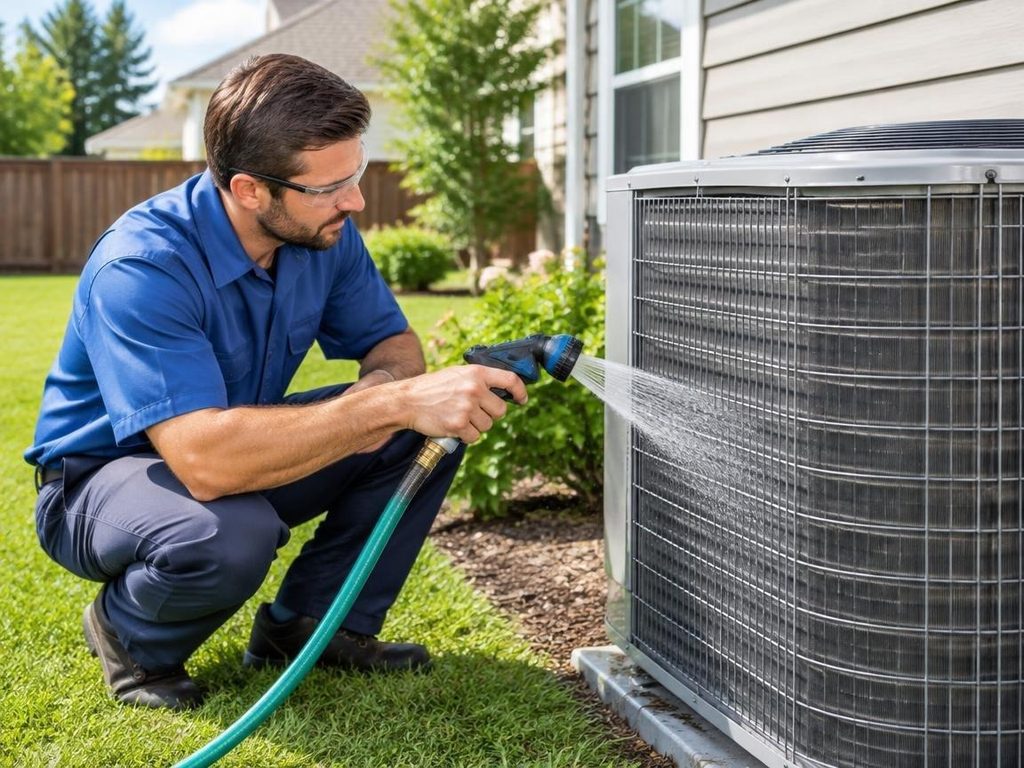
Many compressor failures are preventable. The most effective way to protect your system is through regular maintenance:
- Change Filters: Replace your indoor air filters every 30 to 90 days. Restricted airflow is a leading cause of compressor overheating.
- Clear Debris: Ensure your outdoor unit has at least two feet of clearance from landscaping, grass clippings, and debris.
- Clean Coils: Keep the outdoor condenser coils clean so heat can escape efficiently.
- Professional Tune-ups: Schedule a professional inspection every spring. A technician can check electrical connections, test capacitor health, and monitor refrigerant levels before the summer heat arrives.
Frequently Asked Questions About AC Compressor Issues
Why is my AC compressor humming but not starting?
This is usually caused by a bad start capacitor, which fails to provide the necessary boost to turn the motor. It can also indicate that the compressor is “locked” or that the supply voltage is insufficient to overcome the starting load.
Is it safe to keep running the AC if the compressor will not kick on?
No. If the compressor is humming or failing to start, running the system can cause the motor to overheat, potentially leading to a fire hazard or permanent mechanical damage to the compressor windings. Turn the system off at the thermostat and the breaker until it is repaired.
How much does it typically cost to replace a failed AC compressor?
Costs vary based on the model and the complexity of the installation. While minor electrical repairs are affordable, replacing a compressor out of warranty is a major expense. Because of this, many homeowners choose to replace the entire outdoor unit or the full HVAC system to gain the benefits of modern efficiency standards.
Conclusion
A compressor that won’t kick on is a clear sign that your system needs attention. While basic checks like inspecting your thermostat settings and ensuring the breaker is set can rule out simple issues, most compressor problems require professional diagnostic tools and training. By prioritizing regular maintenance, you can keep your system running smoothly and avoid the stress of a mid-summer breakdown. When in doubt, reach out to a local professional to ensure your home stays cool and your equipment remains in good working order.