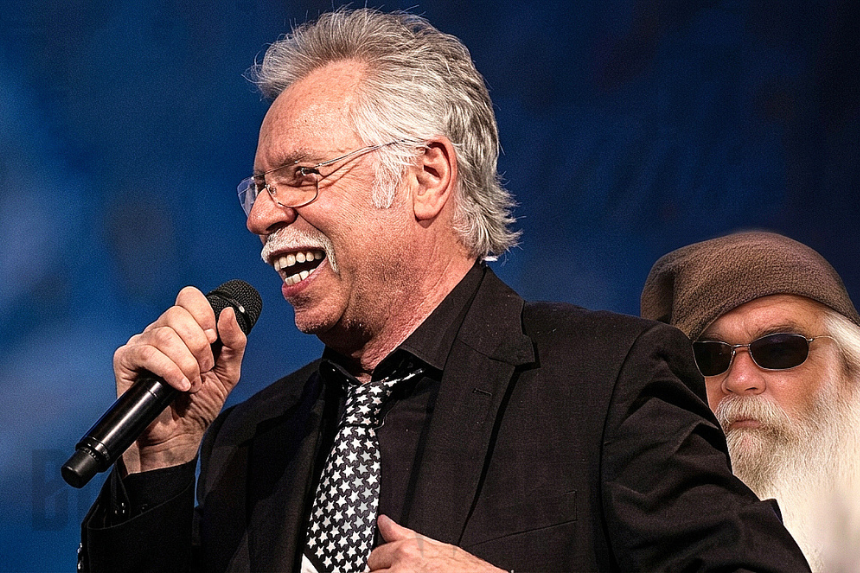
Who Was Joe Bonsall?
Joseph Sloan Bonsall Jr. was born on May 18, 1948, in Philadelphia. From an early age, he developed a deep appreciation for gospel music, a passion that would eventually define his life’s work.
In 1973, Bonsall joined The Oak Ridge Boys, a group transitioning from gospel roots into mainstream country music. His arrival marked a pivotal turning point. With his energetic tenor vocals, the group entered a golden era during the late 1970s and early 1980s.
The Oak Ridge Boys went on to produce iconic hits such as “Elvira,” “Bobbie Sue,” and “American Made.” Over time, the group earned 17 No. 1 country singles, millions of album sales, and a permanent place in country music history. Their career reached another major milestone in 2015 when they were inducted into the Country Music Hall of Fame.
Outside music, Bonsall also built a respected literary career, authoring 11 books ranging from memoirs to inspirational works and children’s stories. This added both creative fulfillment and another revenue stream to his financial portfolio.
Joe Bonsall Net Worth
Joe Bonsall’s estimated net worth stood at approximately $3 million to $5.5 million. This estimate is based on several key income sources, including recording royalties, touring earnings, merchandise and licensing revenue, book royalties, real estate holdings, and long-term savings and investments.
Unlike modern pop stars who generate massive income through streaming and brand endorsements, Bonsall built wealth through traditional entertainment channels, album sales, live performances, and long-term asset ownership.
His wealth reflects the economics of a different music era, where artists often earned steady but less explosive income compared to today’s viral celebrities.
| Fact | Details |
| Full Name | Joe Bonsall |
| Estimated Net Worth | $3 million – $5.5 million |
| Primary Income Source | Music career with The Oak Ridge Boys |
| Major Earnings | Touring, royalties, book sales, merchandise |
| Career Span | 1973 – 2023 |
| Most Valuable Asset | 350-acre Tennessee–Kentucky farm |
| Other Assets | Savings, investments, personal property |
| Wealth Peak | Late career (2015–2024) |
| Financial Status | Stable mid-single-digit millionaire |
Recording Royalties and Album Sales
The Oak Ridge Boys released 43 studio albums and sold approximately 6.7 million albums worldwide. Their commercial peak came in the 1980s, when albums like Fancy Free became major successes. Released in 1981, Fancy Free achieved double-platinum certification, driven largely by the enormous popularity of “Elvira.”
Industry royalty structures suggest that artists from that era typically earned around $1 to $1.50 per album sold after label deductions. Assuming this average, total royalty earnings from album sales could reach several million dollars.
After dividing earnings among band members and accounting for contractual obligations, Joe Bonsall’s personal share from album and single royalties likely fell between $1.5 million and $4 million over his lifetime.
Touring: The Primary Source of Wealth
The Oak Ridge Boys became known for relentless touring, performing year after year across theaters, arenas, fairs, and music festivals. Even decades after their commercial peak, they continued drawing strong audiences.
Touring economics in country music often favor established acts with loyal fanbases. Ticket revenue, VIP experiences, and performance guarantees generate reliable income—especially for groups with multigenerational appeal.
A typical Oak Ridge Boys show could gross tens of thousands of dollars. Over several decades, this translates into substantial revenue.
Assuming the group performed 30 to 40 shows annually over 40-plus years, gross touring revenue could easily reach tens of millions of dollars.
Joe Bonsall’s lifetime share from touring income likely landed between $5 million and $10 million before personal expenditures.
Songwriting and Publishing Revenue
Unlike some artists who accumulate large publishing royalties, Joe Bonsall had relatively limited songwriting income.
Most of The Oak Ridge Boys’ biggest hits were written by outside songwriters, meaning publishing royalties flowed primarily to composers and publishers rather than performers.
Bonsall did contribute creatively through select works, including “G.I. Joe and Lillie,” a song inspired by his parents.
Because his songwriting catalog remained modest, his publishing income was comparatively small, likely under $50,000 in meaningful lifetime earnings.
Books, Media Appearances, and Side Ventures
Over the years, he authored 11 books, including memoirs, faith-based writings, and children’s literature. Book royalties generally do not generate massive income unless titles become bestsellers, but they can provide steady supplemental earnings.
His literary work likely produced $50,000 to $100,000 in lifetime royalties.
He also appeared on television programs, talk shows, and country music specials. These appearances helped maintain public visibility and strengthen the Oak Ridge Boys brand.
Media appearance income was likely modest, estimated below $100,000 in total.
Merchandise sales also contributed incremental revenue. Branded apparel, souvenirs, and concert memorabilia typically generate additional earnings during tours, though these profits are usually shared across the group and management.
Combined, these side ventures added meaningful but secondary support to his overall wealth.
Real Estate and Personal Assets
He owned a 350-acre farm located near the Tennessee–Kentucky border, a property that represented both lifestyle value and financial security. Rural acreage in this region can carry substantial market value depending on land quality, agricultural utility, and development potential.
Industry estimates place the farm’s value at roughly $2 million to $3 million.
In addition to land ownership, Bonsall likely held:
- Personal residence equity
- Vehicles and equipment
- Retirement accounts
- Brokerage investments
- Personal collectibles
These assets added another $1 million to $2 million to his balance sheet.
Real estate often plays a crucial role in preserving wealth for veteran entertainers, particularly those from earlier generations who favored tangible assets over aggressive speculation.
Estimated Assets and Liabilities
A practical financial breakdown of Joe Bonsall’s estate suggests the following:
| Category | Estimated Value |
| Real Estate | $2.5M–$3.0M |
| Investments & Savings | $0.5M–$1.5M |
| Book Royalties & Intellectual Property | $50K–$100K |
| Personal Property | $100K–$300K |
| Total Assets | $3.15M–$4.9M |
Possible liabilities include mortgages or financing obligations tied to property.
| Liability | Estimated Value |
| Mortgage / Loans | $500K–$1M |
| Other Debts | Minimal |
After subtracting liabilities, Joe Bonsall’s estimated net worth reasonably falls within the $3 million to $5.5 million range.
Career Milestones That Shaped His Wealth
His 1973 entry into The Oak Ridge Boys marked the beginning of sustained professional income. The early 1980s brought commercial breakthroughs, with hit records dramatically increasing royalty earnings and concert demand.
The release of Fancy Free in 1981 represented a major wealth-building moment, as “Elvira” became one of the group’s most commercially successful songs.
The 2015 Country Music Hall of Fame induction reinforced the group’s legacy, boosting long-term brand value, merchandise demand, and touring relevance.
In 2024, Bonsall retired following an ALS diagnosis and passed away on July 9, closing an extraordinary chapter in country music history.
Final Thoughts
Joe Bonsall’s financial legacy reflects the career of a dedicated musician who built wealth through consistency rather than celebrity excess.
His estimated $3 million to $5.5 million net worth came primarily from decades of touring with The Oak Ridge Boys, supplemented by recording royalties, book sales, merchandise, investments, and valuable real estate holdings.
More important than the numbers, however, is the legacy he left behind. Joe Bonsall represented professionalism, artistic longevity, and unwavering dedication to fans. His career stands as proof that enduring success in music is often built not through fleeting fame, but through decades of disciplined craft and authentic connection.