
Termites don’t usually announce themselves. There’s no loud warning, no obvious sign at first glance. They work quietly behind walls, under floors, and inside timber structures until the damage becomes expensive and stressful. In Melbourne, where many homes have timber framing and varying soil conditions, they’re a real concern for homeowners.
The good news is that you don’t need to be an expert to catch early warning signs or reduce your risk. With a bit of awareness and a few simple habits, you can protect your home before things get serious.
Understanding how termites show up in everyday life in Melbourne homes
Think of termites as nature’s recyclers of wood—but unfortunately, your house can become part of their “menu.”
In Melbourne suburbs, especially areas with older homes or gardens close to natural bushland, termites often start outside. They live underground in colonies and build hidden mud tunnels to reach food sources like timber fences, decking, or even the wooden frame of your house.
A common real-life example is a homeowner noticing a wooden fence post that suddenly feels hollow when tapped. It may look fine on the outside, but inside it’s already been eaten away. Another example is floorboards that start to sound slightly different when walked on—almost like a soft crunch or hollow echo in certain spots.
In small businesses too, termites can quietly damage stockrooms or storage sheds. Warehouses storing cardboard boxes or wooden pallets are especially vulnerable because these materials are easy food sources once termites get inside.
What makes them tricky is that they avoid light and open air. So instead of being obvious, they move through hidden pathways like wall cavities or under concrete slabs.
Early signs and real-world clues you can spot without special tools
You don’t need equipment to notice early termite activity—your senses are often enough if you know what to look for.
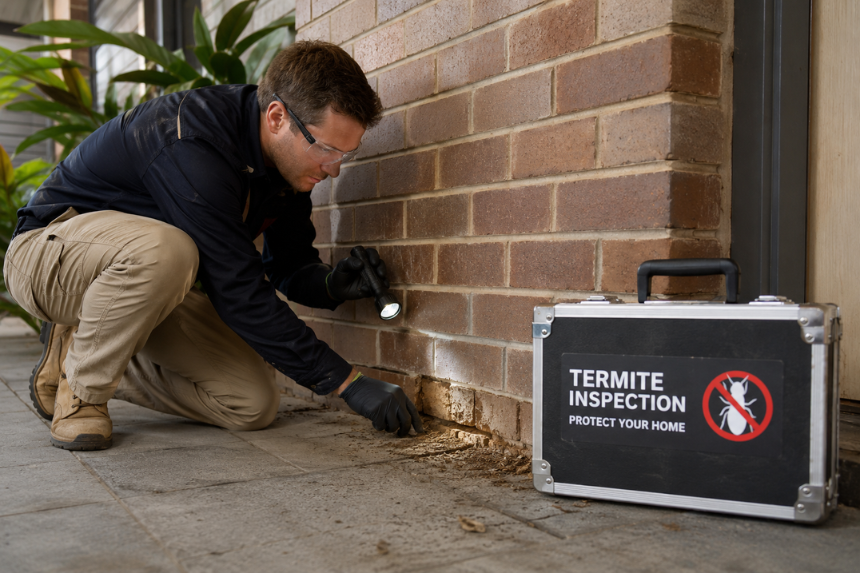
One of the most common signs is what professionals call “mud tubes.” These are thin, pencil-like tunnels made from soil and saliva that termites use to stay protected while traveling. You might see them along brick walls, foundations, or even garden edges. They can look like dried dirt lines, and many homeowners mistake them for harmless soil splashes.
Another sign is timber that sounds hollow when tapped. For example, if you knock on a door frame or skirting board and it feels unusually empty inside, that’s worth investigating.
You may also notice tiny piles of what looks like sawdust. This is actually termite droppings, often found near windowsills or wooden furniture.
In daily life, people sometimes notice doors or windows suddenly sticking more than usual. This happens because termites can alter the structure of wood, causing it to warp slightly due to internal damage and moisture changes.
Even gardeners sometimes spot warning signs first. A garden bed edging or wooden planter box that crumbles more easily than expected can be an early clue.
The key is not to panic over every small change, but to look for patterns—multiple signs in one area usually mean it’s time to take a closer look.
Practical prevention habits and what professionals actually do
Preventing termites is less about doing one big thing and more about consistent, simple habits that make your home less attractive to them.
Start outside. Keep soil, mulch, and garden beds slightly away from your home’s foundation. This creates a small gap that makes it harder for termites to silently enter your structure. In Melbourne’s wetter months, avoid letting water pool near your walls, because damp soil is exactly what termites love.
Firewood is another common risk. Many households stack it neatly against the house for convenience, but this can unintentionally create a direct pathway for termites. It’s better to store it a few metres away and off the ground if possible.
Inside the home, regular checks of basements, crawl spaces, and roof voids can make a big difference. Even a quick monthly look can help you notice changes early.
In commercial settings like cafes or retail shops, storing cardboard boxes directly on floors can attract termites over time. Using shelving or plastic containers reduces that risk.
Professional pest control services typically combine inspection with targeted treatment. This may include creating protective barriers in the soil or using baiting systems that disrupt termite colonies over time. These methods are designed to not just remove visible termites, but to eliminate the source colony as well.
If you ever suspect activity but aren’t fully sure, it’s better to get a proper inspection early. Termite damage tends to escalate quietly and can become costly before it becomes obvious.
For more detailed guidance or to explore professional inspection options, you can simply click here.
Final thoughts
Termites don’t appear overnight, and neither does the damage they cause. They work slowly and silently, which is exactly why early awareness matters so much.
By paying attention to small changes in timber, understanding where they’re likely to appear, and keeping your home environment less inviting, you already reduce a major part of the risk.
Whether you live in a newer townhouse or an older Melbourne home with character-filled wooden structures, a little attention today can save a lot of repair work tomorrow.