T-shirt printing has evolved into a precise and efficient process, where consistency and durability are just as important as design. Among the many methods available today, screen print transfer paper stands out for its ability to deliver reliable, high-quality results. This article explains how it works, why it is effective, and where it fits in modern garment printing.
What Is Screen Print Transfer Paper and How Is It Used?
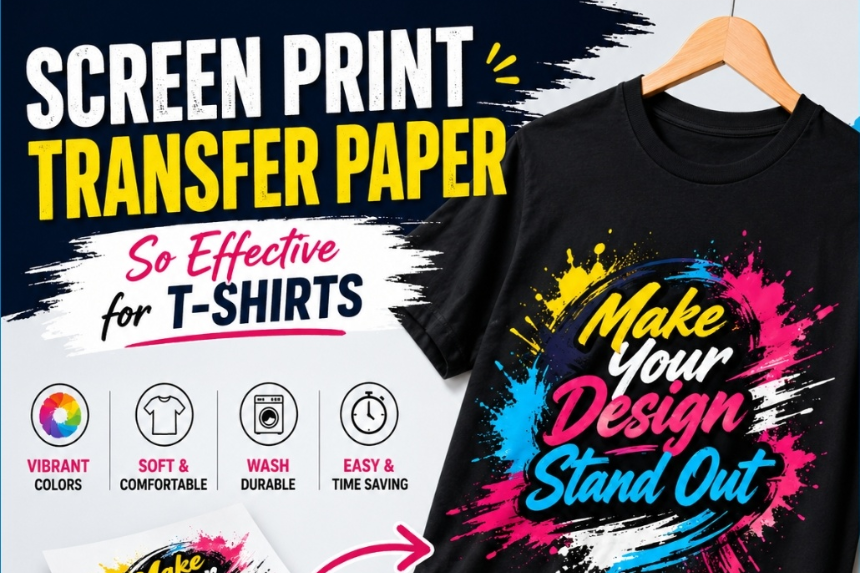
Screen print transfer paper is a coated sheet designed to hold ink during the printing process. Instead of applying ink directly onto fabric, the design is first printed onto this paper using traditional screen printing techniques. The printed design is then transferred onto a T-shirt using a heat press.
This two-step process separates design creation from application, allowing better control over both stages.
Why Does This Method Improve Print Quality?
Printing directly onto fabric can introduce variables such as uneven surfaces, fabric movement, and inconsistent ink absorption. By using transfer paper, the design is first created on a stable and controlled surface.
This results in:
- Sharper edges and finer detail
- More even ink distribution
- Reduced risk of smudging or distortion
As a result, the final print appears cleaner and more professional.
How Does Screen Print Transfer Paper Ensure Consistency?
Consistency is critical in T-shirt printing, especially for bulk orders. Since transfers are produced under the same controlled conditions, each design remains identical before application.
When these transfers are heat-pressed onto garments, the placement and appearance remain uniform across all items.
This makes the method highly suitable for:
- Company uniforms
- Promotional merchandise
- Event apparel
Can This Method Increase Production Efficiency?
Yes, one of the key advantages of screen print transfer paper is its impact on workflow efficiency. Transfers can be printed in advance and stored until needed. This reduces the need for repeated setup and allows faster production during busy periods.
Benefits include:
- Reduced setup time
- Faster turnaround for repeat orders
- Better inventory planning
This approach is particularly useful for businesses handling multiple or recurring designs.
How Does It Work with Screen Printing Design Software?
Modern printing processes often begin with digital design tools. Using screen printing design software, designers can prepare artwork with accurate dimensions, color separations, and layout adjustments before printing begins.
When combined with transfer paper, this ensures:
- Greater design accuracy
- Minimal variation between digital and final output
- Efficient preparation for multi-color prints
This integration of digital and physical processes improves overall production quality.
How Durable Are Screen Print Transfers?
Durability is a major factor in evaluating any printing method. Screen print transfers, when applied correctly, form a strong bond with the fabric through heat and pressure.
Key durability features include:
- Resistance to fading after multiple washes
- Reduced cracking or peeling
- Smooth finish that remains intact over time
This makes the method suitable for both everyday wear and long-term use.
Is Screen Print Transfer Paper Suitable for Different Order Sizes?
Screen print transfer paper offers flexibility for both small and large production runs. Businesses can print limited quantities for custom orders or prepare large batches for bulk production.
This adaptability supports:
- Custom t-shirt printing services
- On-demand printing models
- Large-scale commercial production
It allows printers to respond to varying customer needs without significant process changes.
Does This Method Support a Cleaner Workflow?
Compared to direct screen printing, this method simplifies the production environment. Since designs are pre-printed, there is less ink handling during the final stage.
This leads to:
- A more organized workspace
- Reduced chances of printing errors
- Easier workflow management
A cleaner process often contributes to improved efficiency and consistent output.
What Related Printing Methods Connect to This Process?
Screen print transfer paper is commonly associated with other widely used techniques such as:
- Heat press printing
- T-shirt transfer methods
- Garment printing techniques
- Custom apparel printing
These related methods highlight the versatility and relevance of transfer-based printing in today’s market.
Why Is Screen Print Transfer Paper Still Widely Used?
The continued use of screen print transfer paper is based on its balance of control, efficiency, and quality. By allowing designs to be prepared in advance and applied with precision, it reduces common printing challenges.
It supports consistent results, adapts to different production needs, and integrates well with modern tools like screen printing design software.
What Is the Key Takeaway?
Screen print transfer paper is effective because it separates the critical stages of printing design creation and application into controlled steps. This approach improves accuracy, enhances durability, and ensures consistency across all prints.
For T-shirt production, it remains a dependable method that combines traditional techniques with modern efficiency, resulting in professional and long-lasting prints.