Marcus Burleson: Military Service, Injury, and Veteran Support
Marcus A. Burleson (1981-2025) was a United States Marine Corps Staff Sergeant and Explosive Ordnance Disposal (EOD) technician whose career reflected exceptional courage and dedication to service. He deployed to Iraq, Papua New Guinea, and Afghanistan, serving in one of the military’s most dangerous roles, disarming explosive threats on the front lines.
In 2011, Burleson was critically injured in an improvised explosive device (IED) blast that left him with severe, life-altering injuries. Following extensive rehabilitation, he emerged as a veteran advocate, lending his voice to organizations such as the Boot Campaign and benefiting from a specially adapted smart home provided by the Tunnel to Towers Foundation.
Facts: Marcus A. Burleson
| Fact | Details |
| Full Name | Marcus A. Burleson |
| Date of Birth | January 13, 1981 |
| Date of Death | October 9, 2025 |
| Age at Death | 44 years |
| Nationality | American |
| Military Branch | United States Marine Corps |
| Rank | Staff Sergeant |
| Specialty | Explosive Ordnance Disposal (EOD) Technician |
| Service Years | 2002 – 2011 |
| Major Deployments | Iraq, Papua New Guinea, Afghanistan |
| Critical Incident | Severely injured in an IED explosion (December 9, 2011, Afghanistan) |
| Injuries Sustained | Loss of both arms, multiple fractures, severe burns, broken neck and jaw, partial vision loss |
| Medical Recovery | Extensive rehabilitation at Walter Reed Army Medical Center (2011–2013) |
| Military Awards | Purple Heart, Combat Action Ribbon, Navy Unit Commendations |
| Post-Service Role | Veteran advocate and public speaker |
| Affiliations | Ambassador for the Boot Campaign |
| Housing Support | Recipient of a mortgage-free smart home from the Tunnel to Towers Foundation |
| Family Life | Married; father of children |
| Place of Residence | Texas, United States (later life: Dublin, Texas) |
| Cause of Death | Single-vehicle car accident |
| Burial Site | Dallas-Fort Worth National Cemetery |
Early Life and Foundations
Born on January 13, 1981, Marcus Burleson grew up in Texas, a background often described as deeply rooted in traditional values and patriotism. While detailed records of his childhood remain limited, his later life suggests a formative environment that emphasized discipline, responsibility, and service to the country.
After completing secondary education, Burleson attended Odessa College in Texas for approximately two years. Although it is unclear whether he completed a degree, his early academic path eventually gave way to a stronger calling: military service.
In mid-2002, he enlisted in the United States Marine Corps, beginning a career that would define his identity and legacy. He completed recruit training at Marine Corps Recruit Depot San Diego in June 2002, followed by infantry and logistics training that prepared him for operational roles in support and combat environments.
Early Military Service and Deployments
Burleson’s early Marine Corps career centered on logistics and supply operations, a critical backbone of military readiness. From 2002 to 2005, he served at Headquarters, 3rd Marine Regiment in Hawaii as a supply chief. He later continued in a similar role with Headquarters Marine Aircraft Group 13 (MAG-13) in Yuma, Arizona.
During this period, he deployed to Iraq as part of Marine Wing Security Squadron 372, gaining firsthand experience in combat-zone operations. These early deployments shaped his understanding of battlefield realities and reinforced his commitment to front-line service.
By the mid-2000s, Burleson had already established himself as a disciplined and capable Marine. However, his career trajectory would soon shift toward one of the most technically demanding and dangerous specialties in the armed forces.
Transition to Explosive Ordnance Disposal (EOD)
In 2009, Burleson was selected for training in Explosive Ordnance Disposal, a highly specialized field responsible for identifying, neutralizing, and disposing of explosive threats, including IEDs. He graduated from Naval EOD School in October 2009, officially becoming a certified EOD technician.
This transition marked a defining moment in his career. EOD technicians operate under constant risk, often working in unstable environments where a single miscalculation can be fatal. Burleson’s selection and completion of this training reflected both technical skill and psychological resilience.
Following his qualification, he served in several missions, including support operations in Hawaii and a deployment with the Joint POW/MIA Accounting Command (JPAC) in Papua New Guinea in 2010. By late 2010, he was assigned to 2nd EOD Company at Camp Lejeune, North Carolina, preparing for deployment to Afghanistan.
Afghanistan Deployment and the 2011 IED Incident
In October 2011, Staff Sergeant Burleson deployed to Afghanistan as an EOD team leader with 2nd Platoon, 2nd EOD Company. His mission involved clearing explosive threats in active combat zones—work that demands precision under extreme pressure.
On December 9, 2011, during an operation to neutralize an improvised explosive device, Burleson encountered a secondary explosive. As he attempted to render it safe, the device detonated while he was kneeling over it.
The explosion had devastating consequences. According to veteran support organizations, the blast resulted in the immediate loss of one arm, with the second later amputated due to complications. He also suffered a broken neck, fractured jaw, severe burns, multiple fractures, and loss of vision in his left eye.
This single moment fundamentally altered the course of his life, marking one of the most severe survivable injuries recorded among EOD personnel.
Recovery and Rehabilitation
Following the explosion, Burleson was evacuated to Walter Reed Army Medical Center, where he underwent extensive medical treatment and multiple surgeries. His recovery process lasted approximately two years, from late 2011 through 2013.
During this period, he faced extraordinary physical and emotional challenges, including adaptation to prosthetics, rehabilitation therapy, and relearning basic physical functions such as standing and walking. Despite the severity of his injuries, he demonstrated remarkable persistence and determination.
Over time, Burleson regained significant independence and developed a renewed outlook on life. In interviews, he emphasized resilience and gratitude, once stating that despite his limitations, there remained “things to cherish about today and tomorrow.”
Advocacy and Veteran Support Work
After completing rehabilitation, Marcus Burleson transitioned into veteran advocacy, dedicating his life to supporting others who had experienced similar sacrifices.
In 2014, he became an inaugural ambassador for the Boot Campaign, a nonprofit organization dedicated to providing assistance to veterans and military families. Through public speaking engagements and outreach programs, he shared his personal story to raise awareness about the physical, emotional, and social challenges faced by wounded veterans.
He frequently emphasized civic responsibility and patriotism, stating that supporting military members was a shared national duty.
His advocacy work extended beyond public appearances. He actively mentored other wounded veterans, offering guidance grounded in lived experience. His contributions were honored through initiatives such as “The Burleson Sock,” a fundraising campaign supporting veteran programs.
In 2017, his life took another significant turn when the Tunnel to Towers Foundation provided him with a mortgage-free, specially adapted smart home in Dublin, Texas. This home was designed to accommodate his physical needs, allowing him and his family to live more independently and securely.
Family Life and Personal Character
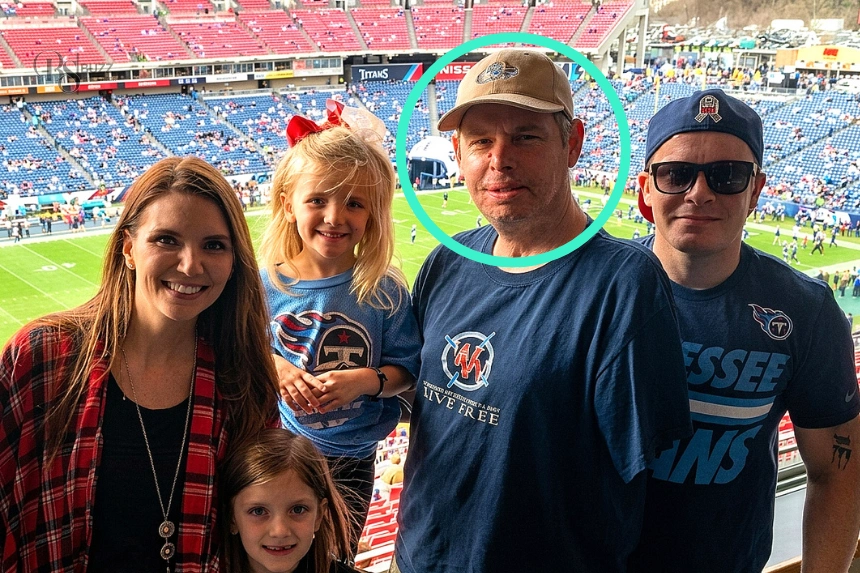
Marcus Burleson was widely recognized not only as a Marine and advocate but also as a devoted husband and father. He lived in Texas with his wife and children, and much of his post-military life centered around family stability and care.
He and his wife raised multiple children, and Burleson often spoke publicly about the importance of fatherhood in his recovery and identity. His family played a central role in his resilience, providing emotional grounding through his rehabilitation and advocacy work.
Marcus Burleson Death in 2025
On October 9, 2025, Marcus Burleson died in a single-vehicle car accident in Dublin, Texas. Reports indicate that his vehicle left the roadway and struck parked vehicles, resulting in fatal injuries. He was 44 years old.
His passing was met with widespread mourning across veteran communities and organizations that had worked closely with him. Memorial services were held later that month in Texas, and he was laid to rest at Dallas–Fort Worth National Cemetery, honoring his military service and sacrifice.
Awards, Honors, and Recognition
Throughout his Marine Corps career, Burleson received numerous military honors, including:
- Purple Heart
- Combat Action Ribbon
- Navy Unit Commendation (two awards)
- Additional campaign and service medals
These recognitions reflect both his bravery in combat and his sustained service in high-risk environments.
Beyond formal awards, his legacy is also defined by symbolic achievements, including his post-injury participation in firearms training events and his continued engagement with veteran communities.
Legacy and Impact
Marcus Burleson’s legacy extends beyond his military record. He represents a generation of service members whose lives were profoundly shaped by asymmetric warfare and the evolving dangers of modern combat.
His transformation from combat engineer to severely wounded veteran to national advocate reflects a rare continuity of service, one that did not end with injury but instead evolved into a different form of contribution.
Through his work with the Boot Campaign, the Tunnel to Towers Foundation, and other veteran organizations, Burleson helped shift public awareness toward the long-term needs of wounded service members and their families.
Conclusion
The life of Marcus Burleson stands as a powerful narrative of courage, loss, recovery, and purpose. From his early days in Texas to his service in some of the world’s most dangerous environments, and finally to his role as a veteran advocate and family man, his journey reflects both the cost and the enduring meaning of military service.
Though his life ended tragically in 2025, his influence continues through the organizations he supported, the veterans he mentored, and the example he set. Marcus Burleson remains a lasting symbol of resilience and devotion, both to country and to the people who serve it.