
Introduction
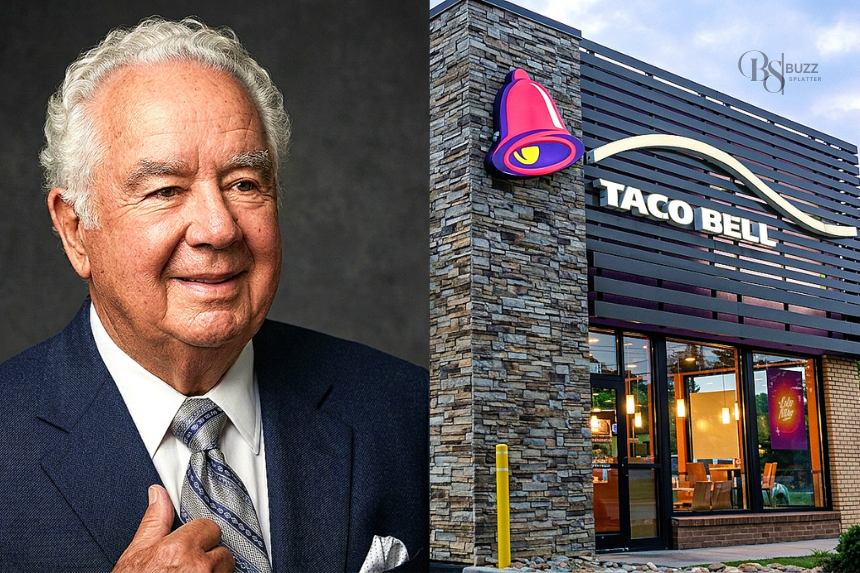
Taco Bell, founded in 1962 by Glen Bell and headquartered in Irvine, has evolved into one of America’s most financially successful fast-food brands, with an estimated 2026 net worth of $15–20 billion. Backed by a franchise-driven business model, strong digital innovation, and a global network of more than 8,700 restaurants, Taco Bell continues to expand its market influence while serving as a major growth engine for Yum! Brands.
Facts About Taco Bell Net Worth
| Fact | Details |
| Company Name | Taco Bell |
| Parent Company | Yum! Brands |
| Founded | 1962 |
| Founder | Glen Bell |
| Headquarters | Irvine |
| Estimated Taco Bell Net Worth 2026 | $15-20 billion |
| Estimated Midpoint Valuation | Approximately $18-19 billion |
| Estimated Brand Value | $6.9-7.2 billion |
| 2024 Global System Sales | Approximately $17.2 billion |
| Reported Yum! Brands Revenue | Approximately $2.86 billion |
| 2024 Operating Profit | Approximately $1.05 billion |
| Global Restaurant Count (2024) | Around 8,757 locations |
| Franchised Restaurants | Approximately 8,253 |
| Company-Owned Restaurants | Approximately 504 |
| Franchise Ratio | Roughly 95% franchised |
| U.S. Restaurant Share | About 87% of locations |
| International Presence | 1,100+ international stores |
| Key Growth Strategy | International expansion and digital ordering |
| Digital Platform | “Byte by Yum” ecosystem |
| Average Revenue Per Restaurant | Approximately $1.9-2 million annually |
| Estimated EBITDA | Around $1.2 billion |
| Major Revenue Sources | Franchise royalties, licensing fees, company-operated sales |
| Main Competitors | McDonald’s, Chipotle Mexican Grill, Wendy’s |
| International Expansion Goal | Around 3,000 international units by 2030 |
| Valuation Drivers | Franchise income, brand equity, digital growth, operating margins |
| Major Risks | Inflation, labor costs, market competition, changing consumer preferences |
Understanding Taco Bell’s Net Worth
Taco Bell’s valuation is shaped by far more than restaurant sales alone, with analysts weighing factors such as system-wide revenue, franchise royalty streams, brand strength, operating margins, long-term growth potential, and its overall contribution to Yum! Brands’ market value.
Unlike traditional restaurant chains that rely heavily on company-owned stores, Taco Bell operates with an asset-light franchise structure. This model significantly boosts profitability because franchisees absorb most operational costs while Taco Bell collects royalty and licensing income.
Taco Bell’s Financial Scale in 2025 and 2026
In 2024, Taco Bell generated approximately $17.2 billion in global system sales, representing total customer spending across all restaurants worldwide. This marked nearly 8% year-over-year growth, reflecting continued consumer demand and expansion efforts.
However, Taco Bell’s reported revenue under Yum! Brands was significantly lower at roughly $2.86 billion. The difference exists because most Taco Bell restaurants are operated by franchisees rather than the corporation itself.
Most customer spending flows directly through independently operated franchise locations, while Taco Bell primarily earns revenue through royalties, licensing agreements, and franchise-related fees tied to its global restaurant network.
This system allows Taco Bell to maintain strong operating margins while reducing capital expenditures associated with restaurant ownership.
By 2026, analysts expect Taco Bell’s financial momentum to remain strong due to continued same-store sales growth, digital ordering expansion, and international development.
The Franchise Model Driving Taco Bell’s Value
One of the most important reasons behind Taco Bell’s estimated $15–20 billion valuation is its heavily franchised business structure.
As of late 2024, Taco Bell operated approximately 8,757 restaurants globally. Around 95% of those locations were franchised, while only about 504 remained company-owned.
This breakdown creates an exceptionally efficient revenue system.
| Revenue Source | Approximate Revenue |
| Company-operated stores | $1.155 billion |
| Franchise royalties and fees | $1.705 billion |
| Total reported Taco Bell revenue | $2.86 billion |
The royalty-heavy structure means Taco Bell earns substantial income without directly managing thousands of restaurant operations. As additional franchise locations open, profitability often rises faster than operating expenses.
This is why Taco Bell has become one of Yum! Brands’ most valuable divisions.
Taco Bell’s Contribution to Yum! Brands
Within Yum! Brands, Taco Bell has increasingly emerged as the company’s strongest growth engine.
In 2024, Taco Bell generated approximately $1.05 billion in operating profit, representing an 11% increase from the previous year. That figure accounted for roughly 38% of Yum! Brands’ divisional operating profit.
Compared to sister brands like KFC and Pizza Hut, Taco Bell has consistently delivered stronger same-store sales growth and more efficient margins.
Industry analysts frequently point to Taco Bell’s ability to combine affordability with menu innovation. Products such as Doritos Locos Tacos, Nacho Fries, Cantina Chicken items, and value-focused meal bundles continue attracting younger consumers while reinforcing brand loyalty.
Digital Innovation and Brand Expansion
Modern restaurant valuations increasingly depend on technology and customer engagement, not just food sales. Taco Bell has invested heavily in digital ordering, loyalty platforms, and app-based marketing.
The “Byte by Yum” digital ecosystem has become a major competitive advantage for Taco Bell. Mobile ordering, loyalty rewards, personalized promotions, and AI-supported operations have helped increase customer retention while improving efficiency.
Digital sales growth has accelerated in recent years as consumers shift toward app-driven ordering and delivery convenience.
At the same time, Taco Bell’s marketing strategy remains one of the most recognizable in fast food. The company consistently generates social media attention through limited-time menu items, celebrity collaborations, and youth-focused branding campaigns.
This combination of technology and cultural relevance strengthens Taco Bell’s overall enterprise value.
International Expansion and Long-Term Growth
Although Taco Bell remains heavily concentrated in the United States, international expansion is becoming a major driver of future valuation growth.
Approximately 87% of Taco Bell locations currently operate in the U.S., leaving substantial room for global development. Markets including India, the United Kingdom, Canada, the Philippines, and Japan have shown promising expansion opportunities.
Management has publicly discussed ambitions to reach roughly 3,000 international locations by 2030.
International growth matters because new global markets create long-term royalty streams while diversifying revenue sources beyond the U.S. economy. Investors typically reward restaurant companies that demonstrate scalable international potential.
As Taco Bell expands abroad with localized menus and modern restaurant formats, its valuation could continue climbing beyond current estimates.
Taco Bell Brand Value vs Enterprise Value
A common misunderstanding involves the difference between Taco Bell’s brand value and total enterprise value.
Independent brand valuation agencies estimate Taco Bell’s standalone brand equity at approximately $6.9-7.2 billion. These valuations focus strictly on the strength of the name, reputation, customer recognition, and intellectual property.
However, enterprise value includes much more:
- Franchise income
- Restaurant operations
- Future cash flows
- Growth expectations
- Real estate relationships
- Digital infrastructure
- Strategic market positioning
Because of these broader financial considerations, Taco Bell’s full enterprise value rises significantly above its brand-only valuation.
This distinction explains why analysts estimate Taco Bell’s total worth closer to $18–19 billion rather than the lower brand-equity figures.
Valuation Methods Used by Analysts
Several financial approaches support Taco Bell’s estimated valuation range.
Parent Company Allocation
Yum! Brands maintains a market value exceeding $40 billion, with additional debt pushing enterprise value beyond $50 billion. Since Taco Bell contributes roughly 38% of operating profit, analysts allocate a proportional share of Yum’s total value to Taco Bell.
This method alone suggests Taco Bell may be worth roughly $18–21 billion.
EBITDA Multiples
Restaurant businesses are often valued using EBITDA multiples. Taco Bell’s estimated EBITDA sits near $1.2 billion.
Applying industry-standard restaurant multiples between 12x and 16x places Taco Bell’s enterprise value between approximately $14 billion and $20 billion.
Discounted Cash Flow Analysis
DCF models project future cash flows based on growth assumptions, margins, and discount rates.
Using Taco Bell’s current profitability and moderate long-term growth expectations, most DCF scenarios generate valuations in the mid-to-high teens.
Taken together, these methods create a fairly consistent valuation picture.
Risks That Could Affect Taco Bell’s Net Worth
Despite its strong performance, Taco Bell still faces several risks that could impact future valuation.
Rising labor costs, food inflation, and increasing competition within the quick-service industry remain ongoing challenges. Consumer preferences are also shifting toward healthier dining options, forcing fast-food brands to continuously adapt.
International expansion presents additional uncertainty because success varies widely across different cultural markets.
Economic downturns could also pressure consumer spending and reduce same-store sales growth.
However, Taco Bell’s value-oriented pricing strategy may help cushion the business during weaker economic periods compared to premium restaurant brands.
Conclusion
Taco Bell has evolved far beyond a traditional fast-food chain. Through franchise efficiency, digital innovation, aggressive menu marketing, and expanding international reach, the company has built one of the most financially powerful restaurant businesses within Yum! Brands.
Current estimates place Taco Bell net worth 2025 and Taco Bell net worth 2026 in the range of approximately $15 billion to $20 billion, with a likely midpoint near $18–19 billion.
While brand-only valuations hover closer to $7 billion, Taco Bell’s full enterprise value reflects its global restaurant network, recurring franchise revenue, and long-term growth potential.
As the company continues expanding internationally and investing in technology-driven customer experiences, Taco Bell’s financial influence inside the global quick-service restaurant industry appears positioned to grow even further.