ATA-certified translator and interpreter, known for shaping Japanese-English translation standards through decades of institutional leadership and service.
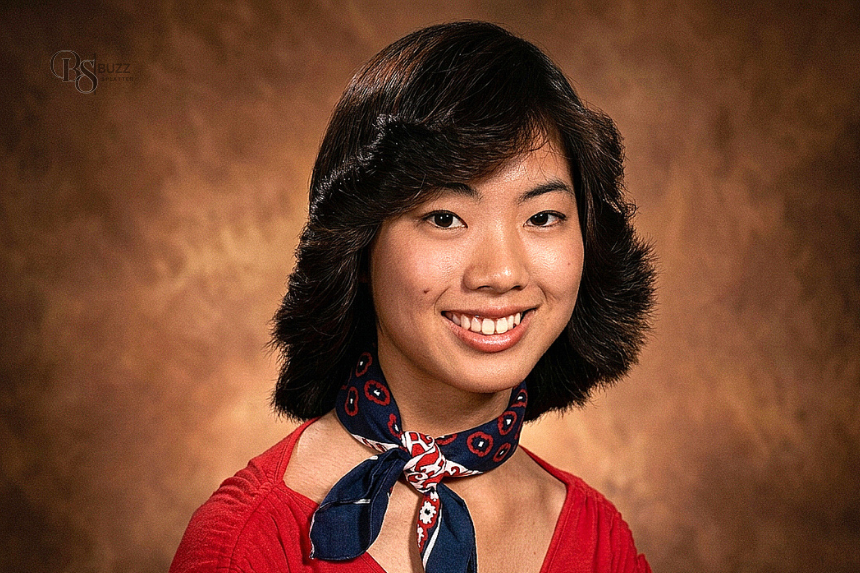
Manako Ihaya (born in January 1962) is a distinguished Japanese-to-English translator, interpreter, and former journalist based in Orange County, California. With a career spanning more than four decades, she has built a reputation for excellence in cross-cultural communication, contributing across journalism, legal and medical translation, and professional language services. Ihaya is an ATA-certified translator and a California Court-Registered Japanese interpreter, widely recognized for her linguistic precision, professional rigor, and ongoing contributions to mentorship and leadership within the translation community.
Manako Ihaya’s Facts
| Facts | Details |
| Full Name | Manako Ihaya (井隼真奈子) |
| Profession | Japanese-to-English Translator & Interpreter |
| Certification | ATA-Certified Translator (Japanese → English) |
| Current Base | Orange County, California, USA (Foothill Ranch area) |
| Nationality | Japanese-born, later based in the United States |
| Date of Birth | January 1962 |
| Age | 64 years (as of 2026) |
| Education | B.A. in English Literature, Sophia University (Tokyo) |
| Early Career | Editor & Writer, The Japan Times Weekly |
| Training | Simul Academy (Translation), UCLA Extension (Court Interpretation) |
| ATA Role | Director (2021–2024), Language Chair, Exam Grader, Workshop Presenter |
| JAT Role | Board Member (2006–2010), President (2007–2009) |
| Certification Milestone | ATA Certification achieved in 1999 |
| Court Interpreter Status | California Court-Registered Japanese Interpreter (2025) |
| Areas of Expertise | Legal, medical, financial, business, literary, and media translation |
| Interpretation Work | Court proceedings, depositions, medical seminars, conferences, cultural events |
| Editorial Work | Editor of JLD Times (1999–2001) |
| Family | Mother of four children |
| Notable Family Member | Reina Hardesty (daughter, actress) |
| Known For | Cross-cultural communication, translation leadership, professional mentorship |
| Legacy Focus | Advancing Japanese-English translation standards and mentorship in the field |
Early Life and Educational Background
Manako Ihaya, whose Japanese name is written as 井隼真奈子, was born in Japan in January 1962. Raised between Japan and the United States, she developed bilingual fluency at an early age, allowing her to navigate both Japanese and English-speaking environments with ease. This multicultural upbringing would later become one of the defining strengths of her professional identity.
Her academic path led her to Sophia University in Tokyo, one of Japan’s most internationally recognized universities. There, she earned a Bachelor of Arts degree in English Literature. During her educational years, Ihaya demonstrated an early passion for language and storytelling. As a high school student, she independently translated a book, an experience that foreshadowed her future career in translation and interpretation.
Manako Ihaya Age
Manako Ihaya was born in January 1962, which places her current age at 64 years old (1962–2026). Her age reflects a long-standing professional journey spanning more than four decades across journalism, translation, interpretation, and leadership within the global language services industry.
Career in Journalism at The Japan Times
Before becoming widely known in the translation community, Manako Ihaya worked in journalism. She served as an editor and writer for The Japan Times Weekly, one of Japan’s leading English-language publications. Her role at the newspaper allowed her to refine her editorial judgment, writing precision, and cross-cultural communication skills.
Working in media during a period of increasing globalization exposed her to international audiences and multilingual reporting. The experience also strengthened her ability to present Japanese ideas and perspectives clearly to English-speaking readers.
Her time in journalism ended in 1994, but the editorial discipline she developed there became highly valuable in her later translation and interpreting career. Many professional translators emphasize linguistic accuracy; however, Ihaya’s journalism background gave her an additional advantage in clarity, readability, and audience awareness.
Relocation to the United States
In 1995, while pregnant with her fourth child, Ihaya relocated from Japan to the United States. The move represented both a personal and professional transition. Seeking broader work opportunities and financial stability, she began focusing more seriously on translation and interpreting as a full-time profession.
After settling in California, she pursued additional professional training to strengthen her credentials. She completed translation courses at Simul Academy in Tokyo and later enrolled in a Court Interpretation course through UCLA Extension. These specialized programs expanded her expertise in professional interpreting, legal terminology, and bilingual communication standards.
Her transition illustrates a broader reality within the language services industry: successful translators often combine academic knowledge with practical specialization and continuous professional development.
Becoming an ATA-Certified Translator
A major milestone in Manako Ihaya’s career came in 1999 when she passed the certification examination for the American Translators Association (ATA). Achieving ATA certification is considered one of the highest professional distinctions for translators in the United States, particularly in specialized language pairs such as Japanese-to-English translation.
That same year, she also joined the Japan Association of Translators (JAT), beginning a long period of active involvement in professional translation organizations.
As an ATA-certified Japanese-to-English translator, Manako Ihaya built a wide-ranging professional portfolio spanning legal and medical translation, financial and corporate documentation, literary works, and media editorial content, reflecting both linguistic precision and cross-cultural expertise.
In addition to written translation, she established herself as a professional interpreter for legal proceedings, medical lectures, conferences, tours, and depositions. Her expertise eventually extended into court interpretation, and in 2025 she became a California Court-Registered Japanese Interpreter.
This certification further strengthened her standing within the legal interpreting field, where precision and ethical standards are critically important.
Contributions to the Translation Community
Beyond her direct client work, Manako Ihaya is widely respected for her contributions to the professional translation community. She has consistently participated in efforts to improve industry standards, mentor emerging translators, and strengthen professional networks.
From 1999 to 2001, she served as Editor of the JLD Times, the newsletter of the ATA’s Japanese Language Division. Her editorial role helped facilitate communication among Japanese-language professionals and encouraged knowledge-sharing within the industry.
Over the years, Ihaya assumed several influential leadership roles within the American Translators Association, serving as an ATA Director from 2021 to 2024, Japanese Language Division Language Chair, certification exam grader, and mentor known for guiding emerging translators through workshops and professional training initiatives.
Her responsibilities often involved evaluating translation quality, supporting certification standards, and helping newer professionals improve their skills.
Within the Japan Association of Translators, Ihaya played an equally significant role. She served on the Board of Directors from 2006 to 2010 and held the position of President from 2007 to 2009. During her presidency, she contributed to strengthening collaboration among translators and interpreters working across different countries and industries.
Expertise in Interpretation and Cross-Cultural Communication
One of the defining characteristics of Manako Ihaya’s career is her versatility. Unlike professionals who specialize exclusively in written translation or spoken interpretation, she successfully built expertise in both areas.
Throughout her career, Ihaya has interpreted across a broad range of high-stakes settings, including court proceedings, legal depositions, medical seminars, business conferences, cultural programs, and expert consultations involving Japanese language and cultural affairs.
Interpretation requires more than bilingual fluency. Professionals must process information instantly, maintain neutrality, and accurately convey meaning under pressure. Ihaya’s long-standing success in interpreting reflects both linguistic mastery and exceptional concentration.
Her ability to bridge cultural differences has made her particularly valuable in legal and professional settings where misunderstanding can carry serious consequences.
Personal Life and Family Background
Outside her professional accomplishments, Manako Ihaya is also known as the mother of four children. Among her daughters is Reina Hardesty, an American actress recognized for her work in television and film. Reina Hardesty’s parents are confirmed as Manako Ihaya and journalist Greg Hardesty.
Although Ihaya generally maintains a private personal life, occasional public references have offered small glimpses into her role as a parent. In a 2009 news feature discussing teenage technology use, one of her daughters referenced her mother’s understanding perspective on communication and mobile phone habits.
These moments reveal a balance between professional dedication and family responsibilities. Her move from Japan to the United States while raising children further highlights the resilience and adaptability that shaped her life journey.
Today, she is associated with Orange County, California, particularly the Foothill Ranch area.
Influence and Lasting Legacy
Manako Ihaya’s influence extends well beyond her individual translation work, reflecting the broader significance of intercultural communication in today’s global landscape. Through her leadership within the ATA and JAT, she contributed to advancing professional standards, mentoring emerging translators, and reinforcing the credibility of Japanese-English language services. Combined with her bilingual upbringing and international experience, her career has come to represent a thoughtful blend of linguistic precision, cultural fluency, and professional leadership.
Conclusion
Manako Ihaya’s career reflects excellence in translation, interpretation, journalism, and professional leadership. From her early days in Japan to her respected role in California’s translation and interpreting community, she has consistently demonstrated dedication to language accuracy and cross-cultural communication.
Her story is also one of adaptability and lifelong learning. Whether working as a journalist, interpreter, ATA director, or mentor, Ihaya has remained committed to helping people understand one another across linguistic and cultural boundaries.
As global communication continues to expand, professionals like Manako Ihaya remain essential in ensuring that language serves as a bridge rather than a barrier.