In Wilmington, North Carolina, warm temperatures, humid air, frequent rain, and coastal storms can change where pests feed, breed, and shelter. Weather does not cause every infestation, but it can make existing entry points, moisture problems, and outdoor harborage more noticeable. Understanding those patterns helps homeowners make practical decisions about pest control before a small issue becomes harder to manage.
Conditions can differ from one property to the next. A shaded yard near a drainage channel may hold moisture longer than a sunny lot, while a home with worn weatherstripping or a damp crawl space may offer easier access and shelter. Regular observation is more useful than assuming a particular season will be pest-free.
Why Weather Changes Pest Activity
Most pests need some combination of food, water, shelter, and suitable temperatures. Warm periods can increase insect movement, while damp areas can support pests that seek moisture. After heavy rain, insects and other animals may leave saturated soil, disturbed nesting areas, or flooded hiding places and move toward drier structures.
A short cold spell can reduce visible activity, but it does not necessarily remove pests already sheltered in wall voids, attics, crawl spaces, or protected outdoor areas. For recurring concerns, a pest control company inspection can help identify the pest involved, likely entry points, and conditions that are allowing activity to continue.
Seasonal Pest Patterns
In coastal North Carolina, weather shifts can lengthen or shorten periods of outdoor pest activity. A warm spring may bring earlier ant trails and mosquito activity. Hot summer conditions can increase activity around kitchens, trash areas, pet food, outdoor lights, and water sources. Rainfall matters, but local drainage, landscaping, sanitation, and building maintenance are often just as important.
Rather than relying on a forecast alone, check the property after weather changes. Look around doors, window frames, patios, gutters, utility penetrations, and shaded landscaping. A warm, wet week can reveal trails, nesting activity, or standing water that was not obvious before.
What to Watch for in Spring and Summer
Ants
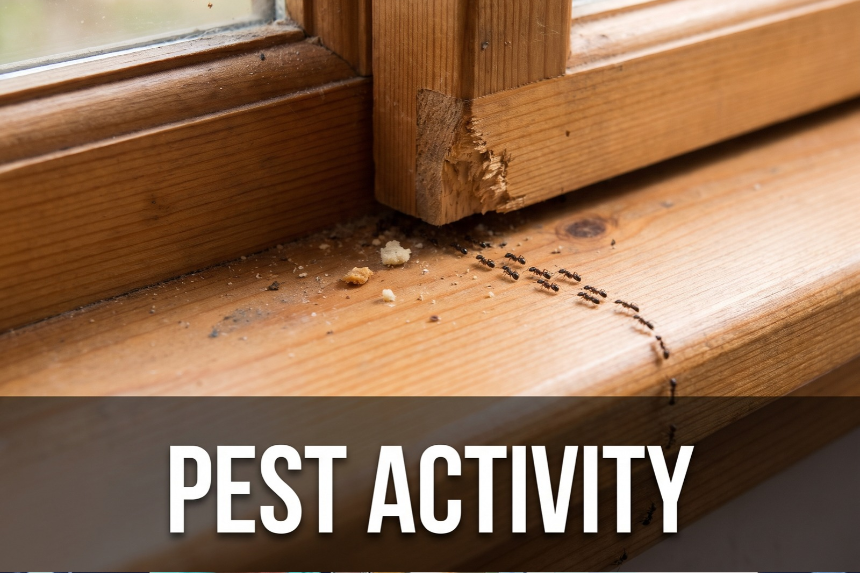
Ants may travel along baseboards, windows, patios, and foundation walls while searching for food or moisture. Indoor sightings near sinks, plumbing lines, and air-conditioning equipment can point to damp conditions. Cleaning crumbs is helpful, but it may not address an outdoor colony or a gap that provides access to the home.
Mosquitoes
Containers that collect water deserve frequent attention. Buckets, plant saucers, toys, birdbaths, clogged gutters, pool covers, and low spots in the yard can all hold water. The CDC recommends regularly emptying, scrubbing, turning over, covering, or discarding water-holding items because mosquitoes lay eggs near standing water. Screens, protective clothing, and approved repellents can also reduce the risk of bites outdoors.
Roaches, Flies, and Stinging Insects
Food residue, leaking pipes, unsealed trash, and damp utility spaces can attract roaches and flies. Repeated daytime roach sightings may warrant a closer look at kitchens, garages, crawl spaces, and plumbing areas. For wasps and other stinging insects, inspect eaves, sheds, gaps in walls, and outdoor play areas from a safe distance. Do not disturb an active nest, especially where children, pets, or people with sting allergies may be exposed.
What Happens in Fall and Winter
As temperatures decline, rodents and insects may seek more protected locations. Gaps around doors, pipes, vents, rooflines, and damaged screens can become entry points for pests. Mild stretches of fall weather may also keep outdoor insects active longer than expected. Winter is a useful time to inspect stored decorations, attic spaces, garages, sheds, and seldom-used rooms for droppings, nesting material, shed skins, or damaged packaging.
Coastal Conditions That Can Raise Pest Pressure
Wilmington-area homes experience conditions that can complicate pest prevention: humidity, summer downpours, storm-related debris, dense vegetation, and moisture around foundations. Salt air and wind can contribute to wear on exterior materials over time, making routine checks of seals, screens, door sweeps, and window frames worthwhile. Homes near marshes, wooded lots, drainage areas, or heavily shaded landscaping may also have different pest patterns than nearby properties.
Early Warning Signs Around the Home
- Droppings, gnaw marks, shed skins, or damaged food packages.
- Small gaps near pipes, vents, screens, siding, or foundation walls.
- Mud tubes, damaged wood, or discarded insect wings near doors and windows.
- Persistent musty or unusual odors in cabinets, walls, attics, or crawl spaces.
- Repeated sightings in the same room, especially at the same time of day.
- Nests, webs, insect trails, or heavy insect buildup around exterior lights.
A Simple Home Prevention Checklist
- Seal small openings around pipes, utility lines, windows, and doors.
- Repair torn screens and replace worn door sweeps.
- Clean gutters and direct water away from the foundation where possible.
- Remove standing water after rain and maintain outdoor containers.
- Store pantry items and pet food in closed containers.
- Keep trash bins covered, clean, and set away from exterior doors.
- Trim branches and dense plants away from walls and rooflines.
- Move firewood, boxes, and yard debris away from the home.
- Repair plumbing leaks and address moisture under sinks.
When to Use DIY Methods and When to Ask for Help
Cleaning, sealing, reducing moisture, and removing outdoor harborage can resolve some minor pest concerns. If activity continues, however, there may be a hidden entry point, nest, colony, or moisture source. The EPA advises homeowners to focus on removing food, water, and shelter, and to avoid using more pesticide than directed, as excessive use can pose health risks. Its guidance on safe pest control practices also emphasizes identifying the pest and using targeted methods.
Use particular caution with hard-to-reach nests, possible structural damage, repeated rodent activity, and any treatment near food, children, pets, or people with allergies. Ask what pest is present, where it is active, and what repairs or sanitation steps can reduce the chance of it returning.
Conclusion
Weather can influence when pests appear and where they move, especially in Wilmington’s humid coastal environment. Seasonal inspections, quick repairs, moisture control, and consistent outdoor cleanup provide a practical foundation for reducing pest pressure year-round.