Adoption work calls for clear records, steady contact, and careful review at each step. A child, a family, and a team may all depend on the same facts, so scattered files can slow the process. A digital record system can help staff keep tasks, notes, forms, and dates in one place. The result may be a calmer path from first review to final adoption order.
A Clear Record From Day One
A strong adoption file starts with details that staff can trust. Foster care software helps place child details, family notes, court dates, forms, and service updates in one secure record. This can reduce repeat data entry and help staff see the full adoption path. It also aids handoffs when a worker, supervisor, or service partner has a new role in the matter.
Clear records matter because adoption work has no room for guesswork. A file may hold home study notes, contact history, health details, sibling links, and legal steps. When this data sits in one place, staff can review it before a call, visit, or team meeting. That can help each person act with the same facts.
Better Support for Adoption Applicants
Adoption applicants need clear steps, fair updates, and a simple way to share required forms. A record system can help staff track checks, references, home study tasks, and approval status. This may help reduce delays caused by lost forms or missed dates. It can also help staff answer status questions with more confidence.
Families may feel tense when they do not know what comes next. A clear task list can show what has been done and what still needs review. Staff can add notes after calls and visits, so the next contact has useful context. That steady record may help the process feel less unclear for everyone.
Stronger Match Detail for Each Child
Adoption placement depends on the needs of the child and the fit of a family. A digital system can help staff compare key facts with care and structure. It does not replace human judgment, yet it can aid case review. Easier access to details may help improve match talks.
A record can show school needs, health notes, past placement history, sibling bonds, and family profile data. These facts can help staff ask better questions during a case review. The team can see where support may be needed before a match moves ahead. That can lead to a more thoughtful plan for the child and family.
Case Notes With Better Context
Notes are a core part of adoption case work because each contact can affect the next step. Staff may add call details, visit notes, service updates, and court prep notes to the same record. Foster care software may help keep those notes tied to the right child, home, or family profile. This can make it easier for supervisors to review progress without extra emails.
Good notes also protect the plan from confusion. A late form, missed visit, or unclear call can cause a delay if it is not easy to see. Task dates and alerts may help staff act before a small issue grows. The goal is steady progress with fewer loose ends.
Documents That Stay Easy to Find
Paper files can be hard to share, hard to update, and hard to protect. A secure document area can help teams store forms, reports, letters, photos, and approvals with the right adoption record. This may reduce duplicate copies and long file searches. It also helps staff review key papers before a case review or court date.
Useful document control may include:
- Adoption forms linked to the correct case record.
- Prior notes ready before a visit or review.
- Supervisor access to key items without a separate request.
- Service provider updates added under proper access rules.
Clear Status for Each Adoption Step
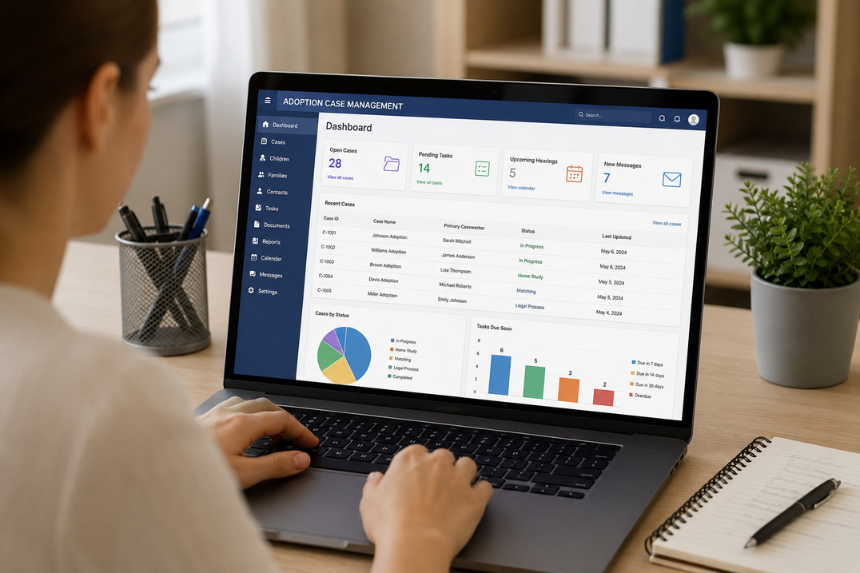
Adoption matters can include intake, home study, match review, legal work, placement support, and final order steps. A status view can show where each record stands without extra calls. This may help supervisors spot delays early. It can also help staff plan the week with less guesswork.
A Simple View of Progress
A useful status view should focus on the next action, due dates, and open tasks. It can show pending forms, review needs, court dates, and contact notes. This helps teams see what needs attention first. It also gives leaders a fair way to support staff with high case volume.
Team Contact With Fewer Gaps
Adoption work may involve social workers, supervisors, legal staff, service partners, and families. A shared adoption record can help each person see current notes, files, and tasks. This reduces the risk of mixed messages. It also helps the team speak from the same facts during calls.
Better contact does not mean more messages. It means the right details are easy to find at the right time. A staff member can check prior notes before a call and avoid repeat questions. That small change can make adoption work feel more respectful and organized.
Reports That Aid Review
Adoption teams need to see what slows a placement path and what helps it move forward. Reports can show open records, overdue tasks, applicant status, service use, and placement trends. These facts may help leaders plan staff support and spot process gaps. They can also support audits, grant reports, and internal reviews.
Reports should stay useful, plain, and tied to adoption work. A simple review may show that home study steps take more time than planned. Leaders can use that insight to adjust workload, forms, or team support. Data has the most value when it helps staff solve real case issues.
Adoption case management depends on trust, clear records, and steady teamwork. A digital system can help staff keep case facts, documents, tasks, and updates in a more useful order. It may also support better review of each child and family without turning the process into a checklist. When the tool supports the work with care, teams can give more attention to the people at the heart of each adoption path.