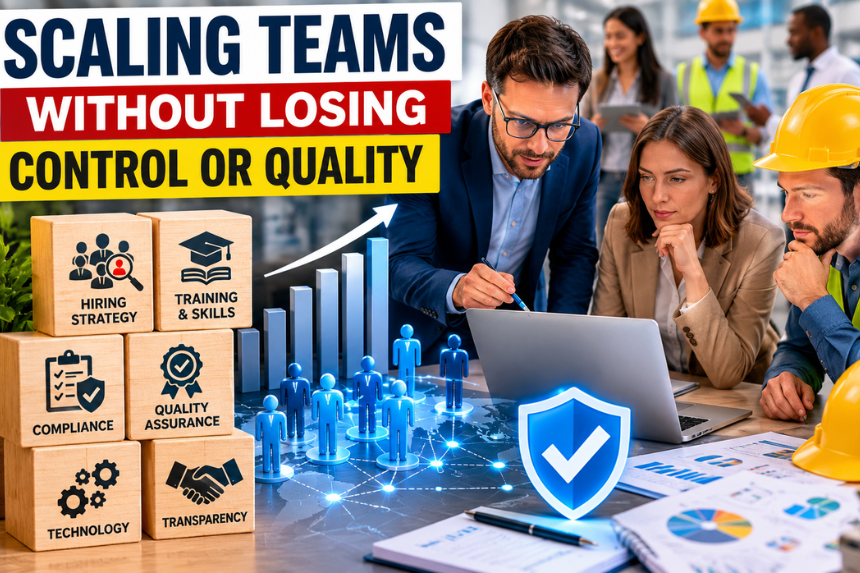
Expanding your workforce is a sign that your organization is growing and succeeding, but it can introduce new challenges, especially when it comes to maintaining standards and compliance. Companies that move too quickly risk eroding the very quality and regulatory controls that fueled their earlier growth. Ensuring recruiting compliance during this stage is crucial to sustainable success and long-term market reputation.
As businesses in manufacturing and other sectors evolve rapidly, leaders must find the right balance between meeting operational demands and embedding robust compliance processes into every hiring and workforce management function. This article unpacks actionable strategies to help organizations successfully expand their teams while upholding both quality and regulatory mandates.
Implement Data-Driven Training Programs
Today’s manufacturing and technology-driven job markets are rapidly shifting. As a result, upskilling and continuous education are no longer optional for organizations that want to remain competitive. Traditional blanket training methods fall short when it comes to closing specific skill gaps or addressing evolving compliance scenarios. Instead, organizations are adopting data-driven training programs, which rely on employee performance analytics to identify current weaknesses and fine-tune coursework to match real-time needs.
This approach not only maximizes training efficiency but also supports quality assurance and compliance by making sure every employee receives the right instruction at the right time. In fact, a Forbes report highlights data-driven training as key to minimizing operational risk and enhancing workforce resilience amidst regulatory changes.
Moreover, integrating data-driven training tools enables ongoing improvement through feedback loops. As employees engage with customized learning modules, HR and compliance teams can collect granular insights on knowledge retention and skill application, making it easier to recalibrate training on the fly. This creates a culture of lifelong learning and adaptability that not only meets compliance obligations but also sparks enthusiasm and engagement among staff. Organizations with robust data-driven learning infrastructures often experience reduced turnover and higher levels of job satisfaction, further reinforcing the quality of workforce output.
Adopt Workforce Capacity Expansion Models
Traditional linear hiring strategies often struggle to keep up with sudden demand spikes or industry-wide disruptions. To maintain quality and compliance, businesses are turning to adaptive workforce capacity expansion models. These models focus on agility, enabling organizations to scale teams up or down in response to evolving needs while closely monitoring the impact on key compliance processes.
For example, agile hiring frameworks might include a blend of full-time staff, contract workers, and temporary labor pools, all managed under a unified set of compliance protocols. This model allows companies to stay nimble yet consistent, deploying skilled talent where needed without operational interruptions. Operations consultancies have reported notable success among enterprises that practice this flexible, quality-aligned approach.
Organizations implementing capacity expansion models should also consider advanced workforce forecasting tools. By using predictive analytics, companies can anticipate labor market fluctuations and adjust recruitment strategies accordingly, thereby safeguarding compliance and labor quality through every growth cycle. A robust forecasting system takes historical data, industry trends, and internal performance metrics into account, positioning companies to respond proactively rather than reactively in times of rapid change. These predictions not only help avoid resource shortages but also ensure that compliance safeguards are never left behind in the pursuit of growth.
Proactively Manage Contingent Labor
The contingent workforce, including freelancers, gig workers, and seasonal staff, has become a critical differentiator for companies seeking to remain competitive without overcommitting to headcount. According to a Deloitte report, 41% of companies expect to increase their contingent labor use in the coming years.
However, integrating contingent labor demands proactive management. HR leaders must ensure that policies, onboarding processes, and performance metrics for temporary workers align with the standards for traditional staff. Close monitoring and clear communication support compliance, reduce risk, and help maintain company culture across all segments.
Additionally, successful management of contingent workers requires effective integration strategies that minimize friction and maximize contribution. Having a unified onboarding plan tailored specifically for contingent talent can ensure they understand and adhere to key compliance expectations from day one. Clear documentation, procedural checklists, and regular check-ins support engagement and performance. By recognizing and celebrating the achievements of non-traditional team members, organizations can foster loyalty, drive better overall outcomes, and maintain rigorous standards.
Leverage Technology for Workforce Agility
Effective workforce management today is underpinned by technology. Real-time HR systems, scheduling platforms, and compliance management software allow for better tracking of workforce metrics, skill distributions, and regulatory compliance. These digital tools streamline processes and improve coordination, reducing the likelihood of critical errors as the organization grows. Automation and data analytics also enable leaders to anticipate challenges and opportunities before they become emergencies. As reported by Honeywell, digital transformation is redefining workforce management playbooks, particularly in complex industries.
Beyond core HR systems, cloud-based platforms and AI-powered analytics have made location-independent collaboration and oversight a reality. Integrating mobile tools, for example, lets remote supervisors instantly monitor frontline compliance and address discrepancies in real time. Machine learning-driven anomaly detection features can quickly surface red flags that might otherwise go unnoticed within sprawling organizational structures. Ultimately, technology is not just an enabler but a strategic multiplier for both maintaining compliance and increasing workforce adaptability as businesses scale out.
Maintain Workforce Transparency
Transparency is central to trust, accountability, and sustainable compliance within any organization. Leaders who prioritize clear, consistent internal communication create an environment where expectations are understood, and issues can be flagged and resolved quickly. Workforce transparency also reinforces compliance by making it easier to spot deviations from process and correct them before they can escalate. This approach not only reduces costs and mitigates risks but also fosters a positive working environment that attracts and retains top talent.
Comprehensive transparency initiatives often include regularly updated dashboards, open forums for feedback, and company-wide updates on compliance metrics or training initiatives. When employees understand how compliance targets are set and measured, and when results are shared openly, good or bad, they are more likely to take personal ownership in maintaining standards. This cultural commitment to transparency multiplies the impact of training, technology, and operational changes, ultimately making compliance a shared achievement rather than a top-down mandate.
Conclusion
Scaling a workforce without compromising quality or compliance requires intentional planning and strong execution across every facet of talent management. By investing in data-driven training initiatives, adopting flexible capacity models, proactively overseeing contingent labor, introducing advanced workforce technology, and prioritizing transparent communication, organizations can achieve growth while safeguarding their foundational standards. As competition and regulatory complexity increase, these strategies are essential for building the resilient, high-performing teams that fuel long-term success.
Ultimately, the most successful organizations view workforce growth not as a mere numbers game, but as an opportunity to deepen core values and elevate operational excellence. This mindset ensures that every step of expansion reinforces, rather than dilutes, a company’s reputation for quality and compliance. With the right blend of people, process, and technology, any enterprise can chart a sustainable path toward industry leadership without sacrificing what matters most.