
Introduction
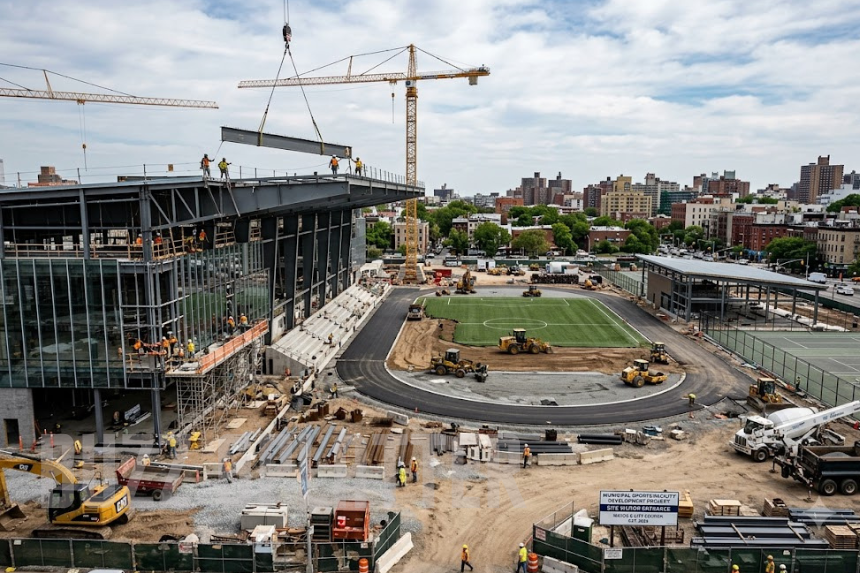
Few municipal projects attract as much public attention as a new sports facility. Community members see opportunities for recreation, tourism, and economic growth, while city leaders see the responsibility of delivering a major capital project on time and within budget. The challenge is that sports complexes come with unique construction demands that many municipalities encounter only once or twice in a generation.
Concerns about rising costs and unexpected delays are well-founded. A McKinsey study of more than 500 large capital projects found that cost overruns average 79% compared to original estimates. For municipal leaders, even small mistakes during planning or construction can lead to significant budget pressure and public scrutiny.
Successfully managing these projects requires more than hiring a contractor and hoping everything goes according to plan. Municipalities need experienced oversight, specialized expertise, and a clear strategy to minimize risk from concept through completion.
Understanding the Unique Challenges of Sports Facility Construction
Sports facilities are very different from traditional public buildings. While a contractor may have extensive experience constructing schools, libraries, or administrative offices, athletic venues introduce a completely different set of requirements.
From specialized playing surfaces and lighting systems to spectator flow, parking demands, and drainage infrastructure, every design decision affects how the facility performs long after construction ends. Missing even a small detail can create operational problems that are costly to fix later.
Outdoor facilities present additional challenges. Turf systems, weather considerations, and seasonal construction windows all influence timelines and budgets. Unlike many commercial projects, sports venues are often expected to be ready for specific league seasons or tournament schedules, leaving little room for delay.
With many outdoor sports complexes costing between $12 million and $20 million, municipalities cannot afford costly design errors or poorly coordinated construction efforts.
| Project Factor | Standard Commercial Construction | Sports Facility Construction |
| Deadlines | Often tied to business timelines | Frequently tied to sports seasons and event schedules |
| Design Requirements | Standard layouts and building systems | Specialized lighting, flooring, clear heights, and spectator spaces |
| Site Infrastructure | Conventional drainage and parking | Advanced field drainage and peak-event traffic management |
| Long-Term Success | Based on occupancy and usage | Based on event hosting, operations, and visitor experience |
Why Cost Overruns and Delays Happen
Budget overruns rarely result from one major mistake. More often, they stem from a series of smaller issues that accumulate over time.
Design conflicts, incomplete planning, unforeseen site conditions, and communication breakdowns between project teams can all contribute to delays. Once construction slows, costs begin to climb quickly.
Material prices and labor costs continue to rise throughout the life of a project. Even a delay of several months can significantly increase overall expenses. For publicly funded projects, those increases can place additional strain on municipal budgets and create difficult conversations with stakeholders.
Without specialized oversight, change orders and contractor disputes can become difficult to manage. Municipal leaders may find themselves making decisions on technical issues outside their area of expertise, increasing the risk of costly mistakes.
How Municipalities Can Reduce Construction Risk
The most effective way to reduce project risk is to establish experienced oversight from the beginning. Rather than reacting to problems after they occur, municipalities can put systems in place that identify and address issues before they affect the budget or schedule.
The Value of an Owner’s Representative
An Owner’s Representative serves as the municipality’s advocate throughout the project. Their role is to protect the owner’s interests while coordinating communication between architects, engineers, contractors, and consultants.
They review technical documents, monitor project progress, evaluate change orders, and help resolve issues before they become major problems. This level of oversight gives municipal leaders access to specialized expertise without requiring them to become construction experts themselves.
Having a dedicated representative also improves accountability. Contractors and consultants know there is an experienced professional reviewing schedules, budgets, and project deliverables every step of the way.
Creating Continuity From Planning Through Construction
One of the biggest risks in facility development comes from fragmented project delivery. Feasibility studies, design work, and construction management are often handled by separate groups, creating opportunities for miscommunication and inconsistent expectations.
A more effective approach is maintaining continuity throughout the project lifecycle. When planning, design, and construction oversight remain aligned, municipalities benefit from better communication, faster decision-making, and fewer surprises.
Many communities choose to work with firms that provide Sport Development Services because they can support projects from initial feasibility analysis through construction completion. This integrated approach reduces gaps between project phases and helps ensure long-term goals remain consistent throughout development.
Managing Procurement and Equipment Costs
Construction budgets extend beyond the building itself. Furniture, fixtures, equipment, and operational supplies can represent a substantial portion of total project costs.
Athletic facilities require specialized equipment ranging from scoreboards and bleachers to sports flooring systems and concession infrastructure. Without careful planning, these expenses can quickly exceed expectations.
Experienced project teams often leverage established vendor relationships and purchasing networks to secure more favorable pricing. They can also help municipalities avoid investing in equipment that appears attractive during planning but proves impractical during operations.
Designing With Operations in Mind
A successful facility must perform well after construction is complete. Unfortunately, some venues are designed primarily for aesthetics rather than operational efficiency.
Real-world operational insight helps municipalities avoid this problem. Factors such as staffing requirements, spectator circulation, concession placement, storage capacity, and event logistics should all be considered during design.
Facilities informed by operational data tend to generate stronger financial performance and better user experiences. They are also less likely to require costly modifications after opening.
Conclusion
Municipal sports facility construction involves unique challenges that extend far beyond traditional public works projects. Specialized design requirements, strict timelines, and significant financial investments create risks that demand careful planning and oversight.
Reducing those risks starts with experienced project management, strong communication, and a clear understanding of how the facility will operate long after construction is complete. Strategies such as owner representation, integrated project delivery, procurement planning, and operationally informed design can help municipalities avoid costly mistakes.
When municipalities take a proactive approach to development, they position themselves to deliver facilities that serve their communities for decades. The result is not just a successful construction project, but a long-term community asset that supports recreation, tourism, and local economic growth.