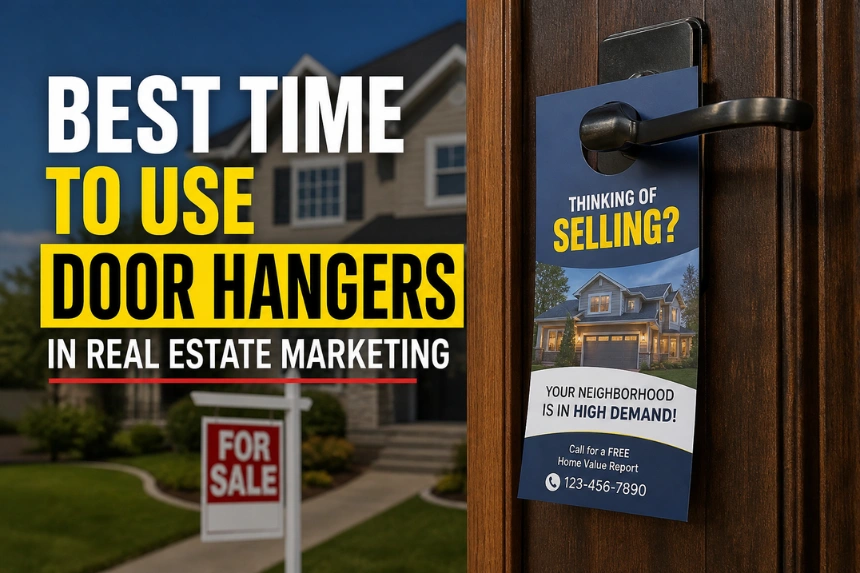
Effective real estate promotion depends on precise timing, targeted messaging, and clearly defined neighborhood coverage strategies. Strong door hanger campaigns focus on specific streets, property types, and homeowner profiles within a selected radius. Consistent offline outreach builds recognition and creates direct communication with residents who value local insights.
Many professionals question whether do door hangers work for real estate in modern marketing strategies. Targeted local campaigns show stronger response rates when distribution aligns with specific property events and key milestones. Here are important timelines that guide effective door hanger delivery for maximum neighborhood visibility and consistent engagement.
Pre-Listing Distribution Period Prior to Property Announcement
A pre-listing phase begins approximately seven to ten days before a property enters the market. Door hangers during this window introduce the upcoming listing and create early curiosity among nearby homeowners. Clear messaging can highlight property type, expected price range, and general location without revealing full details. This approach positions the agent as active and informed within the immediate neighborhood.
Distribution should cover at least fifty to one hundred homes surrounding the property location. Streets within walking distance tend to produce higher engagement due to familiarity with the area. Early awareness often leads to direct neighborhood referrals among residents who know interested buyers. Consistent placement ensures that each household receives the message without duplication or gaps.
Post-Open House Distribution Window for Immediate Local Recall
Door hanger distribution within twenty-four hours after an open house reinforces recent activity and strong buyer interest. Messaging should reference attendance levels, general feedback, or multiple showing requests without exaggeration. This timing signals demand and encourages nearby homeowners to evaluate their own property decisions. Clear, factual communication increases trust and strengthens credibility.
Target homes within a two to three block radius for maximum relevance and visibility. Residents who noticed increased traffic during the event often respond positively to follow-up communication. Immediate distribution keeps the property top of mind and maintains momentum after the event concludes. Structured timing ensures that interest remains active within the neighborhood.
Initial Listing Week Distribution Phase for Early Market Exposure
The first five to seven days after listing activation represent a critical visibility window for any property. Door hangers during this phase extend awareness beyond digital platforms and scheduled viewings. Messaging should include listing highlights such as bedroom count, price bracket, and unique selling features. Clear details allow residents to share accurate information within their networks.
Distribution should focus on one hundred to two hundred nearby homes to ensure broad local coverage. Streets closest to the property often generate stronger referral activity from engaged neighbors. Consistent placement across consecutive days strengthens recall and strengthens listing presence. Early exposure increases the likelihood of attracting qualified buyers through local connections.
Post-Sale Completion Period Within Neighborhood
A completed sale provides verified proof of market demand and successful pricing strategy. Door hangers, within three to five days after closing, communicate this result to nearby homeowners. Messaging should include sale confirmation, approximate price range, and days on market for transparency. This information helps residents understand current conditions within their immediate area.
Distribution across surrounding streets reinforces the agent’s presence and highlights recent success. Homeowners often respond to clear examples of completed transactions rather than general market claims. Consistent communication builds authority and encourages inquiries from those considering a sale. Timely outreach ensures that the information remains relevant and impactful.
New Occupancy Period After Property Sales
New homeowners settle into properties within the first two to three weeks after closing. Door hangers during this period introduce the agent and provide helpful local service recommendations. Messaging can include trusted vendors, maintenance tips, and neighborhood insights tailored to the area. This approach establishes a positive connection without promotional pressure.
Target distribution within the same street and adjacent blocks to maintain relevance and familiarity. New residents often appreciate useful information that supports their transition into the neighborhood. Early engagement increases the likelihood of future referrals and repeat interaction. Consistent communication builds trust and positions the agent as a reliable local resource.
Beginning of Monthly Marketing Cycle for Consistent Visibility
The first three to five days of each month create a structured opportunity for regular neighborhood outreach. Door hangers during this period maintain consistent visibility and reinforce ongoing market activity. Messaging can include recent sales, new listings, and brief market updates specific to the area. Clear and concise content ensures quick understanding and strong engagement.
Distribution should follow a rotating street plan to ensure full coverage over time. Each month can target a defined group of homes to maintain consistency without repetition. Predictable timing helps residents recognize and expect regular updates. Structured cycles support long-term presence and strengthen brand familiarity within the neighborhood.
Community Event Periods With Concentrated Local Foot Traffic
Local events such as neighborhood gatherings or weekend markets increase resident activity and awareness. Door hanger distribution one day before and immediately after these events aligns with heightened attention levels. Messaging can connect the event with local property updates or recent sales activity. This approach increases relevance and encourages engagement.
Target streets near event locations for higher visibility and stronger response potential. Residents who participate in local activities often show greater interest in neighborhood developments. Timely distribution ensures that materials receive attention during periods of increased activity. Coordinated outreach enhances effectiveness and strengthens local communication.
Price Adjustment Phase During Active Property Marketing
Price adjustments typically occur ten to fifteen days after initial listing when market feedback becomes clear. Door hangers during this phase communicate updated pricing and renewed opportunity to nearby residents. Messaging should clearly state the adjustment and highlight value without unnecessary complexity. Transparent communication builds trust and encourages renewed interest.
Distribution should focus on the same neighborhood as the original listing outreach for consistency. Residents who previously noticed the listing may reconsider based on the new price point. Timely updates ensure that information remains accurate and relevant. Structured communication supports continued engagement and improves overall marketing performance.
Precise timing, defined distribution zones, and clear messaging transform door hanger campaigns into effective marketing tools. Each phase offers a distinct opportunity to connect with residents and reinforce local presence. Consistent execution with measurable planning ensures steady engagement and improved response rates. Take action with a detailed schedule and maintain regular outreach across selected neighborhoods. A clear strategy answers the question do door hangers work for real estate through practical results and targeted engagement. Consistent timing, accurate messaging, and structured distribution create lasting impact within focused residential areas.