
Introduction
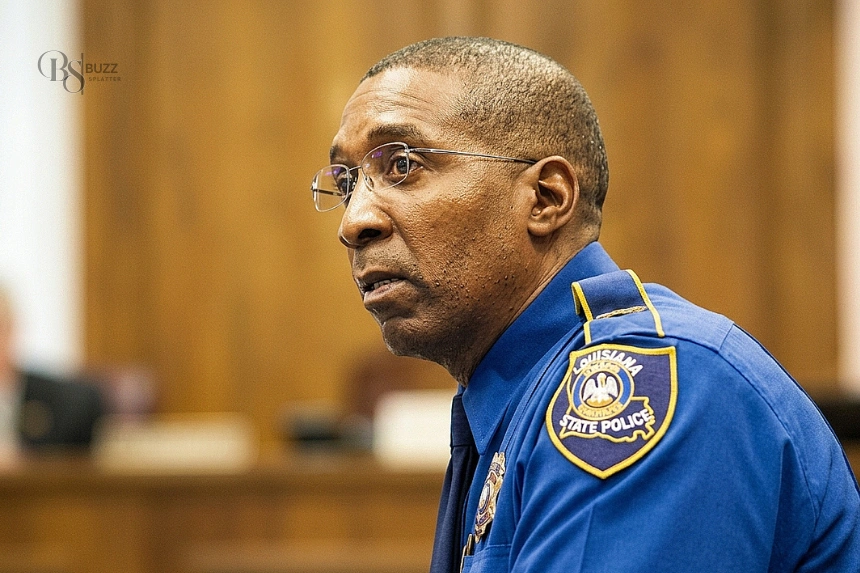
Lamar Anthony Davis is an American law enforcement officer whose career reflects a steady progression through military service, local policing, and state-level leadership. Born and raised in Baton Rouge, Louisiana, Davis ultimately rose to become the 26th Superintendent of the Louisiana State Police (LSP), serving from late 2020 until early 2024. His tenure was marked by historic significance, institutional challenges, and an emphasis on reform and public trust.
As the first Black colonel to lead the Louisiana State Police, Davis occupied a role that carried both symbolic and operational weight. He stepped into leadership during a period of heightened public scrutiny, guiding one of the state’s most visible law enforcement agencies through internal reform efforts, political debate, and ongoing questions about accountability.
Facts About Lamar A. Davis
| Facts | Details |
| Full Name | Lamar Anthony Davis |
| Birthplace | Baton Rouge, Louisiana, United States |
| Nationality | American |
| Profession | Law Enforcement Officer |
| Notable Role | 26th Superintendent of the Louisiana State Police |
| Tenure as Superintendent | October 2020 – January 2024 |
| Historic Achievement | First Black Colonel to lead the Louisiana State Police |
| Education | Bachelor’s degree – Southern University (Baton Rouge); Master’s degree – Southern University at New Orleans |
| Military Service | U.S. Army and Louisiana Army National Guard |
| Early Career Experience | Corrections officer, sheriff’s deputy, Department of Public Safety officer |
| Louisiana State Police Career Start | 1998 (as Trooper) |
| Promoted To Superintendent By | Governor John Bel Edwards |
| Key Focus Areas | Institutional reform, modernization, public trust, organizational accountability |
| Major Initiative | External independent review of LSP policies and culture (Bowman Group assessment) |
| Retirement Date | January 8, 2024 |
| Leadership Style | Structured, reform-oriented, systems-focused |
Early Life and Education
Lamar A. Davis was born and raised in Baton Rouge, Louisiana. His early life in the state’s capital placed him close to the civic and institutional environments that would later define his professional path.
He pursued higher education at Southern University in Baton Rouge, where he completed his undergraduate studies. Davis later earned a master’s degree from Southern University at New Orleans, strengthening his academic foundation in public service and administration.
Before fully entering the field of law enforcement, Davis served in the U.S. Army and later the Louisiana Army National Guard. His military experience contributed to his structured leadership style and understanding of chain-of-command systems, both of which would later shape his approach within state policing.
In addition to his military service, Davis gained early public safety experience in several roles, including as a Department of Public Safety police officer, an East Baton Rouge Parish sheriff’s deputy, and a corrections officer within the state prison system. These varied assignments gave him firsthand exposure to multiple dimensions of the criminal justice system, from corrections to field enforcement.
Entry into the Louisiana State Police
Davis joined the Louisiana State Police in 1998 as a trooper. What followed was a long and methodical rise through the agency’s ranks, reflecting both consistency and adaptability in a complex law enforcement environment.
Over more than two decades with the Louisiana State Police, Davis built a wide-ranging portfolio of experience that bridged field operations and institutional policy. His assignments included Highway Patrol operations, criminal intelligence, gaming enforcement, and criminal investigations, alongside responsibilities in legislative affairs and research-driven policy development.
This diversity of experience allowed Davis to develop a broad understanding of both field operations and administrative policy. By the time he reached the rank of captain in 2020, he had accumulated experience across nearly every major operational branch of the agency.
Colleagues and state officials often described him as a disciplined and reliable leader. His reputation for professionalism played a key role in his eventual appointment to the highest position within the agency.
Appointment as Superintendent and Historic Leadership
In October 2020, following the retirement of then-Superintendent Kevin Reeves, Louisiana Governor John Bel Edwards appointed Lamar A. Davis as Deputy Secretary of Public Safety Services and Superintendent of the Louisiana State Police.
This dual appointment placed Davis in a uniquely powerful position within the state’s public safety structure. Shortly after his selection, he was promoted to colonel, formally becoming the top-ranking officer in the Louisiana State Police.
His appointment was historically significant: Davis became the first Black colonel to lead the Louisiana State Police. This milestone represented a notable shift in an agency that had long faced scrutiny regarding diversity in its leadership ranks.
Upon assuming office, Davis publicly emphasized a commitment to restoring trust in the institution. He frequently spoke about improving relationships both within the agency and between law enforcement and the communities it served.
Leadership Approach and Institutional Priorities
Davis’s leadership style was often described as structured, reform-oriented, and systems-focused. He inherited an agency facing significant public scrutiny, and his administration placed emphasis on internal review and modernization.
Organizational Reform
One of the most notable initiatives during his tenure was the launch of an external assessment of the Louisiana State Police. In 2022, Davis authorized the Bowman Group to conduct an independent review of policies, training practices, and organizational culture.
The review process extended through 2023 and was intended to evaluate operational standards and recommend improvements. Davis described this effort as part of a broader commitment to rebuilding trust and strengthening institutional accountability.
Modernization and Technology
Under his leadership, the agency also pursued updates in communication and dispatch systems. These technological improvements were aimed at enhancing response efficiency and coordination across divisions.
Workforce Development and Diversity
Davis repeatedly emphasized recruitment and retention efforts, particularly with regard to increasing diversity within the state police force. He encouraged initiatives designed to expand representation and strengthen community engagement.
His administration also supported outreach programs intended to improve public understanding of law enforcement operations and build stronger civic relationships.
Public Engagement and Visibility
Throughout his tenure, Davis maintained a visible public presence. He participated in press briefings, legislative discussions, and community forums, often addressing complex and sensitive issues related to policing in Louisiana.
In 2023, he appeared on a public affairs program discussing statewide safety challenges and the evolving role of law enforcement. His communication style during these appearances was generally measured and policy-focused, reflecting his emphasis on institutional stability.
Davis also engaged with lawmakers during legislative sessions, particularly on matters involving oversight, structural reform, and the operational independence of the state police.
Controversies and Public Scrutiny
Davis assumed leadership during a difficult period for the Louisiana State Police. The agency was already under national attention due to multiple high-profile incidents, including the 2019 death of Ronald Greene during an encounter with troopers.
The case, which involved significant controversy and allegations of misconduct, continued to unfold during Davis’s tenure. Investigations by state and federal authorities placed the agency under sustained scrutiny, and Davis was responsible for managing both internal reform efforts and external oversight demands.
He supported ongoing investigations and authorized internal reviews aimed at improving transparency. At the same time, he defended the operational structure of the agency, arguing that trained law enforcement professionals were best positioned to lead in high-pressure situations.
His remarks during legislative hearings occasionally sparked debate, particularly regarding the balance between civilian oversight and traditional law enforcement command structures. While some policymakers advocated for greater external control, Davis emphasized continuity and professional expertise within the agency.
Retirement and Departure from Office
In late 2023, Lamar A. Davis announced his retirement from the Louisiana State Police. His departure became effective January 8, 2024, marking the end of a nearly three-year tenure as superintendent.
In his farewell communication to troopers, Davis reflected on the challenges and responsibilities of his leadership period. He expressed appreciation for the personnel within the agency and acknowledged the difficulties faced during his time in office.
His retirement coincided with a change in state administration, leading to the appointment of a new superintendent under Governor-elect Jeff Landry. Davis’s departure closed a significant chapter in the agency’s recent history.
Legacy and Professional Significance
Lamar A. Davis’s tenure as Superintendent of the Louisiana State Police is often viewed through the lens of transition and institutional reform. His leadership came at a time when law enforcement agencies across the United States were under intense public and political scrutiny.
Key aspects of his legacy include:
- Breaking historical barriers as the first Black superintendent of the Louisiana State Police
- Overseeing an external review of agency policies and culture
- Emphasizing modernization and technological improvement
- Navigating one of the most publicly scrutinized periods in the agency’s history
- Advocating for internal accountability and workforce development
While opinions on law enforcement leadership during his tenure vary, Davis’s career reflects the complexity of managing a major state policing institution during a period of national debate on policing practices.
Conclusion
Lamar A. Davis’s professional journey illustrates the evolution of a public servant shaped by military discipline, local enforcement experience, and long-term institutional engagement. His leadership of the Louisiana State Police placed him at the center of reform efforts, public accountability discussions, and organizational change.
As with many senior law enforcement figures in recent years, his tenure was defined not only by operational management but also by the broader social and political expectations placed on policing institutions. His legacy remains tied to both the challenges he inherited and the reforms he attempted to advance during a pivotal moment in Louisiana’s public safety landscape.