
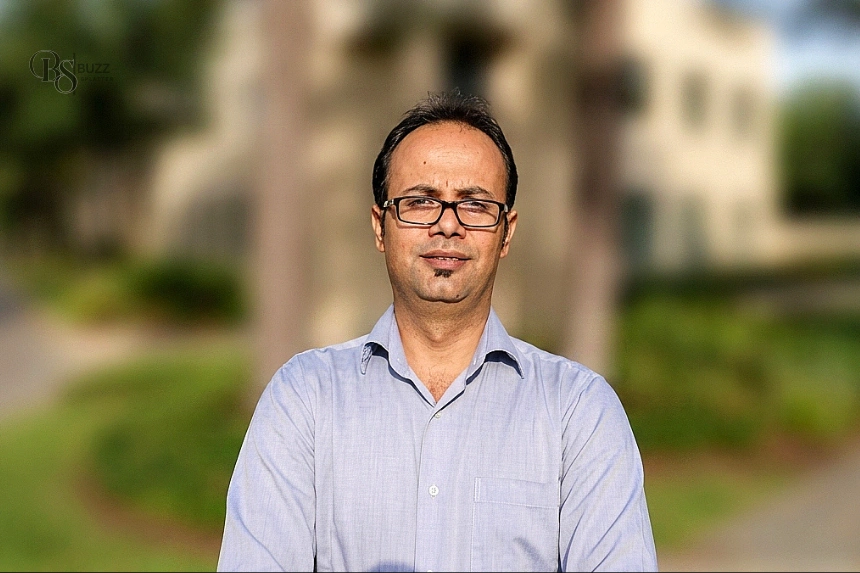
Meysam Heydari-Gharahcheshmeh: The Intersection Innovations in Functional Materials and Energy Technologies at SDSU
Meysam Heydari-Gharahcheshmeh (میثم حیدری قرهچشمه) has emerged as a notable figure in modern materials science through his work in advanced functional materials, energy technologies, and electronic applications. As an Iranian-born scientist and engineer, he has built an academic career defined by innovation in conducting polymers, superconductors, and advanced manufacturing methods.
Currently serving as an Assistant Professor of Mechanical Engineering at San Diego State University (SDSU), Heydari-Gharahcheshmeh leads groundbreaking research that merges experimental engineering with computational analysis to solve complex challenges in energy storage, flexible electronics, and sustainable manufacturing.
Meysam Heydari Gharahcheshmeh’s Facts
| Fact | Details |
| Full Name | Meysam Heydari-Gharahcheshmeh |
| Native Name | میثم حیدری قرهچشمه |
| Nationality | Iranian |
| Profession | Materials Scientist, Engineer, Researcher |
| Current Position | Assistant Professor of Mechanical Engineering |
| Current Institution | San Diego State University |
| Research Lab | Advanced Manufacturing for Energy Devices (AMED) Lab |
| Research Specialization | Conducting polymers, superconductors, energy materials, advanced manufacturing |
| Bachelor’s Degree | Materials Engineering – University of Tabriz (2006) |
| Master’s Degree | Materials Engineering – University of Tehran (2009) |
| Second Master’s Degree | Physics – University of Texas at Brownsville (2013) |
| Ph.D. | Materials Science & Engineering – University of Houston (2017) |
| Postdoctoral Fellowship | Massachusetts Institute of Technology (2017–2021) |
| Previous Academic Role | Assistant Professor at University of Mississippi |
| Major Achievement | Set world-record PEDOT polymer conductivity of approximately 7,520 S/cm |
| Publications | Approximately 38 research papers |
| Citations | Around 1,470 citations (as of 2025) |
| Notable Award | IEEE Council on Superconductivity Fellowship (2016, 2017) |
| Dissertation Honor | Best Ph.D. Dissertation Award (2018) |
| Research Focus | Energy devices, flexible electronics, nanostructured materials |
Early Life and Academic Foundation
Meysam Heydari-Gharahcheshmeh’s academic path began in Iran, where he developed an early interest in engineering materials and their structural behavior.
He earned his bachelor’s degree in Materials Engineering from the University of Tabriz in 2006, followed by a master’s degree in Materials Engineering from the University of Tehran in 2009. These years provided him with a strong technical foundation in metallurgy, structural materials, and engineering principles.
At a time when global research in advanced materials was accelerating, Heydari-Gharahcheshmeh sought broader academic opportunities that would allow him to expand into interdisciplinary research areas. That ambition eventually led him to the United States.
Expanding His Scientific Expertise in the United States
After relocating to the U.S., Heydari-Gharahcheshmeh broadened his academic focus by earning a second master’s degree in Physics from the University of Texas–Brownsville in 2013.
This move proved significant because it strengthened his understanding of the theoretical principles behind material behavior, particularly in areas involving electrical conductivity, thermodynamics, and electromagnetic systems.
He later enrolled at the University of Houston, where he completed his Ph.D. in Materials Science and Engineering in 2017 under the supervision of Professor Venkat Selvamanickam.
His doctoral research centered on highly specialized superconducting materials, particularly heavily doped REBCO superconductors manufactured through roll-to-roll metal-organic chemical vapor deposition processes. His work examined structural and electromagnetic performance improvements in these materials—research with direct relevance to energy transmission technologies and high-performance industrial systems.
The quality of his dissertation earned him the 2018 Best Ph.D. Dissertation Award from the University of Houston’s College of Engineering, signaling his growing reputation within the field.
MIT Research and a Record-Breaking Breakthrough
Following his doctorate, Heydari-Gharahcheshmeh joined the Massachusetts Institute of Technology (MIT) as a postdoctoral associate in the Department of Chemical Engineering, where he worked under Professor Karen K. Gleason between 2017 and 2021.
At MIT, he focused on oxidative chemical vapor deposition techniques used to produce conducting polymers with improved electrical and structural performance. These materials are increasingly important in flexible electronics, wearable devices, solar technologies, and lightweight energy systems.
His most widely recognized breakthrough came when his research helped achieve a world-record electrical conductivity of approximately 7,520 S/cm in PEDOT polymer films. The achievement drew attention because highly conductive polymers are considered essential for replacing heavier and less sustainable traditional materials in electronics manufacturing.
The breakthrough demonstrated how molecular alignment and nanostructural engineering could dramatically improve conductivity while maintaining transparency and flexibility, qualities highly sought after in emerging consumer technologies.
Transition Into Academic Leadership
After completing his postdoctoral fellowship, Heydari-Gharahcheshmeh transitioned into academic leadership.
In 2021, he joined the University of Mississippi as an Assistant Professor of Mechanical Engineering. There, he began teaching engineering courses, mentoring students, and building independent research initiatives.
Although his time at the university was relatively short, it marked an important shift from researcher to academic leader.
In 2022, he accepted a new role at San Diego State University, where his research ambitions expanded significantly.
Leading the AMED Lab at San Diego State University
At SDSU, Heydari-Gharahcheshmeh founded the Advanced Manufacturing for Energy Devices (AMED) Lab, where he currently serves as director.
The lab focuses on developing advanced functional materials for modern technological challenges, including renewable energy systems, flexible electronics, and biocompatible devices.
His research team explores innovative manufacturing techniques such as oxidative chemical vapor deposition, initiated chemical vapor deposition, and machine-learning-assisted material design.
What makes this work particularly important is its practical relevance. Rather than pursuing purely theoretical discoveries, the AMED Lab focuses on materials that could improve real products and systems used in daily life.
This includes technologies related to energy storage, solar conversion systems, thermoelectric devices, and lightweight electronics.
Career Timeline
| Year | Milestone |
| 2006 | B.S. in Materials Engineering – University of Tabriz |
| 2009 | M.S. in Materials Engineering – University of Tehran |
| 2013 | M.S. in Physics, University of Texas-Brownsville |
| 2017 | Ph.D. in Materials Science & Engineering – University of Houston |
| 2017-2021 | Postdoctoral Research at MIT |
| 2021-2022 | Assistant Professor – University of Mississippi |
| 2022-Present | Assistant Professor – San Diego State University |
Research Contributions in Conducting Polymers and Energy Systems
A major portion of Heydari-Gharahcheshmeh’s work centers on conducting polymers—materials capable of carrying electricity while maintaining flexibility and low weight.
Conducting Polymers
Heydari-Gharahcheshmeh has made notable advances in conducting polymers used in modern electronics. His research improved electrical conductivity, transparency, and flexibility in PEDOT films, including a record-setting conductivity achievement at MIT. These developments have important applications in wearable technology, flexible displays, and lightweight electronic devices.
Thermoelectric Devices
He has also contributed to thermoelectric materials that convert wasted heat into usable electricity. By improving polymer nanostructures, his research has enhanced energy conversion efficiency. This work gained wider recognition after being featured on the cover of Advanced Functional Materials.
Solar Energy Technologies
His research in thin-film materials has supported the development of lightweight solar technologies. These innovations could expand the use of portable solar devices, flexible panels, and energy systems designed for aerospace applications.
Superconductors
During his doctoral research, Heydari-Gharahcheshmeh improved the performance of REBCO superconductors by increasing critical current density and manufacturing efficiency. These advancements remain relevant for medical technology, power systems, transportation, and scientific research infrastructure.
The Role of Artificial Intelligence in His Research
One of the most forward-looking aspects of his recent work is his use of machine learning in materials science.
Artificial intelligence is increasingly helping researchers predict material behaviors faster than traditional experimentation alone.
Heydari-Gharahcheshmeh has incorporated computational tools into manufacturing design and material optimization processes, allowing his research team to accelerate innovation while reducing development costs.
This interdisciplinary approach reflects the future direction of engineering research, where data science and laboratory experimentation increasingly work together.
Meysam Heydari Gharahcheshmeh’s Age
Based on his educational timeline, earning his bachelor’s degree in 2006, it is estimated that he is likely in his late 30s to early 40s.
Publications and Academic Recognition
Over the course of his career, Heydari-Gharahcheshmeh has published approximately 38 research papers and accumulated nearly 1,470 academic citations as of 2025.
His research has appeared in highly respected journals such as Advanced Functional Materials, Science Advances, Nature Reviews Methods Primers, and Advanced Materials Interfaces.
Several of his publications have received significant attention within academic and engineering communities, including journal cover features that highlighted the broader significance of his work.
Awards and Professional Recognition
His contributions have earned recognition from multiple institutions and organizations.
Among his most notable honors are two consecutive IEEE Council on Superconductivity Graduate Study Fellowships in 2016 and 2017.
He also received the University of Houston’s prestigious dissertation award in 2018 and has earned numerous academic scholarships, research grants, and professional distinctions throughout his career.
These honors reflect not only technical excellence but also his growing influence in advanced materials research.
Final Thoughts
Meysam Heydari-Gharahcheshmeh represents a new generation of scientists whose work crosses traditional disciplinary boundaries. His contributions to conducting polymers, superconductors, and advanced manufacturing continue to influence how future energy systems and electronic devices may be built.
From his academic beginnings in Iran to his growing influence in American research institutions, his journey reflects persistence, innovation, and a commitment to solving some of engineering’s most complex challenges.