
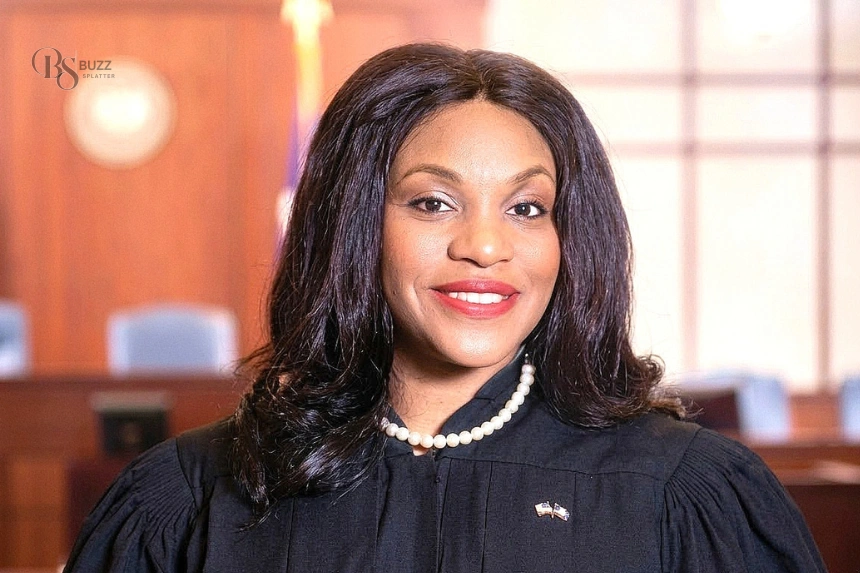
Investigating the rise and fall of Judge Foxworth Roberts amid ethics violations and court sanctions.
The career of Tiffany Foxworth-Roberts reflects a complex story of professional achievement, public service, and judicial controversy. Once elected to the bench of the 19th Judicial District Court in Baton Rouge, Foxworth-Roberts brought an unusual combination of experiences to the judiciary, including service as a nurse, a U.S. Army officer, and an attorney.
However, her tenure as a judge ultimately ended in a highly publicized disciplinary case that drew attention to issues of judicial ethics and accountability. In 2025, the Louisiana Supreme Court ordered her removal from office after concluding that she had made false statements about her military background and engaged in other forms of misconduct.
Key Facts About Judge Foxworth Roberts
| Fact | Details |
| Full Name | Tiffany Foxworth-Roberts |
| Profession | Former judge, attorney, U.S. Army nurse |
| Known For | Serving on the 19th Judicial District Court in East Baton Rouge Parish |
| Judicial Election | First elected on August 15, 2020 |
| Term Began | January 1, 2021 |
| Court Location | Baton Rouge, East Baton Rouge Parish |
| Education | Nursing degree from Southern University (2001); J.D. from Southern University Law Center (2005) |
| Military Service | Served about 13 years in the United States Army Nurse Corps; rank of First Lieutenant |
| Legal Career | Practiced law in Baton Rouge before becoming a judge |
| Community Work | Founded the “Reading in the Robe” literacy initiative |
| Major Controversy | Ethics investigation over false statements about military service and misleading investigators |
| Removal from Office | Removed in December 2025 by the Louisiana Supreme Court |
| Penalties | Removal from office, five-year ban from judicial office, and about $9,449 in investigation costs |
| Spouse | Dr. Jonathan J. Roberts (internal medicine physician) |
| Child | One daughter, Tiffany-Elle |
Early Life and Education
Tiffany Foxworth, later known as Tiffany Foxworth-Roberts, was raised in Louisiana, though details about her exact birthplace remain limited in public records. Her educational journey began with a focus on healthcare, reflecting an early interest in service and community well-being.
She graduated in 2001 from Southern University, earning a degree in nursing. This background in healthcare would later influence aspects of her public outreach and professional identity.
Motivated to broaden her career opportunities, Foxworth pursued legal education at the Southern University Law Center, where she earned her Juris Doctor (J.D.) in 2005. After graduating, she was admitted to the Louisiana bar and began practicing law in the Baton Rouge area.
Her professional affiliations included membership in organizations such as the Louisiana State Bar Association and the National Bar Association. These memberships placed her within established networks of legal professionals and provided opportunities for continued professional development.
Military Service and Public Image
Before fully establishing her legal career, Foxworth-Roberts served in the United States Army as part of the Army Nurse Corps. Her time in military service became a significant component of her public profile.
According to official records, she served for approximately 13 years in both enlisted and officer roles, eventually achieving the rank of first lieutenant. Much of her service took place within the United States rather than in overseas combat zones.
During her later judicial campaign, Foxworth-Roberts frequently highlighted her military experience. Campaign materials described her as a proud Army captain and veteran of several major military operations, including Desert Storm, Iraq, and Afghanistan.
However, these claims later became central to disciplinary proceedings. Investigators determined that she had not served during the Gulf War, nor had she deployed to Iraq or Afghanistan. The discrepancy between official records and campaign statements would later play a decisive role in the judicial ethics case against her.
Legal Career Before Becoming a Judge
After completing law school, Foxworth-Roberts began practicing law in Baton Rouge. Her professional life reflected an unusual blend of legal and medical expertise, which she sometimes used to engage with the community.
One example of this outreach was a weekly health-focused radio program she co-hosted with her husband, Dr. Jonathan J. Roberts, an internal medicine physician. The program aimed to educate listeners about preventative healthcare and early medical intervention.
Foxworth-Roberts also became involved in civic and professional organizations. She participated in the National Association of Women Judges, as well as various community initiatives in Baton Rouge.
Among her community activities was a literacy program called “Reading in the Robe.” This initiative encouraged judges and legal professionals to read to local students, promoting literacy and helping young people become more familiar with the justice system.
Election to the 19th Judicial District Court
Foxworth-Roberts entered the judiciary in 2020 during an election cycle for the 19th Judicial District Court. The court is one of Louisiana’s major trial courts and handles a wide range of civil and criminal matters.
She was elected on August 15, 2020, to fill an unexpired seat in Division M of the court, which serves East Baton Rouge Parish. Later that year, voters confirmed her position in the November 3 general election.
Her full judicial term officially began on January 1, 2021, and was expected to run for six years.
As a judge, Foxworth-Roberts handled civil matters across several divisions, including Divisions XXVII, XXVIII, and XXXI. These cases involved issues such as:
- Contract disputes
- Civil litigation
- Family law matters
- Property conflicts
Although the court also oversees criminal proceedings, her assignment focused primarily on civil jurisdiction.
Judicial Responsibilities and Work on the Bench
During her time on the bench, Foxworth-Roberts presided over a variety of civil cases typical of a state district court. Judges in this role must interpret state law, manage courtroom procedures, and resolve disputes between individuals, businesses, and government entities.
Tiffany Foxworth-Roberts, known as Judge Foxworth Roberts, served on the 19th Judicial District Court in East Baton Rouge Parish following her 2020 election. A former U.S. Army nurse and Southern University Law Center graduate, her tenure ended in 2025 when the Louisiana Supreme Court unanimously removed her, citing a pattern of false statements during her campaign that compromised judicial integrity.
Ethics Investigation and Misconduct Allegations
In May 2021, an anonymous complaint was filed with the Louisiana Judiciary Commission. The complaint triggered an investigation into Foxworth-Roberts’s conduct during her 2020 judicial campaign and her interactions with law enforcement.
The commission issued a formal notice of hearing in February 2024, alleging multiple violations of the judicial code of conduct.
Among the most significant allegations were:
False Statements About Military Service
Investigators found that Foxworth-Roberts’s campaign materials misrepresented her military record. The materials described her as a captain and combat veteran of several conflicts, claims that were not supported by official military documentation.
The court later characterized this exaggeration as a form of “stolen valor,” referring to false claims about military service.
Misleading Police in a Car Burglary Report
Another issue involved a 2020 report of a burglary from her vehicle during the campaign. Evidence showed that Foxworth-Roberts had moved her car before reporting the alleged theft and provided police with inaccurate information about the location and circumstances of the incident.
Lack of Candor During the Investigation
Investigators concluded that she had withheld information and provided misleading statements during the ethics inquiry. These actions raised serious concerns about honesty and credibility, which are essential qualities for a sitting judge.
The Louisiana Supreme Court’s Decision
After a hearing in October 2024, the Judiciary Commission recommended that Foxworth-Roberts be removed from office. The case was ultimately decided by the Louisiana Supreme Court.
In December 2025, the court unanimously accepted the commission’s recommendation. Chief Justice John L. Weimer wrote that the judge’s conduct demonstrated a “pattern of dishonesty” that undermined public trust in the judiciary.
The Louisiana Supreme Court removed Tiffany Foxworth-Roberts from the 19th Judicial District Court, imposed a five-year ban on her seeking judicial office, and ordered her to repay approximately $9,449 in investigation costs, marking a definitive end to her judicial career.
Appeal Efforts and Legal Aftermath
Following the decision, Foxworth-Roberts sought a rehearing in January 2026. The court denied the request in a close 4-3 vote.
Some dissenting justices suggested that a suspension might have been sufficient punishment. However, the majority concluded that removal was necessary to maintain confidence in the judiciary.
Her legal team later indicated that an appeal to the Supreme Court of the United States might be considered, potentially arguing that the disciplinary action affected her constitutional rights. As of early 2026, however, the removal remains in effect.
Personal Life and Community Involvement
Outside her professional career, Foxworth-Roberts is married to Dr. Jonathan J. Roberts, an internal medicine physician. The couple has one daughter, Tiffany-Elle.
The family has participated in various community activities in Baton Rouge, including educational and civic initiatives. Foxworth-Roberts has also been affiliated with organizations such as Alpha Kappa Alpha Sorority, the Junior League of Baton Rouge, and Jack and Jill of America.
Conclusion
The career of Tiffany Foxworth-Roberts offers a multifaceted portrait of public service, professional ambition, and accountability within the legal system. From her early work as a nurse and Army officer to her election as a district court judge, she built a diverse professional résumé.
However, the ethical violations identified during the disciplinary investigation ultimately overshadowed those achievements. Her removal from the bench by the Louisiana Supreme Court underscores the judiciary’s commitment to maintaining public confidence and upholding the principles of honesty and integrity.
As the legal community continues to examine cases like this, the story of judge Foxworth Roberts serves as a reminder that the legitimacy of the justice system depends not only on legal knowledge but also on unwavering ethical standards.