
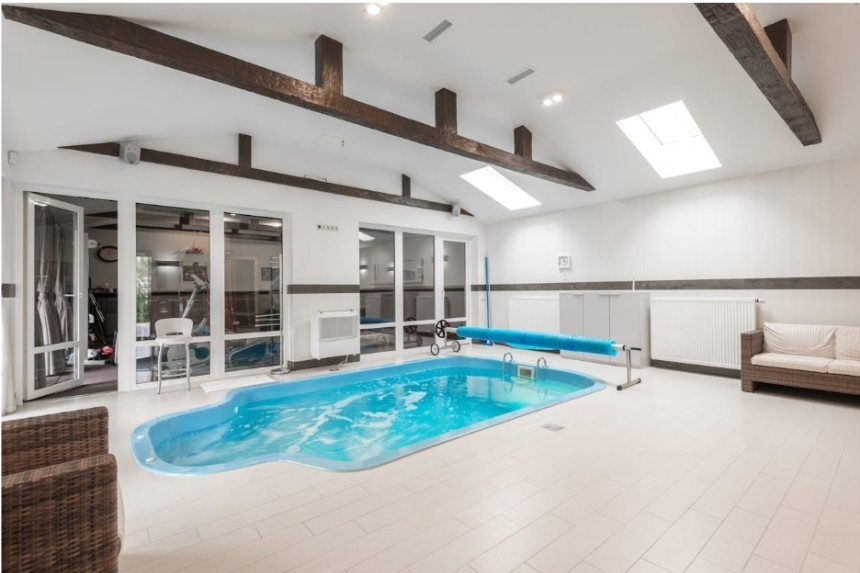
Owning a luxury indoor pool property is the ultimate upgrade in residential leisure. There’s nothing quite like walking into a private oasis for a late-night swim, completely shielded from whatever freezing weather or rain is happening outside. But here’s the reality check that every high-end homeowner discovers pretty quickly: an indoor pool room is an absolute beast to maintain.
You aren’t just dealing with a large body of water; you’re dealing with an active environmental challenge inside your home. Thousands of gallons of heated water constantly try to escape into your air, threatening your drywall, timber framing, and indoor air quality.
To keep your oasis from turning into a humid, structurally compromised nightmare, manual checks won’t cut it. You need dedicated smart systems designed to monitor, balance, and protect your home behind the scenes.
1. Smart Automated Pool Covers
A pool cover is your first line of defense, but if it requires manual cranking or dragging, you won’t use it consistently. Upgrading to a smart, motorized pool cover tied into your automation hub is a game-changer.
When the pool isn’t in use, keeping it covered reduces evaporation by up to 90%. That means your heating system doesn’t have to work twice as hard to maintain water temperature, and your air handling systems don’t get overwhelmed by constant moisture. High-end smart covers can be scheduled to close automatically at night or whenever motion sensors detect zero activity in the room.
2. Specialized Climate Control and Dehumidification Tracking
Standard residential heating and cooling units are not built for pool rooms. If you try to use a traditional AC setup, the chlorine-laden air will eat the components from the inside out within a few short years.
You need a system that actively calculates the dew point and automatically matches the air temperature to the water temperature—ideally keeping the air about two degrees warmer to minimize evaporation. Because this delicate balance requires regular attention and custom engineering, smart properties rely heavily on remote diagnostics monitored by an expert Indoor Pool HVAC, Indoor Pool Dehumidifier Technician to ensure the ventilation stays perfectly calibrated before mold or structural wood rot can take hold.
3. Integrated Security and Access Automation
Safety is the most critical element of pool ownership, especially if you have kids, pets, or frequent guests. Smart locks and biometric scanners on the entry doors ensure that no one steps into the pool enclosure without explicit permission.
Beyond physical locks, your perimeter surveillance needs to be top-tier. Regular outdoor cameras don’t always translate well to the unique lighting, glass reflections, and steam of an indoor aquatic space. Opting for tailored, high-definition setups through a specialized provider like Security Camera Installation Vaughan gives you crystal-clear, real-time alerts on your phone whenever unauthorized movement is detected near the water’s edge, even in low-light conditions.
4. Automated Chemical and Water Quality Systems
Balancing pool chemistry used to feel like a high school chemistry project, involving plastic vials, drops of liquid, and lots of guessing. If you let the pH or sanitizer levels drop for even a couple of days, your crystal-clear water turns cloudy.
Modern luxury properties utilize inline smart sensors that constantly test the water’s chemical composition. These systems connect to automated chemical feeders that inject exact amounts of chlorine or acid as needed. You can check the health of your pool right from a tablet, receiving alerts only when it’s time to refill the chemical reservoirs.
5. Smart Multi-Zone Leak and Moisture Detection
A minor leak in an outdoor pool is annoying; a minor leak in an indoor pool is a structural disaster. Water escaping underneath your flooring can slowly rot your foundation or erode subsoil without you noticing until a massive crack appears.
Smart moisture sensors should be placed strategically behind baseboards, near pump filtration systems, and under the pool deck perimeter. If a pipe fittings cracks or a seal fails, these sensors instantly send an emergency push notification to your phone and can even trigger an automated shut-off valve to stop the water flow entirely before a few gallons turn into a flooded basement.